¡Contenidos disponibles!
Open Day Printed Systems for IoT Low Power Electronics
20 Octubre 2022 | 09:15h a 14:30h
Eurecat | C/Bilbao, 72 | 08005 Barcelona
Jornada híbrida: presencial con retransmisión online en directo
El gran crecimiento del IoT y los dispositivos portátiles en diferentes entornos, como monitorización ambiental o pruebas puntuales para aplicaciones sanitarias, entre otros, ha aumentado la demanda de dispositivos y sensores autoalimentados, así como de métodos de fabricación más baratos y rápidos. La investigación actual en electrónica impresa abre el camino para el diseño de dispositivos flexibles y de bajo coste para aplicaciones de recolección. La forma principal de obtener dispositivos autoalimentados es centrarse en la recogida de energía mediante fuentes de energía sostenibles como termoeléctrica, solar, piezoeléctrica, RF, etc. En aplicaciones de potencia suficientemente baja, estas fuentes de energía pueden incluso eliminar la necesidad de baterías, reduciendo incluso más, los costes de fabricación y contaminación.
OBJETIVOS DE LA JORNADA:
> Explorar la aplicación más reciente de la electrónica impresa en el desarrollo de electrónica de baja potencia.
> Presentar los últimos adelantos sobre materiales, ingeniería electrónica y dispositivos imprimidos para electrónica de baja potencia.
> Dar una visión general de los dispositivos termoeléctricos, piezoeléctricos y autoalimentados, junto con el enfoque de su implementación en circuitos impresos híbridos, para aplicaciones IoT flexibles y ligeras.
> Generar un think tank del futuro de los generadores y dispositivos impresos eficientes energéticamente en el marco de la electrónica sostenible y las ciudades inteligentes.
IDIOMA DE LA JORNADA:
Castellano y/o inglés
A QUIÉN SE DIRIGE:
- Directores y/o comerciales de empresas
- Investigadores
ÁMBITOS DE APLICACIÓN:


AGENDA
9:15h – 9:30h
Bienvenida a la jornada.
Paul Lacharmoise, Responsable de la Unidad de Functional Printing & Embedded Devices.
Eurecat
9:30h – 10:00h
Low power hybrid printed circuits for IoT Applications
Ana Moya Lara, Investigadora de la línea de Printed Sensors & Actuators. Unidad de Functional Printing & Embedded Devices.
Eurecat
10:00h – 10:30h
Nanostructured thermoelectric materials
Alex Morata, Investigador
Institut de Recerca en Energia de Catalunya (IREC)
10:30h – 11.00h
Upscaling of carbon based, solution processed thermoelectric generators for powering low consumption devices
Mariano Campoy, Investigador Científico.
Institut de Ciència de Materials de Barcelona (ICMAB-CSIC)
11:00h – 11.30h
PAUSA CAFÉ & NETWORKING
11:30h – 12.00h
Printed piezoelectric devices for energy harvesting
Gonzalo Murillo, Junior Leader – Senior Research Fellow | Founder
IMB-CNM, CSIC | ENERGIOT
12:00h – 12:30h
Self-Powered devices
Neus Sabaté, ICREA Research Professor | Co-Founder
IMB-CNM, CSIC | FUELIUM SL
12:30h – 13:00h
Comunidad Emergentes FEM-IoT
Marisa Catalán, Wireless Sensor Networks Research Line Manager
i2CAT FOUNDATION
13:00h – 13:30h
Mesa de debate. Tendencias de futuro de la tecnología.
Modera: Claudia Delgado
13:30h – 14:30h
COMIDA & NETWORKING
PONENTES

Ana Moya, Investigadora línia Printed Sensors & Actuators. Unitat Functional Printing & Embedded Devices.
Eurecat
Ana Moya is a Senior Scientific in the Functional Printing and Embedded Devices Unit at Eurecat. She received the Ph.D. in Electrical and Telecommunication Engineering in 2017 from UAB. She has an interdisciplinary scientific background, with solid experience in the design and development of electrochemical sensors through printing techniques specially applied to Lab-On-Chip and Organ-On-Chip systems. Her professional career is focused on the development of printing technologies to produce low-cost sensors in flexible substrates which can be of great interest in clinical and environmental analysis. Her current scientific production comprises more than 30 peer-reviewed articles with an h-index of 12. She has participated in more than 30 national and international projects.
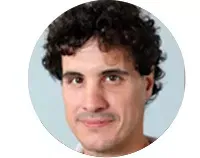
Alex Morata, Investigador.
Institut de Recerca en Energia de Catalunya (IREC)
Alex Morata coursed his degree and master in Physics at the University of Barcelona. He completed his PhD in the same institution, in the electronics department, dealing with the development of functional ceramic materials and film depositions for energy and gas sensing devices. In 2010 he incorporated to the Nanoionics and Fuel Cells group at the Catalonia Institute for Energy Research. Since he joined IREC, he has assumed scientific supervision tasks (nine theses, two postdocs and numerous master thesis), contributed to five patents, and funding attraction and management activities, being IP of 10 public (National and European) and Industrial projects. He has been reference researcher in the lines of Solid Oxide Cells and nanoionics, and he has lead the research lines in micro-batteries and thermoelectrics. He has contributed to more than 100 scientific publications in prestigious journals of his field, worldwide recognized conferences and several book chapters.

Mariano Campoy-Quiles, Investigador Científic.
Institut de Ciència de Materials de Barcelona (ICMAB-CSIC)
Mariano Campoy-Quiles is a materials scientist who has chosen to address one of the most critical problems facing humanity: the future supply of clean energy. He leads a 10-12 people group at ICMAB that has built substantial research efforts in two application areas, solar photovoltaic (light to electric) and thermoelectric (heat to electric) energy conversion. In the frame of his ERC CoG, he and his team have advanced a disruptive technology for the screening of PV and thermoelectric materials. He is co-author in 130 papers, including three papers in Nature Materials as well as a stream of significant papers in leading Physics and Chemistry journals. This output has earned him an h-index of 41/46 and over 8.000/10.000 citations (Scopus/Google Scholar). He is also co-inventor in five patents, and has recently co-founded a spin-off company. He is/has been the principal investigator in 15 projects (including 5 Plan Estatal, two Marie Curie ITN, an ERC Consolidator Grant, and an ERC PoC) and many contracts with industry, summing up more than 5 million €.

Gonzalo Murillo, Junior Leader – Senior Research Fellow | Founder
IMB-CNM, CSIC | ENERGIOT
Dr. Gonzalo Murillo received his Electronic Engineering Degree from the Universidad de Granada (Spain) in 2007. He obtained his PhD on energy harvesting from the Universitat Autònoma de Barcelona (UAB) in 2011. He was a researcher at the Nanotech-DTU (Denmark), MINATEC (France), International Iberian Nanotechnology Laboratory (Portugal) and Georgia Institute of Technology (Atlanta, USA). In 2013, he joined the Microelectronic Institute of Barcelona (IMB-CNM, CSIC) as Junior Leader thanks to «la Caixa» Foundation. In 2016, he was obtained the prestigious award as «Innovator under 35» and «Most Novel Innovator in Europe» by the MIT Technology Review (MIT TR35). Also, he was recipient of the Engega, Climate KIC and CleanTech Camp awards and finalist of “Premio Joven Relevante” Circulo Ecuestre, EDF Pulse Awards, Emprendedor XXI and Premio Everis. In 2019 and 2020, he was selected as Economic Leader of Tomorrow by Choiseul Institute. In 2020, he received the Ramon y Cajal Grant. In 2018, he also co-founded an NPO, «Clubes de Ciencia España», to give access to high quality education to students.
In addition, he founded «Energiot Devices SL», a startup company working on self-powered devices for smart grid, with pilots with Iberdrola (Spain), ENERCAL (New Caledonia), EDP (Spain) and Terni (Italy).
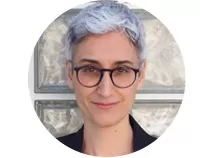
Neus Sabaté, ICREA Research Professor | Co-Founder
IMB-CNM, CSIC | FUELIUM SL
Neus Sabaté obtained her PhD in Physics in 2003. She is an ICREA Research Professor and leader of the Self-Powered Engineered Devices Group at the Microelectronics Institute of Barcelona (IMB-CNM). She has co-authored more than 100 papers in journals and conferences and submitted 15 patents. She is an expert in microfabricated fuel cells, a research line that evolved to the biodegradable electrochemical power sources she develops today. In 2015 she obtained an ERC-Consolidator Grant to develop single-use self-powered sensors as key components of a new generation of affordable and efficient point-of-care devices. She also co-founded Fuelium SL, a company that commercializes paper batteries for single use applications.Her innovative vision on the quest of generating sustainable solutions for single use diagnostic devices and the capability of transferring them to the market by launching and co-funding spin-off initiatives has been recently acknowledged with several awards. In 2020, she was appointed Finalist of the EU Women Innovators in the Main Category award, she obtained the national Prize of Physics, Innovation and Technology of the Spanish Royal Society of Physics and was awarded with the Award to Technological Innovation from the Foundation for Entrepreneurial Women of Catalonia.

Marisa Catalán, Wireless Sensor Networks Research Line Manager
i2CAT FOUNDATION
La Dra. Marisa Catalán dirige actualmente la línea de investigación en Internet de las Cosas (IoT), que forma parte del área de investigación en Mobile Wireless Internet (MWI) en la Fundación i2CAT. También es la responsable técnica local del laboratorio The Thinx 5G Barcelona, un laboratorio que funciona como un acelerador de productos, facilitando la transferencia de conocimientos en tecnologías 5G, como por ejemplo LTEM y NB-IoT.
Ingeniera de telecomunicaciones y doctora en ingeniería telemática, anteriormente trabajó como investigadora en el Wireless Networks Group (WNG) de la Universitat Politècnica de Catalunya. Cuenta con una experiencia de más de quince años en tecnologías IoT inalámbricas (UWB, IEEE802.15.4, Zigbee,6LoWPAN, LPWAN), en redes de sensores y en la implementación de prototipos y bancos de pruebas.
Ha participado activamente en más de 30 proyectos nacionales e internacionales tanto en el ámbito público como el privado.
En la actualidad es la responsable técnica del proyecto “Infraestructures de Carrer Connectat“ de la agrupación Fem-IoT.
ENTIDADES COLABORADORAS