Every day we use water for cooking, showering, washing clothes, or cleaning our homes. These are everyday and essential actions, but we often forget that everything we pour down the drain doesn’t simply disappear. In this way, many substances end up entering the water cycle and, over time, can return to the environment through it.
These substances are called emerging contaminants and include residues of pharmaceuticals, personal care products, cosmetics, pesticides, detergents, microplastics from synthetic clothing or packaging, and industrial compounds such as PFAS. They are often invisible and present in very low concentrations, yet they can accumulate and persist in the environment.
Their increasing presence in rivers, aquifers, and even drinking water is linked to the widespread use of chemicals in modern life and the limitations of conventional treatment systems in removing them.
Why conventional treatment is not enough?
Traditional wastewater treatment plants have been designed primarily to remove organic matter, nutrients (such as nitrogen and phosphorus), and microorganisms through processes like sedimentation, biological treatment with activated sludge, and disinfection. These systems are very efficient for this purpose but were not designed to remove dissolved and persistent synthetic chemical compounds.
As a result, the removal efficiency for emerging contaminants is often limited and highly variable depending on the substance. Available data indicate that in conventional treatments, the average removal can be around 40% for pharmaceuticals, 35% for personal care products, and 50% for pesticides.
This means that a fraction of these compounds is not completely eliminated by the treatment plant and is discharged into rivers or other water bodies. The difficulty of removal is explained by the fact that many contaminants have very stable chemical structures, degrade slowly, or are present in extremely low concentrations (nanograms or micrograms per liter), making them resistant to conventional biological processes.
Environmental and health impact
Even in small quantities, emerging contaminants can have significant medium- and long-term effects:
- Endocrine system disruption and effects on aquatic fauna and human health: Certain pharmaceutical residues, synthetic hormones, and other compounds act as endocrine disruptors, interfering with the hormonal systems of organisms. In aquatic fauna, this can lead to alterations in reproduction and fertility, such as the feminization of male fish or changes in reproductive behavior. This could result in these compounds entering the food chain.
- Antibiotic resistance: Residues of antibiotics and their byproducts can promote the development of resistant bacteria and facilitate the transfer of resistance genes between microorganisms, spreading this problem within aquatic ecosystems.
- Microplastics and bioaccumulation: Microplastics come from a wide range of sources, such as packaging, personal hygiene products, and synthetic fibers released during laundry, among others. These materials degrade very slowly, which promotes their accumulation within organisms. They are persistent substances that can bioaccumulate and be transferred along the food chain. Their combination with other contaminants can amplify effects on health and the environment.
- Per- and polyfluoroalkyl substances (PFAS): PFAS are highly persistent chemicals that have been used for decades in various applications, such as non-stick cookware coatings, waterproof clothing, cosmetics, and paints, among others. They do not degrade easily and accumulate in organisms, affecting the immune and hormonal systems and increasing the risk of diseases. Despite recent measures to reduce their presence, these compounds continue to pose a significant challenge for the environment and human health.
Overall, although each contaminant individually may seem to have little impact, their combination, persistence, and accumulation can produce lasting and significant effects. This underscores the need to improve treatment systems to reduce their presence in water.
What we can do as citizens
Technology is essential, but prevention also begins at home. Daily habits play a key role in reducing the entry of contaminants into the environment: returning expired medications to the pharmacy, avoiding pouring chemical products down the drain, reducing the use of plastics and materials that generate microplastics, choosing more sustainable cleaning products, and maintaining responsible consumption.
The sum of these small actions directly contributes to protecting the water cycle and minimizing the impact of emerging contaminants on the environment and human health.
Science and innovation response
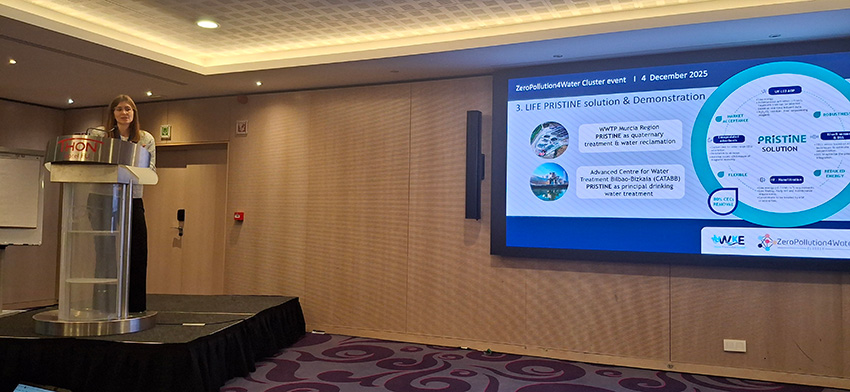
To address this challenge, scientific research is developing more advanced detection and removal technologies. In this context, the European project LIFE PRISTINE, led by ACCIONA, promotes sustainable solutions based on a combination of processes such as adsorption, nanofiltration, and advanced oxidation, integrated with intelligent monitoring and decision-support systems.
Eurecat participates in the project by developing an innovative adsorption capsule system. The solution consists of very small capsules with a magnetic metallic core coated with natural materials such as biopolymers and/or activated carbon, which act like a sponge to capture substances such as pharmaceuticals, PFAS, and microcontaminants. The PRISTINE solution also incorporates hollow-fiber nanofiltration membranes that are more energy-efficient developed by NX Filtration, which are capable of separating emerging contaminants from treated water. Additionally, the PRISTINE solution includes a UV-LED advanced oxidation process led by Xylem that can eliminate emerging contaminants from water. Finally, ACCIONA has developed two digital solutions that complement the other technologies: a digital sensor that enables the prediction of emerging contaminants in water and a decision-support system that helps optimize the use of reagents and energy.
The strategy followed by the LIFE PRISTINE project allows for the removal of high percentages of emerging contaminants, including PFAS, pesticides, pharmaceuticals, and microplastics, while improving the efficiency of water treatment and ensuring safer reclaimed and drinking water.