
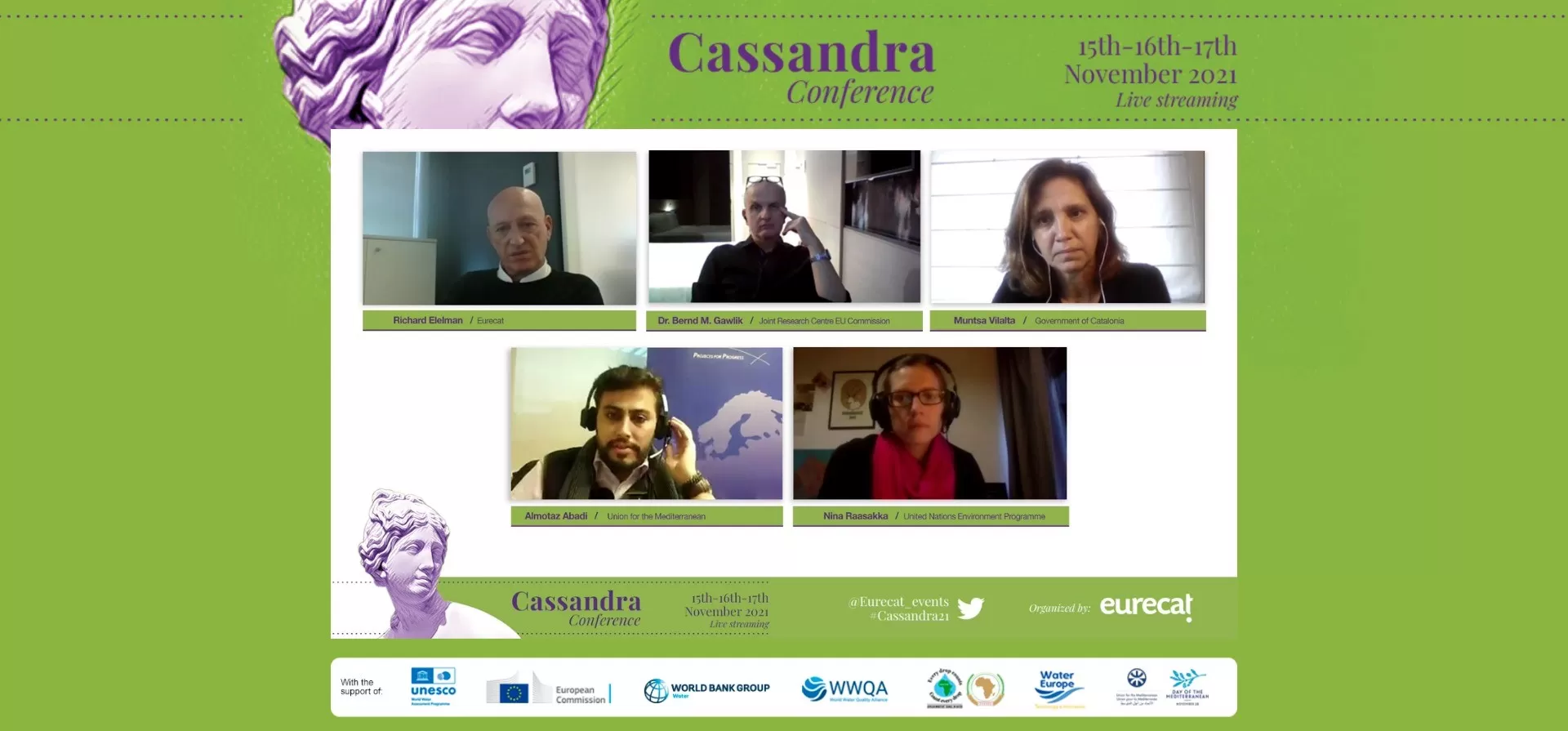
The international Cassandra conference hosted by the Eurecat technology centre has underscored the need to fast-track joint efforts by the private and public sectors, society and scientists to roll out long-term solutions founded on consensus and trust to tackle the Mediterranean’s environmental challenges.
“Maybe it’s time for scientists and other key stakeholders in the responses to the climate crisis to pledge to engage in honest, open and unbiased endeavours to unlock long-term solutions,” argued Richard Elelman, Eurecat’s Head of Politics.
Bernd M. Gawlik from the European Commission’s Joint Research Centre stressed the importance of “a Mediterranean identity for the future” anchored in shared common values and also noted that “one of the European Union’s principles is to be united by diversity”.
The Cassandra conference “has made it obvious that the most effective way forward is to break out of sector, social and institutional silos,” said Montserrat Vilalta, the Director General of Foreign Action in the Catalan Government, who took part in the event’s closing session.
“We need to start thinking about people and we need to start thinking beyond borders” because emerging climate change problems and challenges run across them, pointed out Almotaz Abadi, Managing Director for Water at the Union for the Mediterranean. He believes that “it’s time to learn from each other, not from mistakes but rather from achievements.”
Nina Raasakka, coordinator of the United Nations Environment Programme’s Global Water Partnership, added that to address these issues “we need these frameworks and I think Cassandra is an outstanding example of a platform which has brought together civil society, UN institutions and international organisations, yet also touches on these more philosophical questions about, for instance, the role of art and scientists” to really get the message across.


