
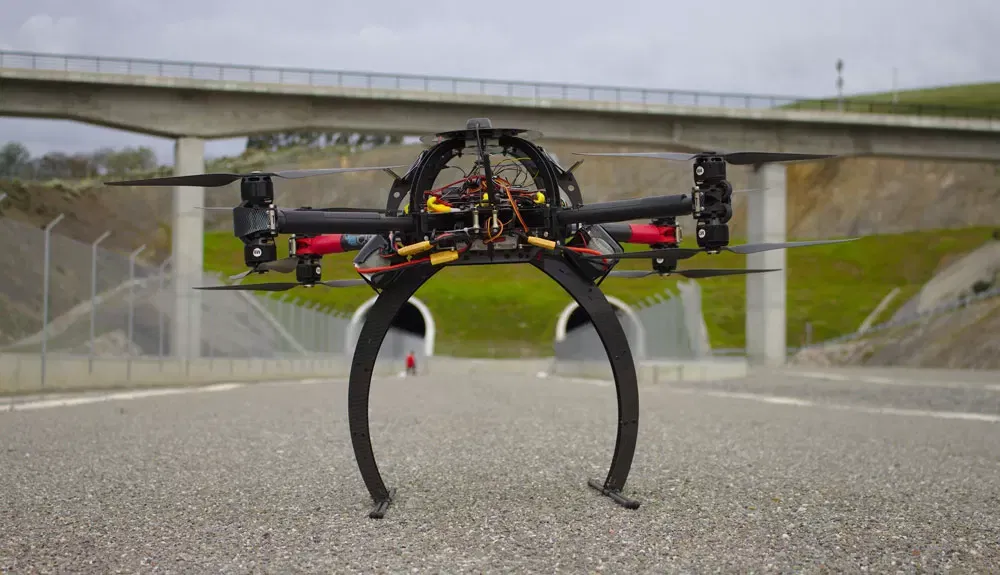
The Eurecat technology centre has developed a new system to predict the evolution of corrosion and meticulously schedule maintenance tasks. This has involved combining its expertise in identifying corrosion mechanisms with regular monitoring of hard-to-reach areas using drones and data analytics powered by Artificial Intelligence.
Corrosion monitoring is a “crucial aspect for selecting the most suitable materials and avoiding catastrophic failures,” said Montse Vilaseca, director of Eurecat’s Metal and Ceramic Materials Unit, during the technology centre’s attendance at the Eurosurfas trade fair which is taking place in Barcelona.
The technology centre’s Metal and Ceramic Materials Unit “is working on research projects to design and develop functional surfaces which can withstand mechanical stresses and harsh environments,” she added.
Eurecat’s Surface and Coatings Technology Research strand applies advanced functional coatings using plasma technologies to increase wear and corrosion resistance, reduce friction and add scale inhibitor properties for biomedical applications in order to make surfaces more functional.
Meanwhile, Eurecat’s Corrosion and Degradation Research strand delivers solutions to surface environmental degradation problems by means of advanced testing using aggressive environments such as corrosive liquids, salts, microorganisms and gases on a range of materials. The effect of these aggressive environments on mechanical properties is also evaluated in combination with mechanical trials where stress corrosion, fatigue corrosion and tribo-corrosion tests are designed and conducted.


