
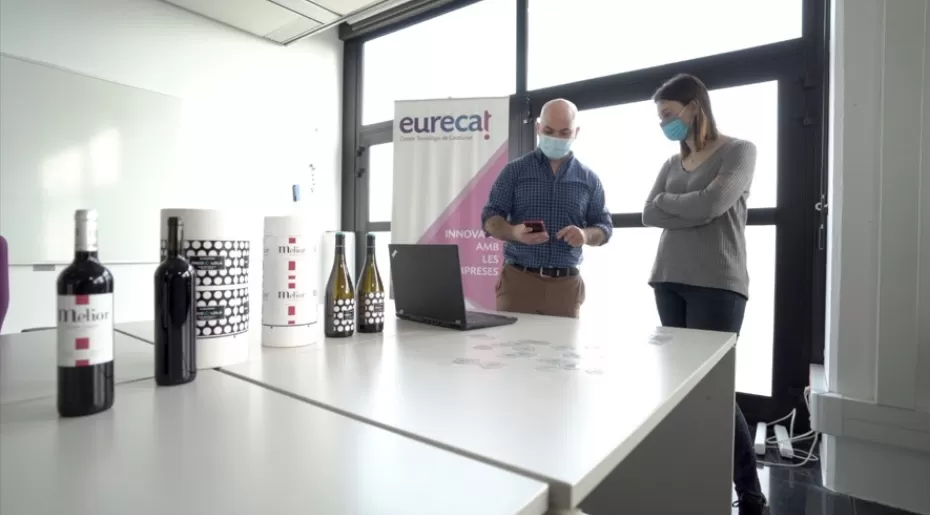
The Eurecat technology centre has taken part in the SmartLabels project which over the last year has explored the feasibility of using new printing technologies in self-adhesive labels for wine bottles such as NFC antennas, invisible ink and unique two-dimensional barcodes. The idea is to closely track the product right across the production and distribution process while preventing counterfeiting and enhancing consumer interaction with the packaging and the brand.
The Catalan Packaging Cluster and the Galicia Food & Drink Cluster have coupled the digitalisation needs of wineries Paco&Lola and Matarromera with the Eurecat technology centre’s knowhow and the resources of label and sleeve manufacturer IPE Indústria Gràfica to develop these smart labels originally intended for the wine industry but which can easily be replicated in others.
After a year of strenuous efforts, the project’s results were unveiled to the national innovation ecosystem at this morning’s virtual conference.
Xavier Lesauvage, Managing Partner and Marketing Strategy Leader at consultancy firm Connociam, opened the session with a presentation of trends in smart packaging for 2021 based on the study carried out with the Packaging Cluster (see the executive summary) early in the year.
Noelia Dosil, Innovation Project Manager at the Galicia Food & Drink Cluster, championed the SmartLabels project’s input to the industry’s overarching expertise in technological innovation which enables the smart label system to be replicated across other products and industries.
At today’s event Juan Estanislao López, Smart Engineering Research Group Manager at Eurecat, also shared how the NFC (Near Field Communication) system works for the wine industry as it means contactless technology can harnessed to build a bond with the consumer while sharing useful information about the brand and the product.
Meanwhile, Cleiver Salazar, Technical Manager at IPE Industria Gráfica, outlined the process of applying invisible ink with a unique two-dimensional barcode on the labels they are to design as subject-matter experts.
Daniel Durán, a Winegrowing and Innovation specialist at Sociedad Cooperativa Vitivinícola Arousana, Paco & Lola, and Raquel González, an R&D Department specialist at Bodegas Familiares Matarromera, concluded with a demonstration of how the prototypes have been rolled out on their production lines.
The teamwork between regions and industries has brought out the initiative’s considerable potential by unlocking a concept which can be scaled up across other areas and generating significant added-value knowledge consistent with the National Strategy for Connected Industry 4.0.


