
The Eurecat technology centre is taking part in the RECIPLAC project, supporting the social integration company Andròmines and the Universitat Politècnica de Catalunya – BarcelonaTech (UPC) in developing a new advanced computer recycling process which will make it possible to recover critical and high-value metals such as palladium, copper and neodymium magnets.
The project is coordinated by Andròmines and based “on circular economy and urban mining principles combining three strategies for recovering critical metals from computer recycling,” says Albert Martínez Torrents, a researcher in Eurecat’s Waste, Energy and Environmental Impact Unit.
“This project enables us to make headway as a social and environmental organisation, bringing our experience in waste management and the circular economy to the table,” adds Nuria Sau, project director at Andròmines. “For Andròmines, leading the RECIPLAC project is a chance to show that technological innovation and social commitment can go hand in hand, transforming recycling as we know it and creating local jobs.”
Toni Dorado, a researcher and coordinator of the Biohydrometallurgy group at the UPC’s Manresa Campus, believes that this project is a big step towards efficiently transferring innovative technology developed in Catalonia with a direct impact on the region’s business community in e-waste recycling.
Firstly, it selectively sorts the palladium-rich components from the printed circuit boards (PCBs) of devices and then uses hydrometallurgical technology to recover them.
Secondly, it deploys a strategy that taps new biohydrometallurgical processes to recover the metallic copper in the PCBs.
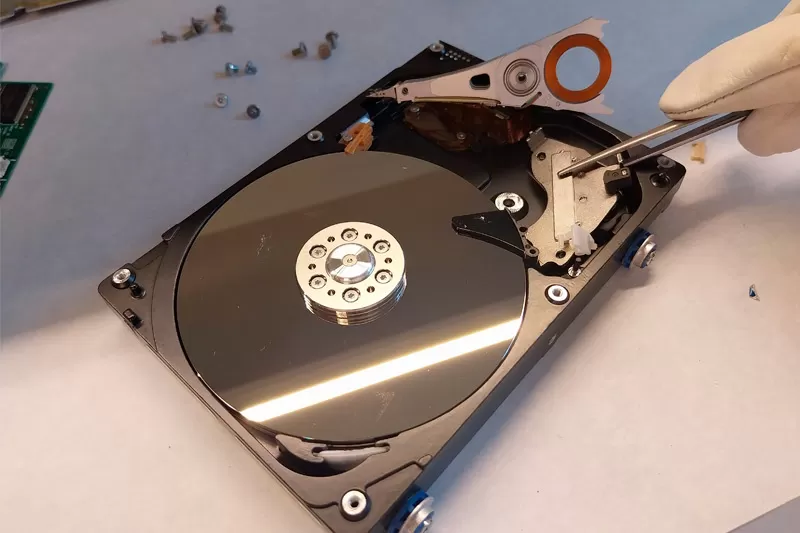
Finally, the device then goes through another process to recycle the magnets in computer hard drives. New hydrometallurgical processes turn them into neodymium magnet matrices which can be used as high-quality precursors for new magnets.
The project also includes a study of other components from the computer recycling process since “the aim is to optimise recycling and increase reuse based on sustainability criteria,” says Dr Martínez Torrents.
The initiative has a budget of over €330,000, part of which has been financed with a €250,000 grant through the call for Green R&D Hubs for R&D projects in the circular economy in waste management for 2024 by ACCIÓ and the Catalan Waste Agency.
The project has the backing, technical assistance and advice of Datambient as an expert in waste and waste management.


