

Development of digital tools to increase circularity in secondary raw materials. The Plooto project offers a circular and resilient information system (CRIS) to help manufacturers in their ecological, digital and circular transition. The system developed by Plooto enables waste reduction and end-to-end traceability of secondary raw materials through interconnected digital services for real-time decision-making, material and product tracking and certification. This solution is demonstrated in three pilot projects for the recycling of organic waste, composites and permanent magnets from waste electrical and electronic equipment (WEEE). WEEE recycling is crucial due to the rise of the electric [...]

EDGELESS
EurecatIG2023-11-29T12:07:00+01:00Serverless efficient computing in extremely diverse computing environments, from edge devices with limited resources to highly virtualised cloud platforms. EDGELESS makes use of the "serverless" concept in all layers of the edge-cloud continuum to fully benefit from the diverse and decentralised computational resources available on-demand close to where data is produced or consumed. In particular, the project achieves a efficient and transparent horizontal pooling of resources in edge nodes with constrained capabilities or specialised hardware, smoothly integrated with cloud resources. This represents a giant leap forward compared to to state-of-the-art vertical offloading solutions where the edge [...]

SafeCREW
EurecatIG2023-11-29T11:57:16+01:00Investigation of unknown disinfection by-products and exhaustive characterisation of the formation of those already known. With the results, commercial methods will be developed to quantify and reduce these by-products to avoid negative effects on human health. During the project, three case studies are carried out to promote the characterisation of water quality, develop new treatment methods and improve the management of water distribution networks to maintain a high quality of drinking water. This includes all processes, from the water source, through treatment and distribution. Climate change poses major challenges for Europe's drinking water supply. With the [...]

DiÓptiBa
EurecatIG2023-03-17T14:25:46+01:00Development of a software platform aimed at owners of storage technologies and renewable energy to increase the profitability of their projects. The DiÓptiBa project proposes decision-making support tools for optimal asset management, maximising their performance from participation in the different electricity markets. DiÓptiBa explores different models of continuous learning and the design of architectures that support the data value chain. The value proposition is to integrate technical and economic criteria into forecast algorithms, optimising the energy management strategy. Eurecat participates in the DiÓptiBa project through its Applied Artificial Intelligence Unit, in charge of developing the software platform. The [...]

FLEXCRASH
EurecatMV2026-02-17T13:22:39+01:00Flexible and hybrid manufacturing of green aluminium to produce tailored vehicle adaptive crash-tolerant structures. The Flexcrash project, coordinated by Eurecat, is developing a flexible and hybrid manufacturing technology using aluminium alloys and based on applying surface patterns by additive manufacturing onto preformed parts. In the last years, the automotive industry has made important efforts focused on lightweight construction to meet the stringent Greenhouse Gas Emission limits and increase passenger safety. However, both aspects are counteracting because we need heavier structures to improve passenger protection, but heavier vehicles also produce more severe crashes. In this sense, the [...]

WATERVERSE
EurecatIG2023-11-24T14:52:02+01:00The WATERVERSE project develops a Water Data Management Ecosystem (WDME) for making data management practices and resources in the water sector accessible, affordable, secure, fair, and easy to use. This will improve usability of data and the interoperability of data-intensive processes, thus lowering the entry barrier to data spaces, enhancing the resilience of water utilities and boosting the perceived value of data and therefore the market opportunities behind it. WATERVERSE will be demonstrated in 6 countries (Cyprus, Spain, Germany, the Netherlands, Finland and United Kingdom), setting clear and measurable indicators for assessing fairness of data in [...]

NebulOus
EurecatIG2025-02-21T13:38:25+01:00Development of the next generation of higher-level meta operating systems for the smart Internet of Things. NebulOus transparently manages all the layers of the cloud continuum stack, in an equivalent manner to an Operating System, managing the available computing capacity to facilitate an adaptive application hosting environment, driven by the processing proximity to data sources and optimised based on the data involved, the defined quality of service (QoS) requirements and the regulatory, security or privacy constraints. Therefore, NebulOus will develop a novel Meta Operating System and platform for enabling transient fog brokerage ecosystems that seamlessly exploit [...]

DICAMI
EurecatIG2022-09-15T12:37:47+02:00Development of a control system through a microwave sensor for the optimisation of humidity in the production of compound feed. The DICAMI project aims to generate a control system capable of memorizing the different electrical responses of a humidity sensor depending on the materials that make up the compound feed, interpolating the response of the system according to the stored calibrations. DICAMI provides a common response to all systems, regardless of the type of mixer or manufacturing system, obtaining a response based on the main components of the food. Another objective of the project is the [...]

PORTS4ALL
EurecatIG2022-09-16T08:41:07+02:00Restoration of marine ecosystems of port infrastructures PORTS4ALL is an industrial research project that aims to offer a comprehensive multi-technological solution to transform grey infrastructures (ports, offshore wind farms...) into blue infrastructures (marine oasis). This transformation will be achieved through the restoration of degraded and polluted spaces, the recovery of lost biodiversity and the proposition of adaptation and mitigation strategies to tackle the effects of climate change. To achieve this main goal, the technological members of the consortium combine research in four different areas: Research and evaluation of new techniques and technologies for the generation and [...]
OSC ROBOT
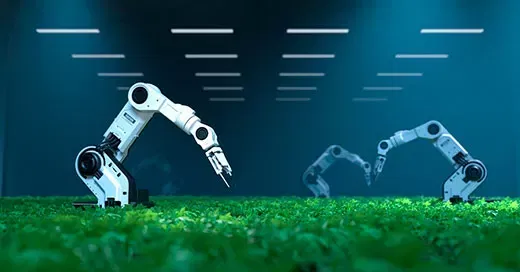
EurecatIG2022-05-18T14:30:44+02:00Research and development on the new technological challenges required by an electromechanical device. The OSC ROBOT project researches and develops solutions to the latest challenges presented by collaborative robots, depending on the changing needs of the manufacturer in different environments (food, health, metallurgy, etc.). The project is divided into 3 main objectives: Creation of a super low cost robot for developers, training centers and producers (makers) that simulates as much as possible each part of an industrial robot, but simplified to the minimum expression to get users of this device. Creation of a web platform that [...]

PREDIVÍ
EurecatIG2022-04-27T09:16:37+02:00Use of Big Data to optimize the volume of wine production. The PREDIVÍ project aims to improve decision-making related to wine harvests through Big Data. The growing variability of the volume and quality of wine production means that the investment of resources and the dedication of technical teams to obtain harvest predictions is also increasing. Currently, the technical teams use multiple systems (sampling, maturation controls, gauging, etc.) to ascertain in advance the aforementioned variables of volume and optimal harvest time, but the reliability of the results that these systems provide has a lot of potential for [...]

Technical feasibility study for IoT and AI R&D project applied to the water sector
EurecatIG2022-03-22T09:13:33+01:00Technical feasibility study to evaluate the application of disruptive technologies in the water subsector. The IoT-IA CWP project aims to analyze how the application of the Internet of Things (IoT) and artificial intelligence (AI) can allow overcoming defined challenges in the water subsector. The beneficiary sector will be the Comprehensive Water Cycle Exploitation Services, which encompasses several points in the value chain and opens up the possibility of incorporating these technologies that will improve current decision-making and monitoring systems. Other goals of the project are to: Submit 2 R&D projects in regional, national or European financing [...]
SEAWIZARD
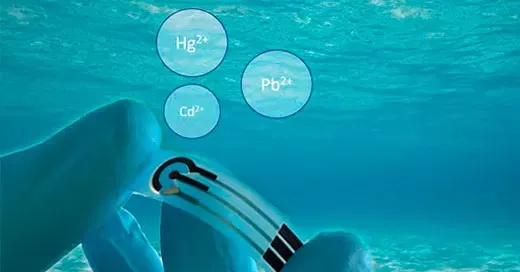
EurecatIG2022-03-15T11:11:27+01:00Development of a proof of concept to monitor heavy metals and interfering elements in seawater. The SEAWIZARD project aims to research and develop a proof of concept for monitoring heavy metals such as lead, mercury or cadmium in seawater, as well as key interfering elements such as temperature or pH, at much smaller temporal and spatial scales than currently possible. As a result, a new concept of marine environmental sensing will be built upon the convergence of dissimilar technologies, such as printed electronics, materials and environmental science and artificial intelligence (AI). This improvement will make it [...]

ALIMENTE21
EurecatIG2022-02-28T13:31:17+01:00Boosting the food industry towards a more intelligent, predictive, prescriptive managent model with a lower environmental impact. The ALIMENTE21 project aims to increase the availability and efficiency of resources, both industrial and raw materials, of the food industry, as well as its production processes. This boost is applied to the multiple links of the value chain, while guaranteeing the safety and quality of procedures. The mission of ALIMENTE21 is to research and develop cutting-edge solutions based on artificial intelligence, big data, edge computing and digital twin, with the aim of advancing the food industrial organization towards [...]

BBI4.0
EurecatMV2026-07-03T15:16:17+02:00Development of signal processing modules bounded with data-driven Virtual Sensors and novelty/anomaly detection Machine Learning solutions, specifically addressed for the manufacturing industry. BBI4.0 is a sub-project of the European Factory Platform (EFPF) which proposes to implement novel data-driven Predictive Maintenance (PM) solutions tailored to industrial applications. The proposed objectives and modules extend the EFPF platform functionalities and demonstrate their main capabilities by developing bespoke solutions for pilot use cases. The specific objectives of the project are: Design and develop signal processing and pattern recognition modules and solutions customized to manufacturing sensor data. Design, develop and extend [...]