

Driving clean hydrogen production through advanced, sustainable, and scalable manufacturing processes for solid oxide electrolysis cells The HySPRINT project aims to improve the manufacturing of solid oxide electrolysis cell (SOEC) components, making the process more sustainable, efficient, scalable, and competitive. The initiative combines advanced manufacturing technologies, automation, artificial intelligence, and quality control systems to reduce waste, minimize defects, and enhance the performance of components used in green hydrogen production. To achieve this, the project develops and optimizes several advanced manufacturing processes, including inkjet printing, magnetron sputter physical vapor deposition (PVD), and ReScale technology. These solutions enable [...]

Fast-F
EurecatNF2026-07-02T14:41:51+02:00Development of an accelerated fatigue testing methodology and a digital platform for material selection and structural component design. The FAST-F project addresses a key limitation in the development of mechanical components: the need for reliable fatigue data obtained through conventional testing methods, which require a large number of specimens and testing times that can extend over months or even years. To overcome this limitation, the project develops and validates a novel procedure known as the stiffness method, capable of determining the fatigue behaviour of materials using only three specimens and requiring approximately one day per testing [...]

FastCrack Product
EurecatNF2026-06-12T11:14:52+02:00A testing tool for the fast evaluation of fracture resistance in high-strength steels The FastCrack Product project drives the commercialisation of a testing tool that enables the fast and cost-effective evaluation of fracture resistance in the high-toughness steels used in sectors such as automotive and aerospace. The tool responds to a growing challenge in the steel industry, which over the last decade has developed Advanced High Strength Steels (AHSS) in response to increasing requirements for passenger safety, vehicle performance and fuel efficiency. These steels offer improved formability and greater impact energy absorption, but present problems related [...]

SHIFT
EurecatNF2026-04-24T10:30:10+02:00Innovation in stamping processes for high-strength steels. The SHIFT project develops an innovative semi-hot stamping process for Quenching and Partitioning (Q&P) steels. The solution combines advanced experimental techniques, microstructural analysis, and tool development to understand and control the key material transformation mechanisms during the forming process. This advancement revolutionizes the manufacturing of lightweight automotive parts for safety applications. By maintaining the high mechanical performance of Q&P steels while improving their formability, it effectively minimizes the springback effect under real industrial conditions. The initiative ranges from improving the warm forming of Advanced High-Strength Steels (AHSS) to analysing [...]

nODS
EurecatNF2026-03-05T10:49:02+01:00New technologies for obtaining reinforced metallic materials through oxide dispersion strengthening. The nODS project develops and demonstrates alternative production routes for metal matrix composite materials reinforced by ceramic particles. The solution combines the fundamental knowledge of powder metallurgy with two innovative tools: severe plastic deformation and additive manufacturing. The study contemplates the modification of the raw material through three different routes: the processing of metal powder in a reactive atmosphere, its coating through acoustic mixing, and modification during sintering. These three procedures enable the production of metallic powder with ceramic particles of different characteristics and with [...]

PHOTO-RECIRCUIT
EurecatNF2026-06-19T08:29:19+02:00Sustainable and customizable energy solutions for next-generation devices. The PHOTO-RECIRCUIT project drives the development of sustainable and customizable energy solutions for next-generation Internet of Things (IoT) devices, aimed at extending their lifespan and reducing their environmental impact. This initiative is developing a disruptive printed circuit board (PCB) technology using recycled steel substrates, designed to tackle the industry's heavy reliance on batteries and critical raw materials. The solution is based on PCBs with a recyclable steel core, functionalized with advanced vitreous coatings and integrated photovoltaic harvesters. This architecture enables the creation of low-power IoT devices that overcome [...]

HOT-COAT
EurecatEQZ2026-06-19T08:49:26+02:00Advanced protective coatings obtained through PVD and CVD to increase the service life of tools, dies and moulds used in hot-working material processes. HOT-COAT develops advanced protective coatings, obtained through PVD (Physical Vapor Deposition) and CVD (Chemical Vapor Deposition) technologies, to increase the service life of tools, dies, and molds used in hot-working material processes (hot forging, hot stamping, and plastic injection molding), while also improving the quality of the final surface finish of the processed parts. To this end, the project includes the implementation of new technologies for producing coatings with high functional performance (tribomechanical, [...]
Safe&Clean
EurecatMV2026-03-30T17:38:08+02:00About the project | Project phases | Expected results | Progress beyond state of the art | Consortium | News & Events | Resources | Contact us Safe&Clean in a nutshell Understanding the safety performance of high-recycled content steels with low carbon footprint for critical automotive safety components ABOUT THE PROJECT The Safe&Clean project focuses on demonstrating that low-CO2 steels with high recycled content can safely meet the stringent requirements of modern automotive safety components. Steel remains the most widely used material [...]

2E4GREEN
EurecatIG2025-04-16T13:28:39+02:00Development of new ester-based oils and additives, as well as lubrication strategies for electric mobility. The 2E4GREEN project boosts a smart-lubrication strategy based on the selective activation of microencapsulated additives to reduce friction and wear, increase lubricant efficiency and extend service life. It does so by taking into account both the improvement of friction losses and the working conditions of electric mobility, to respond as a whole to the new concept of green mobility. The addition of additives to base oils improves the tribological performance of the system. In this sense, 2E4GREEN develops a solution based [...]
COMECOCO2
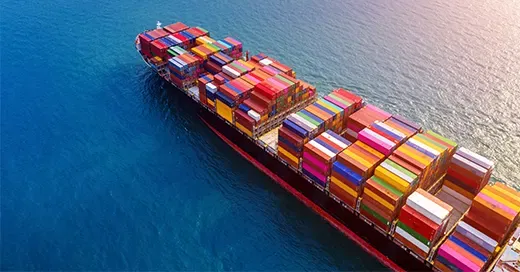
EurecatIG2025-03-05T10:31:07+01:00Renewable methanol for sustainable maritime transport. COMECOCO2 develops and validates an efficient system that integrates a high-temperature co-electrolyser (co-SOEC) and a catalytic reactor to produce competitive renewable methanol from CO2 captured from wastewater, reclaimed water and renewable electricity. This system, with application in maritime transport, will be validated in a laboratory environment and a preliminary validation will be carried out in a relevant environment, specifically in a wastewater treatment plant (WWTP). Despite the deployment of numerous emission mitigation policies through the use of renewable energy alternatives, sectors such as heavy transport continue to use almost exclusively [...]

H3MOV
EurecatIG2026-07-09T08:53:18+02:00Type III compressed hydrogen tanks for collective mobility using high-cadence processes. H3MOV develops high-cadence production processes to provide innovative solutions for compressed hydrogen storage, to address the high cost and low efficiency of current manufacturing methods. The project focuses on type III compressed hydrogen tanks, which, although not the lightest for a given volume, have several advantages over type IV tanks, such as lower hydrogen permeability and simpler sealing systems for the tank nozzles. Due to their slightly higher weight, these tanks are currently used in collective mobility vehicles, such as buses and trains. H3MOV focuses [...]

GEAR-UP
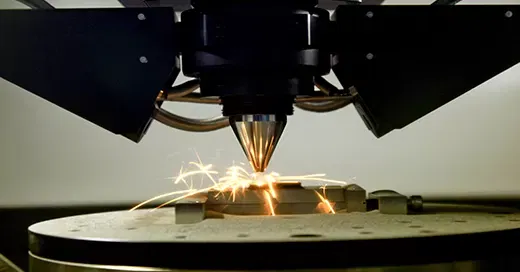
EurecatIG2025-01-30T10:51:34+01:00Revolutionising the manufacturing sector through sustainable practices and advanced technologies. GEAR-UP develops digital tools and methodologies that address recycled materials variability, covering stainless steel, aluminum alloys, and fiber-reinforced plastics for additive manufacturing (AM). The project employs simulation-driven approaches for optimising various AM processes, including laser beam-directed energy deposition, metal laser beam powder bed fusion, and fiber-reinforced polymer material extrusion. GEAR-UP emphasises environmental conservation by using recycled materials in engineering design, significantly reducing virgin resources, energy consumption, and greenhouse gas emissions. The project overcomes challenges associated with secondary materials, such as performance variability, through resilient design and [...]
REPAM
EurecatIG2025-01-15T13:58:10+01:00Revolutionising sustainability in additive manufacturing processes. REPAM addresses inefficiencies in additive manufacturing, focusing on enhancing material recycling and optimising processes for greater sustainability. Current production methods, such as metal powder production, suffer from low yields (30-50%), with significant energy losses due to remelting and limited recycling options for advanced alloys. REPAM transforms the entire process chain through innovation, from material production to recycling and reuse. The project develops advanced sensors and artificial intelligence models to monitor and optimise powder production processes, enabling real-time process control and the use of a broader range of recycled materials. Scrap [...]

CiSMA
EurecatIG2026-02-17T15:25:23+01:00Circular steel for mass market applications. CiSMA introduces scrap-based Electric Arc Furnace steel products into mass-market sheet metal consumer goods with high-quality requirements. Scrap-based steel production using Electric Arc Furnace leads to drastic reduction of CO2 emissions. It also favours a Circular Economy production model with reduced foreign dependency. However, this is currently not possible for high-performance applications, where the less flexible and more contaminant Blast Furnace- Basic Oxygen Furnace route is used. Moreover, low-quality scrap also affects the final performance of the steel. In that sense, CiSMA works to generate fundamental knowledge on how residual [...]

DURALINK
EurecatIG2026-05-14T09:25:45+02:00DURALINK in short Optimizing steel welds and corrosion protection to improve the durability and cost-efficiency of offshore wind turbines About the project | Objectives | Methodology | Expected outcomes | Consortium | News & events | Resources | Contact us ABOUT THE PROJECT The DURALINK project identifies optimisation design opportunities for offshore structures that lead to a reduction of the capital and operational expenditures of offshore extra-large wind turbines. To do so, DURALINK will evaluate existing and [...]