

Solution to increase the useful life and quality of high pressure casting molds (HPDC). Project INNOCAST aims at developing an innovative physical vapor deposition (PVD) coating concept, based on nanostructured morphology to generate a complex layer of surface oxides to greatly reduce wettability and attack by molten aluminium on die casting tools. The project also investigates the use of ion implantation to modify the PVD coating, a highly innovative concept in the metal-mechanic sector that will allow the creation of phases with self-lubricating and wear-resistant properties. To validate the performance of these new solutions, a pilot [...]

SALWATERTWIN
EurecatIG2022-12-16T14:31:40+01:00The SALWATERTWIN project aims to conceptually design and validate, at a laboratory level, a small-scale, low-consumption semi-autonomous plant decentralised from general water distribution networks and infrastructures to treat the problem of salinity in groundwater. This plant incorporates a digital twin that allows intelligent and efficient management, considering all the parameters that may occur in a real environment. The project includes two phases: a first for research and a second for the development of a pilot that allows it to operate on a small scale and demonstrate the technical and economic viability of the technological solution. This [...]

REBUILDING TO LAST
EurecatIG2024-01-05T08:15:20+01:00Promoting the sustainable future of cultural spaces. The Rebuilding to Last project aims to develop the capacity of cultural spaces to address the sustainable future of their buildings and their organisations through an inspiring and leading transformation among cultural teams, audiences, communities, cities and beyond. Rebuilding to Last investigates how non-governmental cultural centers are integrating sustainable practices into the renovation of their buildings and their general operation, and conversely, identify inhibitors to sustainable practices (e.g. lack of access to finance). In addition, the project sensitises managers of non-governmental cultural centers, as well as other building-based cultural organisations and [...]

SATURN
EurecatIG2022-11-22T12:44:14+01:00Revaluation of the fat from different cuts of pork from meat mincing, based on its analysis, to obtain an ingredient rich in unsaturated fatty acids and evaluate its industrial applicability. The SATURN project’s its main objective is the valorisation of a by-product to recover different fractions of fat to be incorporated into food matrices. This approach will make it possible to contribute to the competitiveness of companies through the transfer of study results and the promotion of collaborations between companies and knowledge centers. Eurecat participates in the SATURN project through its Nutrition and Health Unit, with [...]
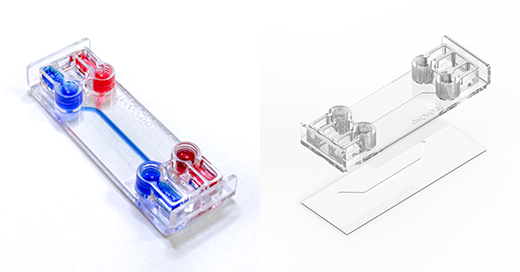
MICROGUT
EurecatIG2023-03-15T13:38:03+01:00Investigation of the nutritional quality and the interaction with the microbiota of new protein alternatives through the combination of new dynamic digestion technologies and Organ-on-Chip (OOC) intestinal modeling. The MICROGUT project aims to investigate the application of new OOC technologies for the recreation of the microenvironment of the human colon, including the microbiota and its interaction with the cellular and molecular component of the epithelium, optimising dynamic digestion systems to recreate the biochemical conditions in vitro, microstructure and fluidics of the three differentiated sections of the small intestine (duodenum, jejunum and ileum). MICROGUT will explore the [...]

Research and development in new offsite construction systems
EurecatIG2022-11-15T11:52:32+01:00This project aims to develop four solutions (photovoltaic, kinetic, light and active shading) that are integrated into the innovative façade covering system developed by the company DENVELOPS. The lighting solution consists of the use of unitary 200x300mm lighting panels that integrate LED lights (low power) and silicone to diffuse the light, eliminating the punctual effect of the LED. Color is controlled and aesthetic lighting effects are achieved. As for the photovoltaic solution, it consists of unitary 200x800mm panels, with four photovoltaic cells per panel. The cables and connections are invisible, since they are integrated into the [...]

PROPERS
EurecatIG2022-11-10T17:42:56+01:00The main objective of the PROPERS project is to evaluate the feasibility of different technologies and digital resources to empower the consumer, through a digital prescriber, to improve their experience at different times of regular consumption, in addition to providing them a differential value through the company's communication. To this end, an initial study is being developed to learn about the technologies useful for improving communication with the consumer, digitising the experience of purchasing and consuming gourmet products. In an advanced phase of the project, interactive communication methodologies and technologies are conceptualised, using different digital tools [...]

FLEXCRASH
EurecatMV2026-02-17T13:22:39+01:00Flexible and hybrid manufacturing of green aluminium to produce tailored vehicle adaptive crash-tolerant structures. The Flexcrash project, coordinated by Eurecat, is developing a flexible and hybrid manufacturing technology using aluminium alloys and based on applying surface patterns by additive manufacturing onto preformed parts. In the last years, the automotive industry has made important efforts focused on lightweight construction to meet the stringent Greenhouse Gas Emission limits and increase passenger safety. However, both aspects are counteracting because we need heavier structures to improve passenger protection, but heavier vehicles also produce more severe crashes. In this sense, the [...]

LIFE PRISTINE
EurecatEG2026-02-03T12:31:29+01:00PRISTINE in a nutshell Removing Contaminants of Emerging Concern (CECs) from water streams thanks to the PRISTINE Integrated Solution ABOUT THE PROJECT LIFE PRISTINE project aims to develop the PRISTINE Integrated Solution to remove Contaminants of Emerging Concern (CECs) from water streams. The PRISTINE Integrated Solution will be adaptable on a case-by-case basis for drinking water (DW), to protect humans from CECs, and for wastewater (WW), to protect the environment and remove these contaminants from the water cycle. LIFE PRISTINE will focus on [...]

PROVEG
EurecatIG2022-10-10T11:08:00+02:00Identification of new sources of plant protein, characterising their technological behaviour for the development of new plant-based foods. The main objective of the PROVEG project is to identify new sources of vegetable protein such as mushrooms, nuts or algae, among other co-products, derived from food industry processes. PROVEG will characterise the nutritional composition and technological behaviour of new plant protein sources, as well as develop different prototypes based on the plant protein ingredients studied within the framework of the project. Eurecat participates in this project through its Nutrition and Health Unit, responsible for the identification and [...]

WATERVERSE
EurecatIG2023-11-24T14:52:02+01:00The WATERVERSE project develops a Water Data Management Ecosystem (WDME) for making data management practices and resources in the water sector accessible, affordable, secure, fair, and easy to use. This will improve usability of data and the interoperability of data-intensive processes, thus lowering the entry barrier to data spaces, enhancing the resilience of water utilities and boosting the perceived value of data and therefore the market opportunities behind it. WATERVERSE will be demonstrated in 6 countries (Cyprus, Spain, Germany, the Netherlands, Finland and United Kingdom), setting clear and measurable indicators for assessing fairness of data in [...]

HELIX
EurecatIG2026-02-17T13:54:21+01:00Development and testing of fasteners able to withstand high applied stresses under harsh environmental conditions typical of large offshore wind turbines. The HELIX project provided lower cost (up to 20% reduction), high corrosion resistant (a minimum of 25 service years), high strength steel (10.9 and 12.9 grades) and high diameter (≥ M64) fasteners to the offshore wind industry to support the ever-increasing size of wind turbines, leading to higher productivity. HELIX used advanced characterisation and traditional techniques under both atmospheric and immersion conditions to advance in the knowledge of hydrogen absorption in high strength steels under [...]

VISITMOB
EurecatIG2022-10-05T14:38:51+02:00Study of the habits of the visitors of Barcelona and its impact on the quality of life of the resident population to improve mobility management in the city after the COVID-19 crisis. The VISITMOB project is based on a multi-methodological research process that combines quantitative and qualitative techniques, using diverse and complementary sources of information, such as surveys of resident and visiting populations, tracking with GPS devices, workshops and discussion groups, participatory methods and interviews and spatial analysis using Geographic Information Systems. Based on the information collected, the project analyses the different mobilities associated with the [...]

NebulOus
EurecatIG2025-02-21T13:38:25+01:00Development of the next generation of higher-level meta operating systems for the smart Internet of Things. NebulOus transparently manages all the layers of the cloud continuum stack, in an equivalent manner to an Operating System, managing the available computing capacity to facilitate an adaptive application hosting environment, driven by the processing proximity to data sources and optimised based on the data involved, the defined quality of service (QoS) requirements and the regulatory, security or privacy constraints. Therefore, NebulOus will develop a novel Meta Operating System and platform for enabling transient fog brokerage ecosystems that seamlessly exploit [...]

EChiLiBRiST
EurecatIG2023-11-29T11:42:40+01:00Development and validation of a quantitative point-of-care test for the measurement of severity biomarkers to improve risk stratification of fever syndromes and enhance child survival. The EChiLiBRiST project has the objective of developing and validating a rapid triaging tool (RTT) based on endothelial activation markers to determine, objectively, quantitatively and with high precision those pediatric patients at risk of dying, so as to prioritise their care. During the first 2 years of the project, a laboratory prototype as well as develop a functional prototype to produce mini-series to test in the field will be developed and [...]