

Modular water pre-filtration system based on 3D printing and graphene oxide to improve efficiency, sustainability and resilience in emergency situations. INNOSWAMP develops a new modular system to improve in situ water filtration capable of removing bacteria, heavy metals and chemical substances. The solution combines 3D printing and advanced materials such as graphene oxide to offer a robust, energy-efficient and reusable system capable of adapting to different water sources and contamination scenarios. The innovation, with dual use adapting civil technology to the needs of defence and emergency missions and operations, contributes to European standards in water quality [...]

DryTi3D
EurecatIG2025-12-17T15:14:08+01:00Revolutionising post-3D printing treatments through the use of the DryLyte technology. DryTi3D research, studies and demonstrates strategies to obtain Ti6Al4V parts with improved surface quality in additive manufacturing for the biomedical and aerospace industries, optimising the dry electropolishing process. The project investigates a design of new solid-state electrolytes (with different electrolyte particle size, acid media and concentration), electrical parameters and polishing strategies to offer greater profitability and efficiency to the process. Dry electropolishing surface finishing process is proposed to be the most efficient surface treatment to produce mirror-like workpieces with tailored surface and near surface characteristics. [...]

IMPLICIT
EurecatIG2026-02-17T18:01:21+01:00Highlighting the lack of recycling of auxiliary materials used in the composite production. IMPLICIT develops a circular economy system for the recycling of auxiliary materials such as vacuum bags, breather fabrics and bleeding cloths, using a combination of mechanical, physical and chemical recycling methods to recover the original polymers. Despite advances in the recycling of the composites themselves, these auxiliary materials are primarily disposed through landfill or incineration. This poses a significant challenge to achieving the European Union's 2030 recycling targets. IMPLICIT seeks to close the life cycle of these auxiliary materials by reintroducing the recovered [...]

BIOntier
EurecatIG2026-06-19T11:36:04+02:00Breaking frontiers in sustainable and circular biocomposites with high performance. BIOntier creates an industrial platform to develop the new generation of multifunctional, sustainable, and recyclable bio-based composites (BioC) with enhanced properties for sectors such as automotive, aerospace, energy, and water treatment. The project promotes advanced manufacturing processes, improving synthesis and stability while reducing environmental impact. The initiative aligns with the UN Sustainable Development Goals and the EU Green Deal. BIOntier also fosters collaboration and establishes networks to tackle environmental challenges, demonstrating high-level industrial applications and opening new opportunities for BioC adoption in European industries. The global [...]

CarbonSC
EurecatIG2025-12-17T15:14:58+01:00Disruptive carbon-fibre sternal closure system for fast and secure fixation of a sternotomy. CarbonSC develops and clinically tests a disruptive sternal closure compatible with mini-sternotomies that solves the main drawbacks of current technologies. In this sense, CarbonSC is the first cost-effective solution that fixes the sternum in a safe, fast and error-proof way, while avoiding bone damage. The main clinical innovations of the CarbonSC system are, on the one hand, designing a unique mechanism, integrated into the device itself, that ensures the application of a precise tightening force to close the sternum, and on the other [...]
BioVit
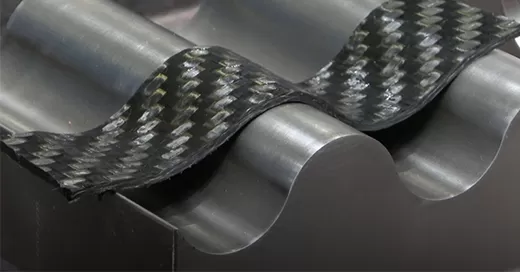
EurecatIG2025-12-17T15:15:24+01:00Towards a more sustainable future with biobased vitrimeric resins. BioVit develops vitrimeric resins from natural resources for the production of high-performance composite materials, offering sustainable solutions for industry. Vitrimers combine the mechanical properties of thermoset polymers at low temperatures with the malleability of thermoplastic polymers at high temperatures, allowing not only their use in advanced applications, but also their reuse or recycling at the end of their useful life. BioVit adapts the synthesis of vitrimeric resins to produce large batches suitable for the manufacture of composite material parts on an industrial scale. This adaptation ensures that [...]

H3MOV
EurecatIG2026-07-09T08:53:18+02:00Type III compressed hydrogen tanks for collective mobility using high-cadence processes. H3MOV develops high-cadence production processes to provide innovative solutions for compressed hydrogen storage, to address the high cost and low efficiency of current manufacturing methods. The project focuses on type III compressed hydrogen tanks, which, although not the lightest for a given volume, have several advantages over type IV tanks, such as lower hydrogen permeability and simpler sealing systems for the tank nozzles. Due to their slightly higher weight, these tanks are currently used in collective mobility vehicles, such as buses and trains. H3MOV focuses [...]

Polymers-5B
EurecatIG2025-12-17T15:16:04+01:00Turning agri-food waste and biomass into sustainable polymers. The Polymers-5B project develops novel alternative biological polymers synthesized from biobased monomers sourced from underexploited second-generation feedstocks, such as agri/food waste and biomass, obeying the food first and cascading principle. Polymers-5B brings together cutting-edge technologies and knowledge to develop and drive innovation in biocatalysis and green chemistry processes, generating novel bio-based polymers like polyesters and polyamides with pendent functional groups (e.g. hydroxy, carboxylic, amine, epoxy, thiol, etc.), polyphenols and polyfurans, which mimic fossil-based polymers properties, targeting improved biodegradability. These new polymers will be blended to provide valuable bio-composites [...]

EvoRoads
EurecatIG2025-12-19T10:14:49+01:00Enhancement of road safety across Europe. The EvoRoads project accelerates the attainment of the Vision Zero EU goal through a holistic framework of innovative models, tools and services that enable data-driven evolution of safety assessment frameworks, facilitate dynamic monitoring of cyber-physical infrastructures and promote the proactive warning for safety risks in complex environments. At the operational level, EvoRoads defines safety criteria and KPIs quantification methodologies covering the entire spectrum of the “Safe System” approach and develops a connectivity platform where transport infrastructure assets are digitalised and safety assessment services are functioning in a harmonious way. The [...]

DASIT
EurecatIG2025-12-17T15:16:18+01:00Creation of a cyber-physical device that monitors and optimizes the plastic injection process. The DASIT project develops a cyber-physical prototype that allows real-time and remote monitoring of the injection process, obtaining direct data from sensors embedded in the mould and indirect data through a device connected to the mould. The device powered by DASIT is energy efficient, by integrating an energy harvesting system, and has a geolocation system through the implementation of advanced technologies to track the location of the molds. It is a cloud-connected wireless device with a low-cost approach. In addition, data quality validation [...]

PHASAL
EurecatIG2026-02-17T17:55:13+01:00Development of new biodegradable plastic formulations for the biomedical sector. The PHASAL project develops different bioplastic formulations that introduce PHB-HV with different loads of hydroxyvalerate (-HV) from the revaluation of organic waste. The objective is that these formulations, applicable to the health field, present advanced biodegradability and biocompatibility properties to minimize the environmental impact they present due to their poor recyclability. In this sense, PHASAL develops a complex rigid packaging system, such as a suture kit, and a direct medical application with controlled drug release, such as a transdermal patch. The new advanced formulations developed during [...]

GIANCE
EurecatIG2026-02-17T17:18:40+01:00Pioneering sustainable solutions based on graphene to address environmental challenges. The GIANCE project establishes a holistic, integrative and industry-driven platform with a clear focus on the improvement of sustainable materials and their real-world applications. In this sense, GIANCE designs, develops and scales the next generation of multifunctional composites, coatings, foams and membranes based on graphene and derived materials (GRM), so that they are profitable, sustainable, lightweight and recyclable. These advanced materials are designed to improve their performance, such as their thermal, mechanical and chemical properties, offering functionalities such as wear resistance, corrosion resistance, chemical and fire [...]

HIDROGENIA
EurecatIG2025-12-17T15:17:04+01:00Design, manufacture and experimental validation of a tank to store hydrogen at high pressure. The HIDROGENIA project develops and validates to TRL 5 a type IV tank to safely store hydrogen at high pressure (700 bars). These types of tanks are already manufactured today, but they present permeability problems because the materials used do not have a sufficient barrier effect against hydrogen passage. Eurecat participates in the HIDROGENIA project through different Technological Units: The Product Development & Multiphysics Simulation Unit designs the interior liner and calculates the tank based on the numerical simulation of the different elements of [...]

LEGATO
EurecatIG2025-12-19T10:15:34+01:00Development of organic photovoltaic modules (OPV) with high efficiency, transparency and 3D integration in plastic parts. The objective of the LEGATO project is to unveil the design and processing aspects that remain unexplored to enable the production of OPV modules with enhanced light use efficiency (LUE) and 3D integration. LEGATO contributes to the improvement in energy performance of organic photovoltaics at affordable costs by implementing high throughput manufacturing processes, including a versatile laser patterning methodology. Its main ambition is to conceive new design and processing guidelines for the advanced manufacturing of OPV modules. Research and innovation [...]

FUSE3D
EurecatMV2025-12-17T15:17:21+01:00Improvement of shaping systems for the deposition of semi-molten materials, applicable mainly to plastic, metallic or mixed materials (plastic, metallic, ceramic and inorganic). The FUSE3D project develops new technologies for the deposition of semi-molten material with the aim to improve the adhesion between layers of material and increasing its strength, combining different materials when printing to obtain different surfaces and be able to create geometries with more height. The innovation promoted by the project allows to carry out studies, characterisations and optimisations of printing materials and processes. Moreover, the definition of the mechanical properties of the [...]