

Expert system for intelligent recommendation of audiovisual content for patients and professionals. The SERICAPP project develops an audiovisual content recommendation system capable of anticipating users' demands and adapting to the needs that may arise during their health and disease life course. This system takes into account the environmental data of the users, which will be changing depending on the environments where they reside, as well as the evolving data of their medical records, both genotypic and phenotypic. The development of this software as a service (SaaS) enriches existing ontologies automatically, ensuring operational human control and using deep learning [...]

NNDTC
EurecatIG2023-10-24T09:52:15+02:00Boosting the implementation of 5G technology. The NNDTC project implements radio frequency (RF) devices that allow the tuning of the radio frequency heads of mobile terminals, responding to the 5G technology implementation challenges by means of electromechanical microstructure manufacturing technology (MEMS). NNDTC proves, for the very first time, the feasibility of RF-MEMS in complementary metal-oxide-semiconductor (CMOS) substrate with the appropriate performance to undertake the antenna tunning function. The technological challenge is to provide solutions to the problems of reliability, encapsulation and electrical performance in standard manufacturing processes of conventional integrated circuits. A key aspect of NNDTC is the [...]

Aurea 4.0
EurecatIG2023-03-08T10:11:26+01:00Study, development and validation of a hybrid payment platform for the world’s leading clubs. The Aurea 4.0 project proposes a solution based on blockchain to guarantee the authenticity of all economic transactions generated by the world’s leading clubs, their immutability, privacy and scalability, as well as the number of transactions per second and minimising the cost per transaction. This payment platform guarantees that data cannot be falsified and that the custody and management services are secure, encouraging the generation of new services and markets for its customers, such as the introduction of NFT assets. Eurecat participates in the [...]

AGED
EurecatIG2023-03-10T14:44:38+01:00A digital system capable of analysing frail patient health data and developing an underlying health index using machine learning. The AGED project develops a solution based on software as a service (SAAS) that provides a single multivariate reading interpretation of the evolution of the mobility of a frail patient. This solution, called Ephion Vitality, integrates multiple sensors and variables thanks to machine learning systems to determine the efficacy of new treatments and the results of ongoing clinical trials in the field of frailty and associated health conditions and comorbidities. The new platform is intended to assess the functional [...]

HACDOS
EurecatIG2024-04-03T12:42:58+02:00Solar generation of hydrogen from wastewater in economical and scalable photocatalytic panels. The HACDOS project aims to design, produce and validate low-cost solar photocatalytic panels for hydrogen production from wastewater. This process entails the degradation of aqueous pollutants, mostly organic, through solar photocatalytic reforming in anaerobic conditions with concomitant hydrogen production. HACDOS is focused on scaling up the process and pilot-scale validation of this technology, using wastewater as raw materials and under natural sunlight. Among others, the key performance parameters monitored are pollutant removal, hydrogen productivity and purity, hydraulic residence time, and durability and robustness under [...]

THERASONAR
EurecatIG2023-03-10T09:18:36+01:00Development of a digital therapeutic intervention to treat acute stress. The THERASONAR project promotes a solution to combat acute stress made up of a back-office platform for professionals and a mobile application for final patients, preventing them from becoming chronic. To do this, THERASONAR develops a voice analysis technology using algorithms capable of recognising emotions to offer specific and personalised stress treatment programs through advanced audio formats to distribute them through an application. In addition, within the framework of the project, technologies for digital phenotyping, state-of-the-art sound therapy and clinical decision support for therapeutic personalisation are developed. The [...]

OPTIMA
EurecatIG2023-03-10T08:57:04+01:00Optimisation of photovoltaic technology for self-consumption in the building. The OPTIMA project develops innovative systems to make the most efficient use of solar energy applied to self-consumption in the building. The system proposed by OPTIMA presents competitive advantages regarding current roof-top installations: Greater electricity production per power and surface units, thus maximising the use of roofs. Greater linkage between the hours of generation and those of consumption, reducing energy dependence on the network and the necessary contracted power. Greater efficiency in energy conversion through the use of the latest generation Wide Band Gap (WBG) electronic devices, which has [...]
HIDROGENIA
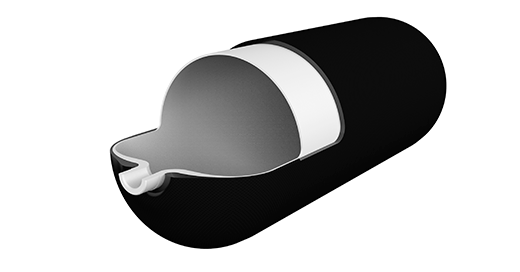
EurecatIG2025-12-17T15:17:04+01:00Design, manufacture and experimental validation of a tank to store hydrogen at high pressure. The HIDROGENIA project develops and validates to TRL 5 a type IV tank to safely store hydrogen at high pressure (700 bars). These types of tanks are already manufactured today, but they present permeability problems because the materials used do not have a sufficient barrier effect against hydrogen passage. Eurecat participates in the HIDROGENIA project through different Technological Units: The Product Development & Multiphysics Simulation Unit designs the interior liner and calculates the tank based on the numerical simulation of the different elements of [...]

FATHIS
EurecatIG2022-12-28T13:46:41+01:00New amino acid combination which acts as a new treatment against obesity and liver steatosis. The FATHIS project has the objective to develop a new therapy to ameliorate the obesity and non-alcoholic fatty liver disease (NAFLD) impact, as well their associated comorbidities. The World Health Organisation (WHO) defines obesity as an excess of fat accumulation in adipose tissues and in other metabolic organs, leading to serious health implications. Obesity is a rising issue whose prevalence has defined as a global pandemic being responsible of millions of deaths annually. Also, obesity is related with several comorbidities such as NAFLD, with [...]

THICK-COAT
EurecatIG2023-02-08T10:28:26+01:00Treatment of the main problems and limitations currently identified in the field of PVD (Physical Vapor Deposition) coating technology to improve the mechanical performance and durability of components and tools used mainly in the metal-mechanic sector. The project develops an innovative PVD hard coating technology that allows high thicknesses of up to 100 microns to be achieved at high deposition rates (20 microns/hour), enabling its application in new industrial sectors that were previously unapproachable. This innovation constitutes a real, technically, economically and environmentally viable alternative to other coating technologies that, like hexavalent hard chromate, present serious [...]

FormPlate
EurecatIG2026-03-06T14:14:22+01:00FormPlate seeks to optimise the energy efficiency, cost and durability of metallic bipolar plates, a key component to guarantee the energy efficiency of proton exchange membrane (PEM) hydrogen fuel cells for application in the automotive sector. The technological innovation of the project is based on: New geometric plate designs by Finite Element Method (FEM) and Computational Fluid Dynamics (CFD) simulations. Development and improvement of plate manufacturing techniques. Implementation of alternative metallic materials to reduce the cost and weight of the plates. Development of protective, electrically conductive and corrosion-resistant coatings. The energy transition towards electromobility and sustainability [...]

e-LEAF
EurecatIG2023-01-09T16:49:26+01:00The objective of the e-LEAF project is to develop, from a patented experimental proof of concept, fuel cells to be used in hydrogen-powered vehicles. Using printed technologies, the project describes a novel fabrication methodology and Membrane Electrode Array (MEA) design flexible as a thin printed device with improved diffusion rate and reduced cost compared to conventional cell configuration. Lower vehicle emissions since 2008 have already reduced the number of deaths attributable to air pollution by thousands and returned billions of euros in public health benefits. However, only little progress has been made in reducing its climate [...]

FATIGA2
EurecatIG2023-07-03T14:20:20+02:00Development of a device for monitoring fatigue and effort in athletes of any level and condition to prevent injuries and health incidents, as well as optimise their performance. The FATIGA2 project aims to design and improve a wearable device made of sustainable materials capable of monitoring fatigue and effort in athletes, in order to optimise their performance and prevent the formation of injuries and health-related incidents. The device, which is attached to the body through an adhesive, measures the levels of lactate in sweat and the heart rate in order to know the level of the [...]

INFUNDA
EurecatIG2022-12-19T17:56:30+01:00Collaborative research to find solutions in the functionalisation of surfaces. The INFUNDA project is a collaborative research business initiative carried out by seven companies (KOSTAL, WALTERPACK, TOUS, MAIER, INECFI, FLUBETECH and GOIZPER), two of which are SMEs (INECFI and FLUBETECH), which have come together to combine their knowledge and provide solutions in the functionalisation of surfaces, both in plastic and metal components. INFUNDA is part of the latest generation of innovative enabling technologies that are at a basic level of maturity, identified by their high application potential, giving companies a differential position by giving way to [...]

LEGATO
EurecatIG2025-12-19T10:15:34+01:00Development of organic photovoltaic modules (OPV) with high efficiency, transparency and 3D integration in plastic parts. The objective of the LEGATO project is to unveil the design and processing aspects that remain unexplored to enable the production of OPV modules with enhanced light use efficiency (LUE) and 3D integration. LEGATO contributes to the improvement in energy performance of organic photovoltaics at affordable costs by implementing high throughput manufacturing processes, including a versatile laser patterning methodology. Its main ambition is to conceive new design and processing guidelines for the advanced manufacturing of OPV modules. Research and innovation [...]