Portfolio

LIFE MySOIL

2023-05-11T15:33:07+02:00

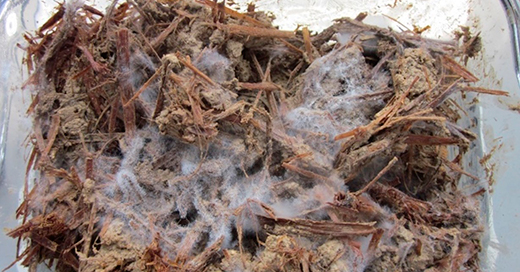
Improvements in mycoremediation technology for the recovery of contaminated soils. The LIFE MySOIL project develops a competitive and innovative technology to demonstrate the feasibility of mycoremediation to full-scale configuration. Mycoremediation is a type of bioremediation that uses fungal inocula to degrade (or accumulate) pollutants. The advantage of mycoremediation is that it retains the benefits of bioremediation treatments, including low economic, social and environmental costs, while increasing the removal efficiencies up to similar figures of thermal desorption. Mycoremediation is a very widely studied technology at lab-scale and there exists a few experiences at bench-scale, a paucity of information [...]

EMAPS-CARDIO

2021-11-02T12:38:21+01:00

Development of a new platform for growth and maturation of cardiac microtissues for adult-like organotypic models. The EMAPS-Cardio project proposes realistic heart models that can help to advance the understanding of several prevalent heart diseases, such as heart attacks and strokes, while striving to be sufficiently accurate to detect drug potency in both healthy and diseases tissues. To achieve this, biomimetic microenvironment, that provides all the needed stimuli, and biomechanical have been developed by combining electro-mechanoactive polymer-based scaffolds (EMAPS) with bioactive membranes. Currently, cardiovascular diseases (CVDs) account for 45% of deaths in Europe and are estimated [...]

ALTERNATIVE

2021-11-22T09:37:50+01:00

Development of an innovative platform based on aged cardiac tissue model in order to evaluate the environmental toxicology of chemical mixtures. The ALTERNATIVE project is developing an in vitro platform with the objective to culture a 3D functional human cardiac tissue to evaluate the cardiotoxicity of chemical compounds and the impact of toxic substances on the population, especially in elderly and people with chronic diseases. The novel developed platform will enable regulators and industry to identify, quantify and prevent cardiotoxic co-exposures to industrial chemicals and pharmaceuticals in a cost-effective way. Additionally, the implementation of computational models [...]

LIFE SOuRCE

2022-09-06T12:30:33+02:00

Sustainable on-site remediation technologies for per-and polyfluoroalkyl substances (PFAS) contaminated groundwater. The LIFE SOuRCE project aims to demonstrate an innovative cost-efficient and versatile remediation solution for PFAS contaminated groundwater, which is able to remove long-chain PFAS (> 99 %) and short-chain PFAS (> 95 %). The project represents an affordable solution covering the broadest range of contaminated site characteristics, for meeting the new EU Drinking Water Directive targets. PFAS substances are a group of highly persistent chemical antigens presents in the environment and in the human body, which are difficult to degrade and can accumulate over [...]

IMPETUS

2023-03-09T16:23:46+01:00

Dynamic information management approach for the implementation of climate resilient adaptation packages in European regions. The IMPETUS project aims at accelerating Europe’s climate change response and turning commitments into concrete action, developing innovative measures to make its regions more resilient. Moreover, the project explores the synergies between climate change mitigation, supporting regional socio-economic growth and stability, and transition of communities to ecological sustainability and resilience. Within the project, each of the 7 bioclimatic regions of Europe – Arctic, Atlantic, Boreal, Coastal, Continental, Mediterranean and Mountainous - host seven regional test beds where innovative solutions are piloted [...]

C3 Project

2021-09-14T16:18:02+02:00

Development of new alternative sources of animal feed to study the feasibility of obtaining feed and animal feed products for birds, based on alternative protein sources. The C3 Project formulates and develops animal feed products based on an alternative protein source such as insects. Moreover, the project aims to characterize in detail the nutrient composition of the by-products to identify and select those that allow maximum efficiency, and at the same time, optimize the by-product as a protein ingredient for the formulation of high biological value feed. The use of insects as an alternative protein represents [...]

BECA TORRES QUEVEDO

2021-11-03T14:39:20+01:00

Development and standardization of the mycoremediation of hydrocarbon polluted soils. The Torres Quevedo project evaluates the performance of this technology in a systematically manner with soils of different texture, with different inoculum substrates addition and under different environmental conditions (temperature and humidity). One of the main outputs of the project is the release of a mycoremediation implementation guide to help companies and organisations during the application of this treatment. Mycoremediation is a technique which is currently under development. One of the principal obstacles to become a reference technology is the lack of consensus on the ideal [...]

NEXOGENESIS

2022-01-14T15:02:42+01:00

Next generation of effective and intelligent water-related policies using Artificial Intelligence and reinforcement learning to assess the water-energy-food-ecosystem (WEFE) nexus. The NEXOGENESIS project aims to support the development of policies that manages resources effectively. To do so, the project is developing and validating a coherent cross-sectorial policy-making framework at different scales, addressing climate and socio-economic change, as well as stakeholder behaviour and transboundary (diplomacy) issues. This solution is developed for and validated by stakeholders, policy makers and academics. Using Artificial Intelligence and Machine Learning techniques, a Self-Learning Nexus Assessment Engine (SLNAE) will be developed to support [...]

CAPTACO2

2021-09-13T09:40:31+02:00

Development of a device for capturing atmospheric carbon dioxide (CO2) through a chemical reaction that converts carbon dioxide into carbonate with the objective to fight against climate change and reduce greenhouse gases in the atmosphere. The CAPTACO2 project develops an innovative device that uses special polysulfone membranes which manage to obtain a capture solution inside and produce the conversion of carbon dioxide into carbonate. During the first phase of development, the CAPTACO2 project has tested different membranes configurations and capture solutions in order to maximise the efficiency of the process. The most efficient configuration has been [...]

NUTRISCORE

2021-09-14T16:02:57+02:00

Development and classification of new healthier food products According to the level of nutritional labelling Nutriscore. The NUTRISCORE project aims to improve the nutritional classification of meat derivatives defined by the participating companies to achieve a better position with respect to competing products in the consumer. For this, it will be based on the development of ingredient formulation strategies and adaptations of the manufacturing processes of the SAME ones. The main objectives of the project are: Diagnosis of the current situation of meat derivatives according to the visual nutritional classification system Nutriscore. Identification of opportunities to [...]

EpiSars

2021-09-06T08:10:18+02:00

Development of tools to understand the dynamics of infection by SARS-CoV-2, and for other potential pathogens in the future, through the methodology of epidemiology based on the analysis of wastewater. The EpiSars project optimizes molecular methodologies for the monitoring and evaluation of SARS-CoV-2 in wastewater from different sources, such as hospitals, residences or livestock production. The new solutions promoted by the project contribute in the short term to the control and prevention of coronavirus transmission, to the identification of emerging strains, to the surveillance of virus circulation and the impact of the vaccine, thus improving health [...]

PECT EBRE BIOTERRITORI

2022-01-26T14:02:48+01:00

The Specialization and Competitiveness Project (PECT) Ebre Bioterritori promotes and facilitates the systemic transition (technical-economic and social), towards a model of sustainable exploitation of natural capital, articulating a stable innovation environment in the whole of Terres de l'Ebre (Baix Ebre, Monstià, Terra Alta and Ribera d'Ebre counties). The project is co-financed by the European Regional Development Fund (ERDF) of the European Union, within the framework of the ERDF Operational Program of Catalonia 2014-2020, an objective of investment in growth and employment. The systemic change driven by the project implies that the innovation structures are set up [...]

ARIES

2021-08-26T13:14:07+02:00

Artificial Intelligence (AI) embedded on surfaces and applications of the habitat sector. The ARIES project studies the combination of hybrid, flexible and rigid electronics with the application of gesture recognition technology, using Artificial Intelligence in products from the habitat sector with the objective to adapt and adapt them to the new needs detected in the market. In this way, the project also allows that these products become intelligent objects capable of being integrated into the Internet of Things (IoT), as well as connectivity 4.0, and responding to the concerns shown by the population related to the [...]

PECT BAGESS

2024-01-08T08:54:04+01:00

Creation of a dynamic ecosystem in digital health in Bages that generates a new model of more efficient and quality health and social care in the region, and that, at the same time, is exportable to other territories in a shared agenda format. The Specialization and Territorial Competitiveness Project (PECT) BAGESS “Big Data, Analytics, Management and Strategy in Health and Social”, has the objective of improving the quality of life and the social inclusion of people with dependency and chronic diseases, converting them into active agents of their own health. Additionally, the project promotes an economic [...]

SCORPION

2024-02-06T12:38:36+01:00

Development of safe, cost-effective agricultural mobile robots with smart precision spraying tools, mainly directed at vineyards but applicable to all permanent crops. The SCORPION project develops modular autonomous robots to bring value to small-size agricultural machinery through its automation and optimization of spraying tasks by novel ecological approaches, thereby reducing downtime costs, soil compaction, and human exposure to chemicals. The modular design used within the project considers the scalability of functions, allowing robots to further perform tasks such as pruning and harvesting, while being compliant on existing and future agricultural interoperability standards. Eurecat participates in the [...]

Go to Top