

Development of aluminum alloys with more than 90% recycled content. The ICARFA project, to obtain these aluminum alloys, establishes a methodology to obtain a constant quality from scrap metal, which results in a predictable casting process that reduces the need for primary material to balance out tramp elements. On the other hand, the project explores the limits of the alloy to comprehensively understand how chemical composition and tramp elements affect allow formability and service properties, being able to tailor the composition to requirements and applications. In addition, ICARFA explores technologies to increase formability of aluminium sheet, applying surface [...]

NNDTC
EurecatIG2023-10-24T09:52:15+02:00Boosting the implementation of 5G technology. The NNDTC project implements radio frequency (RF) devices that allow the tuning of the radio frequency heads of mobile terminals, responding to the 5G technology implementation challenges by means of electromechanical microstructure manufacturing technology (MEMS). NNDTC proves, for the very first time, the feasibility of RF-MEMS in complementary metal-oxide-semiconductor (CMOS) substrate with the appropriate performance to undertake the antenna tunning function. The technological challenge is to provide solutions to the problems of reliability, encapsulation and electrical performance in standard manufacturing processes of conventional integrated circuits. A key aspect of NNDTC is the [...]

HIDROGENIA
EurecatIG2025-12-17T15:17:04+01:00Design, manufacture and experimental validation of a tank to store hydrogen at high pressure. The HIDROGENIA project develops and validates to TRL 5 a type IV tank to safely store hydrogen at high pressure (700 bars). These types of tanks are already manufactured today, but they present permeability problems because the materials used do not have a sufficient barrier effect against hydrogen passage. Eurecat participates in the HIDROGENIA project through different Technological Units: The Product Development & Multiphysics Simulation Unit designs the interior liner and calculates the tank based on the numerical simulation of the different elements of [...]

THICK-COAT
EurecatIG2023-02-08T10:28:26+01:00Treatment of the main problems and limitations currently identified in the field of PVD (Physical Vapor Deposition) coating technology to improve the mechanical performance and durability of components and tools used mainly in the metal-mechanic sector. The project develops an innovative PVD hard coating technology that allows high thicknesses of up to 100 microns to be achieved at high deposition rates (20 microns/hour), enabling its application in new industrial sectors that were previously unapproachable. This innovation constitutes a real, technically, economically and environmentally viable alternative to other coating technologies that, like hexavalent hard chromate, present serious [...]
FormPlate
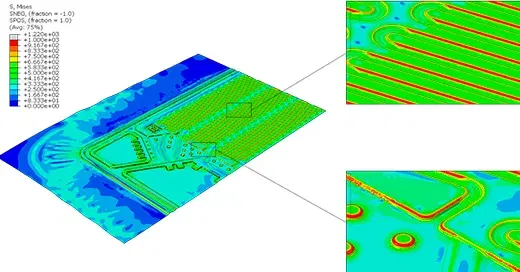
EurecatIG2026-03-06T14:14:22+01:00FormPlate seeks to optimise the energy efficiency, cost and durability of metallic bipolar plates, a key component to guarantee the energy efficiency of proton exchange membrane (PEM) hydrogen fuel cells for application in the automotive sector. The technological innovation of the project is based on: New geometric plate designs by Finite Element Method (FEM) and Computational Fluid Dynamics (CFD) simulations. Development and improvement of plate manufacturing techniques. Implementation of alternative metallic materials to reduce the cost and weight of the plates. Development of protective, electrically conductive and corrosion-resistant coatings. The energy transition towards electromobility and sustainability [...]

INFUNDA
EurecatIG2022-12-19T17:56:30+01:00Collaborative research to find solutions in the functionalisation of surfaces. The INFUNDA project is a collaborative research business initiative carried out by seven companies (KOSTAL, WALTERPACK, TOUS, MAIER, INECFI, FLUBETECH and GOIZPER), two of which are SMEs (INECFI and FLUBETECH), which have come together to combine their knowledge and provide solutions in the functionalisation of surfaces, both in plastic and metal components. INFUNDA is part of the latest generation of innovative enabling technologies that are at a basic level of maturity, identified by their high application potential, giving companies a differential position by giving way to [...]

INNOCAST
EurecatIG2022-12-16T15:23:28+01:00Solution to increase the useful life and quality of high pressure casting molds (HPDC). Project INNOCAST aims at developing an innovative physical vapor deposition (PVD) coating concept, based on nanostructured morphology to generate a complex layer of surface oxides to greatly reduce wettability and attack by molten aluminium on die casting tools. The project also investigates the use of ion implantation to modify the PVD coating, a highly innovative concept in the metal-mechanic sector that will allow the creation of phases with self-lubricating and wear-resistant properties. To validate the performance of these new solutions, a pilot [...]

FLEXCRASH
EurecatMV2026-02-17T13:22:39+01:00Flexible and hybrid manufacturing of green aluminium to produce tailored vehicle adaptive crash-tolerant structures. The Flexcrash project, coordinated by Eurecat, is developing a flexible and hybrid manufacturing technology using aluminium alloys and based on applying surface patterns by additive manufacturing onto preformed parts. In the last years, the automotive industry has made important efforts focused on lightweight construction to meet the stringent Greenhouse Gas Emission limits and increase passenger safety. However, both aspects are counteracting because we need heavier structures to improve passenger protection, but heavier vehicles also produce more severe crashes. In this sense, the [...]

LIFE PRISTINE
EurecatEG2026-09-08T09:58:15+02:00PRISTINE in a nutshell Removing Contaminants of Emerging Concern (CECs) from water streams thanks to the PRISTINE Integrated Solution ABOUT THE PROJECT LIFE PRISTINE project aims to develop the PRISTINE Integrated Solution to remove Contaminants of Emerging Concern (CECs) from water streams. The PRISTINE Integrated Solution will be adaptable on a case-by-case basis for drinking water (DW), to protect humans from CECs, and for wastewater (WW), to protect the environment and remove these contaminants from the water cycle. LIFE PRISTINE will focus on [...]

HELIX
EurecatIG2026-02-17T13:54:21+01:00Development and testing of fasteners able to withstand high applied stresses under harsh environmental conditions typical of large offshore wind turbines. The HELIX project provided lower cost (up to 20% reduction), high corrosion resistant (a minimum of 25 service years), high strength steel (10.9 and 12.9 grades) and high diameter (≥ M64) fasteners to the offshore wind industry to support the ever-increasing size of wind turbines, leading to higher productivity. HELIX used advanced characterisation and traditional techniques under both atmospheric and immersion conditions to advance in the knowledge of hydrogen absorption in high strength steels under [...]

ToughSteel
EurecatMV2026-02-17T15:19:08+01:00Valorisation, dissemination and awareness about the concept of fracture toughness, as well as its extension to other applications in the steel sector and to other industries working with Advanced High-Strength Steels (AHSS). The ToughSteel project involves and engages the main stakeholders around the steel sector with the objective to promote, disseminate and transfer the know-how acquired in previous projects about the use of fracture toughness as a tool to address cracking problems in forming and in-service performance of AHSS. The main objectives of the project are: Collect, organize and analyse the fracture toughness data measurements (from previous [...]
SALEMA
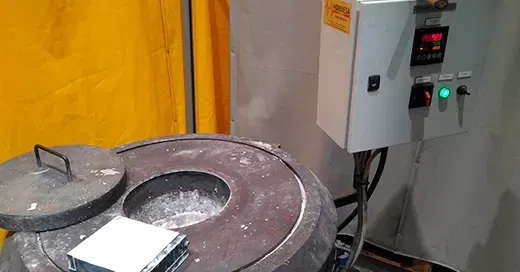
EurecatMV2026-02-17T14:59:51+01:00Development of an alternative source of Critical Raw Materials (CRM) on Aluminium Alloys for electrical vehicles. The SALEMA project, coordinated by Eurecat, proposes a circular economy model using scrap metal as an alternative source of CRM and the substitution of them for commonly available alloying elements. The project is addressing in a coordinated and cooperative manner the key challenges in the different levels of the value chain: Improving scrap classification and sorting systems to turn scrap into a valuable raw material Demonstrating the feasibility to substitute CRMs in alloying systems Developing recycled aluminium alloys with improved [...]
ReMove
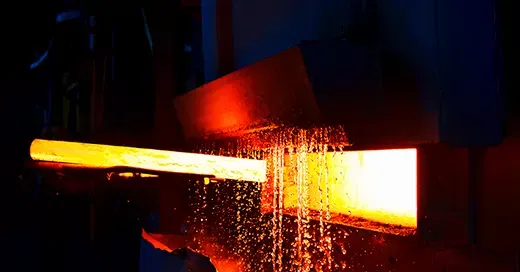
EurecatMV2021-04-13T14:06:44+02:00High-performance steels addressed to electric mobility sector obtained through the use of recycled material. Currently, the European industry and mobility is facing a two-pronged challenge: the need of obtaining materials with increasing performance and cost competitiveness, while at the same time, reducing their ecological footprint and foreign dependency. Affordable and indefinitely recyclable, high performance steel is an attractive solution to this conundrum. The ReMove project aims to obtain two advanced materials needed for electric mobility sector through material recycling routes: Boron steel for press hardening, a high-performance structural material which has become the current standard in [...]
VARTIP
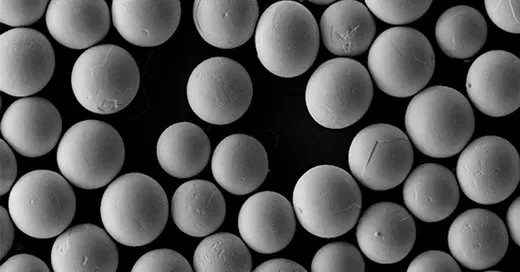
EurecatMV2021-02-26T08:25:06+01:00Recovery of titanium sheet waste to manufacture titanium metal powder through atomisation. The VARTIP project valorises titanium sheet metal waste with the objective to manufacture high-value titanium powder and promote its future commercialisation. In this sense, VARTIP is developing a centrifugal atomisation technology for high melting point metals, which will allow to manufacture spherical powders, an indispensable characteristic to accomplish in most of powder applications. The valorisation process consists in a direct transformation of the sheet scrap into powder by atomisation, without intermediate stages, which makes it a more energy-efficient and economically advantageous process. Eurecat participates [...]

MARBEL
EurecatMV2026-02-17T13:56:52+01:00Design, manufacturing and validation of the next generation of battery packs for the automotive mass-market. The MARBEL project develops an innovative and competitive lightweight battery with increased energy density and shorter recharging times with the objective to accelerate the mass market take-up of electric vehicles. The project innovation is based on the following main pillars: Advanced battery packaging using a Design for Assembly (DfA) and Disassembly (DfD) methodology. Lightweight and sustainable Battery Packaging. Solutions and processes for the sustainable dismantling and 2nd life Flexible advanced battery management systems. Ultra-Fast Charging strategies and enhanced thermal management Procedures for [...]