

Sustainable e-MeOH Production via Thermoelectrocatalytic Tandem Reactor. The THUNDER project, coordinated by Eurecat, develops a thermoelectrocatalytic tandem reactor for e-MeOH production from renewable energies, integrating CO2 and water capture and conversion in a single device through a “one-pot” process. The project combines co-electrolysis to generate CO and green H2 with CO2/CO hydrogenation to synthesize e-MeOH, overcoming the limitations of current systems in cost, energy consumption, and overall efficiency. THUNDER’s innovation lies in integrating all steps into a single modular system, using multifunctional membranes, advanced catalysts, and surplus heat recovery to optimize efficiency and reduce reliance on [...]

LIFE InBioSoil
EurecatIG2026-06-19T08:55:30+02:00Using fungi and bacteria to clean European contaminated soils. LIFE InBioSoil develops a new biological technology to decontaminate soils directly in situ, without the need for excavation, using fungi and bacteria that transform pollutants into harmless substances. The project offers a sustainable, efficient, and low-impact solution to restore polluted soils across Europe and drastically reduce the emissions associated with traditional remediation methods such as excavation or thermal treatment, which are also costly, energy-intensive and often destructive to the soil. LIFE InBioSoil combines low-pressure injection, mycoremediation, biosurfactants, and predictive functional genomics to demonstrate that it is possible [...]

WatEnerWine
EurecatIG2026-06-19T09:35:10+02:00Promoting sustainability in the European wine sector. WatEnerWine improves the efficiency of water and energy use in the European wine sector and other agri-food sectors, while promoting the use of renewable energy sources. The project develops a strategy focused on improving the support structures for the sustainable transition of the sector, including the creation of Green Transition Centers to advise wineries on the adoption of new technologies that optimise the use of resources such as water and energy. WatEnerWine also facilitates knowledge transfer within the industry through good practice guides and innovation catalogs, carrying out events [...]

EMPRÈN BIO 4.0
EurecatIG2026-06-19T12:23:11+02:00Technological and innovative entrepreneurship program in Lleida. EMPRÈN BIO 4.0 promotes technological and innovative entrepreneurship as a driver of new sustainable business models in Lleida. The project boosts the economic and business fabric through the bioeconomy and its value chains: agri-food, biomaterials, bioenergy, biofertilizers, biofuels, bioproducts, bioplastics and the economic and social valorisation of ecosystem services. EMPRÈN BIO 4.0 supports entrepreneurs through specialised training and mentoring to promote the creation and growth of companies based on innovation, technology and new business models in the field of bioeconomy. The objective is to promote the valorisation of renewable [...]

AGRIVAL
EurecatIG2026-06-19T16:21:24+02:00Development of a substrate with properties similar to conventional substrates, made from the by-products of the agri-food industry as an alternative to peat and/or coconut fiber. AGRIVAL identifies which by-products and mixtures from the agri-food industry have similar properties to peat and coconut fiber in order to generate sustainable and efficient substrates. Once characterised, the new substrates will be used in crops of local agricultural producers, particularly in strawberry and tomato crops, to assess their technical, economic, and environmental application. Currently, peat and coconut fiber are key components in the production of agricultural substrates, as they [...]

LIFE CHANDELIER
EurecatIG2026-04-16T09:33:56+02:00Production of vehicular biomethane from agro-food waste in rural areas. The LIFE CHANDELIER project demonstrates an innovative solution for the production of high-quality vehicular biomethane in rural areas, using agro-food waste. LIFE CHANDELIER addresses one of the great environmental challenges of our time: the mitigation of climate change through the efficient and traceable production of biomethane, a renewable fuel with a significantly lower environmental impact than traditional fossil fuels. The project focuses on the integration of advanced technologies to improve the efficiency and reduce the cost of biomethane production, while ensuring the economic and environmental sustainability [...]

BIOFORIN
EurecatIG2026-01-29T16:50:12+01:00Thermochemical processes for the valorization of forest resources. BIOFORIN is a strategic project to promote the regional bioeconomy and climate resilience through the boost of research and the development of new applications of added value in the market. BIOFORIN brings together the entire value chain, from forest owners to end users, to generate a sustainable forest management model oriented towards industrial use. The initiative promotes a boost in the use of forest biomass, in the first instance for thermal use, generating at the same time an opportunity for a sustainable and resilient management of forest masses, [...]

PHASAL
EurecatIG2026-02-17T17:55:13+01:00Development of new biodegradable plastic formulations for the biomedical sector. The PHASAL project develops different bioplastic formulations that introduce PHB-HV with different loads of hydroxyvalerate (-HV) from the revaluation of organic waste. The objective is that these formulations, applicable to the health field, present advanced biodegradability and biocompatibility properties to minimize the environmental impact they present due to their poor recyclability. In this sense, PHASAL develops a complex rigid packaging system, such as a suture kit, and a direct medical application with controlled drug release, such as a transdermal patch. The new advanced formulations developed during [...]

AL-INVEST Verde Construcción
EurecatIG2026-06-19T17:25:26+02:00Strengthening and improvement of the chain of SMEs and their business organisations associated with the construction sector, which have or want to have an offer of sustainable products. The AL-INVEST Verde Construcción project promotes, trains and implements circular economy practices inspired by successful experiences in Europe. AL-INVEST Verde Construcción is carried out in the Metropolitan Region and the Los Lagos Region (Chile), although companies from neighbouring regions related to the construction sector can participate. The project works with two main types of SMEs: providers of products and services with sustainable attributes, with a particular focus on [...]

BatteReverse
EurecatIG2026-06-25T08:18:28+02:00Next generation of battery reverse logistics. The BatteReverse project develops a more efficient and universal method for battery discharge and first diagnosis. BatteReverse improves the safety of Li-ion batteries transportation by developing safety packaging with a monitoring system that can reduce thermal runaway risk. The project also boosts more advanced and precise methods for automated dismantling and sorting of battery components based on a safe and more efficient human-robot collaboration. In addition, BatteReverse develops a more precise and faster Remaining Useful Life assessment of battery modules for second-life applications based on acoustic testing and machine learning [...]
SALEMA
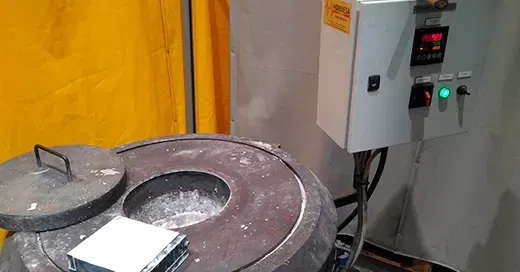
EurecatMV2026-02-17T14:59:51+01:00Development of an alternative source of Critical Raw Materials (CRM) on Aluminium Alloys for electrical vehicles. The SALEMA project, coordinated by Eurecat, proposes a circular economy model using scrap metal as an alternative source of CRM and the substitution of them for commonly available alloying elements. The project is addressing in a coordinated and cooperative manner the key challenges in the different levels of the value chain: Improving scrap classification and sorting systems to turn scrap into a valuable raw material Demonstrating the feasibility to substitute CRMs in alloying systems Developing recycled aluminium alloys with improved [...]

MARBEL
EurecatMV2026-02-17T13:56:52+01:00Design, manufacturing and validation of the next generation of battery packs for the automotive mass-market. The MARBEL project develops an innovative and competitive lightweight battery with increased energy density and shorter recharging times with the objective to accelerate the mass market take-up of electric vehicles. The project innovation is based on the following main pillars: Advanced battery packaging using a Design for Assembly (DfA) and Disassembly (DfD) methodology. Lightweight and sustainable Battery Packaging. Solutions and processes for the sustainable dismantling and 2nd life Flexible advanced battery management systems. Ultra-Fast Charging strategies and enhanced thermal management Procedures for [...]