

Co-creation of a citizen science toolkit for climate assemblies in living labs. The CLIMAS project aims to support a transition to climate resilience by co-designing an innovative problem-oriented climate adoption Toolbox, which relies on the application of a value-based approach, design thinking methods and citizen science mechanisms. CLIMAS will test the Toolbox in Climate Assemblies and Living Labs and formulate scientific-based guidelines for policymakers on how to shift Climate Assemblies from expert technically based deliberations to multi-stakeholder value-based dilemmas from a bottom-up and more societal perspective. The use of the Toolbox will anticipate possible tensions, points [...]
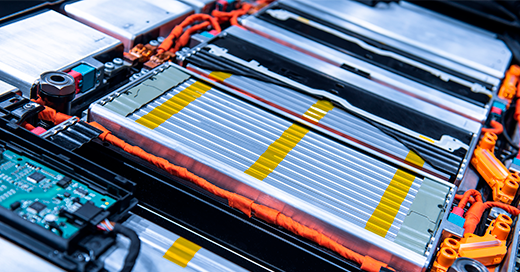
IntelLiGent
EurecatIG2023-11-29T13:02:56+01:00High voltage lithium batteries with a higher energy density, a faster charge and a longer useful life. The IntelLiGent project designs and develops electrode structures, supported by modelling, for a high energy density (>350 Wh/kg) while maintaining fast charging capacities (>2C). IntelLiGent balances the need to include a high amount of active material in the structure of the electrode for high-energy while facilitating the transport of mass, power and heat for high-power operation. The project refines the strategies to stabilise the interfaces for a long cycle lifetime, focusing on the stabilisation of solid electrolyte interface (SEI) [...]
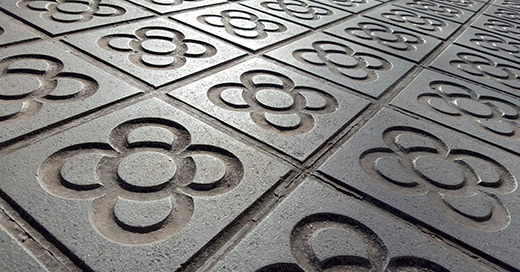
R3PANOT
EurecatIG2023-05-05T11:03:12+02:00The new panot of the XXI century. In 1906, Barcelona City Council ran a tender, which Escofet won, to standardise the designs of its “panots”, the paving stones that have fundamentally shaped the image of Barcelona's streets. One hundred and fifteen years later, through the BIT Habitat Foundation, it is launching a new challenge: “Rethinking the panot for the 21st century” to make it more sustainable while keeping its iconic design intact. The R3PANOT proposal, one of the three finalist projects presented by Escofet and Promsa, both companies from the Cementos Molins Group, and Eurecat, is [...]

OPADE
EurecatIG2023-11-29T12:59:37+01:00Identification of key biomarkers in major depressive disorder to support the decision-making process of healthcare professionals. The OPADE project focuses on the microbiota-brain axis, which plays a major role in mental health and, in particular, in major depressive disorders (MDD). OPADE studies the combination between genetics, epigenetics, metabolism, immune system, microbiome and inflammatory networks to: Establish patient profiles to predict and optimise the efficacy of the antidepressants prescribed with an increase in the remission rate. Establish the possible correlation between inflammatory markers, metabolomics, epigenomics, genomics, immune profile and microbiome with mental disorders. Evaluate molecular and non-molecular [...]

InnWater
EurecatIG2023-11-29T12:51:02+01:00Social innovation to renew multi-level and cross-sectoral water governance. The InnWater project responds to the need to find sustainable solutions for arbitrating water uses that take into account the realities of the field facing the challenges of climate change. The strength of the project lies in the close collaboration with the five pilot sites on Réunion Island (France), Brenta (Italy), Figueres (Spain), West Country (United Kingdom) and Middle Tisza (Hungary). The challenge is to progressively expand the target group of the pilot sites to develop a community of practice on the new modes of governance adapted [...]

VISIRIA4.0
EurecatIG2023-04-28T13:15:24+02:00High-performance sensor for an industry 4.0 with zero manufacturing defects. The VISIRIA4.0 project develops vision technology to establish a constant line of information that allows any industry to improve its production processes, thus reaching manufacturing with zero defects. VISIRIA4.0 develops a new high-performance sensor that works in the spectrum range 400 – 1700 nm. In this sense, the application of photonic technology will facilitate the automation of error detection in a non-intrusive and continuous way. This technology will be validated in two relevant industries such as textile knitting and plastic injection by silicone moulds. VISIRIA 4.0 [...]

SMARTHABIT
EurecatIG2023-04-28T08:05:15+02:00Development of an open, common, interoperable and easily scalable cloud platform that allows accelerating the deployment of new smart products in the habitat sector. The SMARTHABIT project develops a cloud-based platform that allows the integration of multiple sources of data and information from various smart habitat products, as well as from external sources, which allow adding value to their functionalities and utilities. SMARTHABIT will allow companies in the habitat sector to promote a broader adoption of emerging enabling technologies, simplifying collaboration with companies from technological sectors accustomed to these new value chains. In recent years, the [...]

COL_RES
EurecatIG2023-11-29T13:23:08+01:00Research on how intestinal microbiota fights against food-borne pathogens. The COL_RES network is made up of a group of world-leading researchers investigating the mechanisms by which the gut microbiota protects against serious foodborne pathogens (Salmonella, E. coli, Listeria, Citrobacter and Campylobacter). As a result, it will lead to the identification of new-generation probiotics that can protect against multiple infectious agents. Through cross-sectoral affiliations between industry and academia, the network offers state-of-the-art training for early-stage researchers (ESRs), preparing them for problem-solving and entrepreneurial roles in industry and society and supporting cutting-edge research in infectious diseases in the [...]
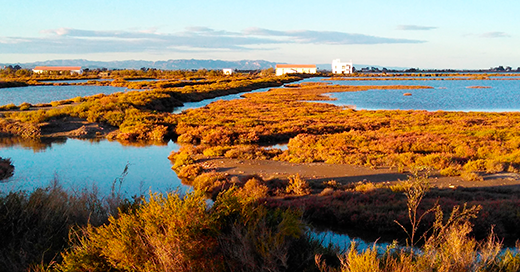
REST-COAST
EurecatIG2023-11-29T13:24:09+01:00Tools to address some of the key challenges of coastal ecosystems. The REST-COAST project demonstrates that upscaled coastal restoration can provide a low-carbon footprint solution for climate adaptation and disaster risk reduction for threatened coastal systems, combined with gains in their biodiversity and ecosystem services delivery. This solution is based on a "Restoration Revolution" to overcome current obstacles and improve coastal restoration interventions through new technical, financial, management and transfer tools, aligned with the needs of vulnerable coastal regions and society. During the project, hands-on restoration actions are developed in nine pilot sites, with different ecosystems [...]

e-Hospital4Future
EurecatIG2023-09-22T11:05:39+02:00Elevation of the educational process of health professionals, combining social, technical and digital skills modules. The e-Hospital4Future project creates, disseminates and implements training modules aimed at healthcare professionals in a hospital environment. E-Hospital4Future goes beyond the status quo of the capabilities of health professionals, innovating the contents and methodologies of the training programs for the target audience. The ultimate goal of the project is to promote the implementation of this type of training programs across Europe, including not only hospitals and other healthcare institutions, but also schools and universities. Eurecat participates in this project through its [...]

Improvement of honey production and obtainment of new honey-derived products with added value through the use of fungi
EurecatIG2023-04-19T09:59:41+02:00Improvement of bee immunity and honey production thanks to the supplementation of food based on fungi. This project investigates new food sources for bees that allow them to improve their immune system, promoting in parallel new honey-based products through the use of fungal extracts. Specifically, the project develops the following products: Two solid foods for bees based on fungal extracts to boost their immune system, thus increasing their defences against diseases. Two honeys improved with these foods, enriched with compounds present in the fungi or the metabolites that are formed during the passage through the bees' [...]
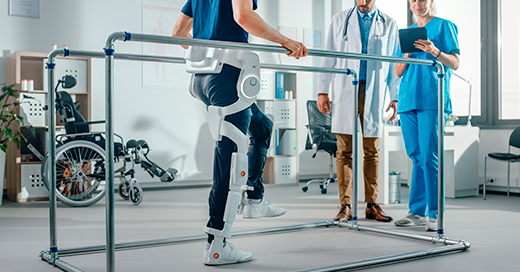
ABLE Human Motion
EurecatIG2023-04-27T11:51:50+02:00Collaboration in the development of the ABLE exoskeleton: light, easy to use and affordable, aimed at patients with spinal cord injuries. The ABLE Human Motion project helps people with paraplegia due to a spinal cord injury to stand up and walk independently again thanks to a wearable exoskeleton. ABLE uses a patented electrical actuator to flex and extend the knee during walking, mimicking natural human movement. The technology also includes inertial sensors that detect the user's intention to take a step forward. Spinal cord injury is a catastrophic event that pushes five million people worldwide into a life [...]

PEER
EurecatIG2024-04-04T11:04:19+02:00Enablement of a two-way communication flow with enhanced feedback loops between users and AI, leading to improved human-AI collaboration, mutual learning and reasoning, and thus increased user trust and acceptance. The PEER project focuses on how how to systematically put the user at the centre of the entire AI design, development, deployment, and evaluation pipeline, allowing for truly mixed human-AI initiatives on complex sequential decision-making problems As an interdisciplinary project between social sciences and artificial intelligence, PEER facilitates novel ways of engagement by end-users with AI in the design phase. PEER creates novel AI planning methods [...]

BatteReverse
EurecatIG2023-11-29T12:24:15+01:00Next generation of battery reverse logistics. The BatteReverse project develops a more efficient and universal method for battery discharge and first diagnosis. BatteReverse improves the safety of Li-ion batteries transportation by developing safety packaging with a monitoring system that can reduce thermal runaway risk. The project also boosts more advanced and precise methods for automated dismantling and sorting of battery components based on a safe and more efficient human-robot collaboration. In addition, BatteReverse develops a more precise and faster Remaining Useful Life assessment of battery modules for second-life applications based on acoustic testing and machine learning [...]

HIPERMAT
EurecatIG2023-04-13T16:28:05+02:00More sustainable furnace components through advanced design and continuous component monitoring for material and coating development. The HIPERMAT project promotes strategies and tools for the efficient development of new alloys and components that operate in high temperatures and corrosive environments. HIPERMAT includes the integration and validation of these materials through advanced manufacturing technologies in high-performance final components. These components will have an extended useful life with greater efficiency, which allows reducing the consumption of energy and raw materials. Hot stamping is a key transformation process in the transition to emission-neutral mobility, as it enables lighter automotive [...]