

Innovative and affordable solutions for advanced car body shells manufacturing and lightweight material strategies for railways, innovative doors and train modularity. The CARBODIN project, coordinated by Eurecat, has the objective to contribute to the next generation of passenger trains that will be lighter and more energy and cost efficient than the current ones. An important step for that is the use of composite technologies, which still face barriers for full implementation such as their high cost. Another important aspect is the modular design of interiors and low-cost manufacturing of vehicles part. The Composites Materials Unit of Eurecat [...]

DECODE
EurecatMV2019-12-02T10:53:40+01:00With the generalization of Internet’s usage, thousands of data are created daily. The European project DECODE is a response to people’s concerns about a loss of control over their personal information on the internet and has the objective to develop a new model for the treatment of online data in which individuals are in control of what happens to their personal information and with who they share it. DECODE’s tools allow the user to recover sovereignty on their data. These tools combine the blockchain technology with cryptography in order to help building a trusted digital society [...]
SCOREwater
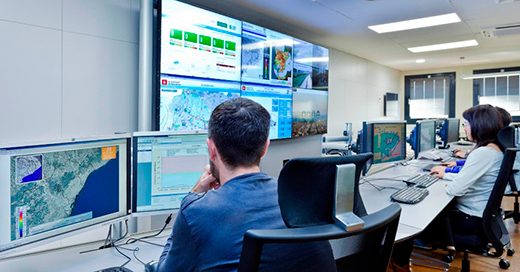
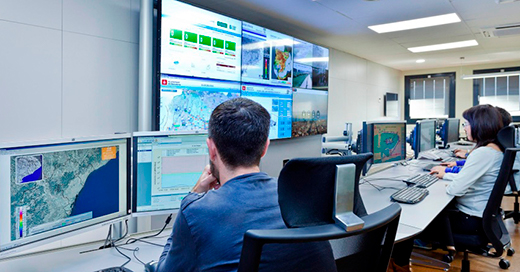
EurecatMV2019-11-27T14:18:33+01:00Sensors and digital tools to improve the management of waste water, storm water and flood events. SCOREwater project aims at enhancing the resilience of cities against climate change and urbanisation by enabling a water smart society. SCOREwater develops and uses digital services for cities, such as the FIWARE platform, methods, games, immersive experiences and other digital tools that increase public and civil society’s commitment to water management. Tools and digital services are developed and tested by relevant stakeholders, including communities, companies and civil society in cooperation with developers and adapting to stakeholders’ needs. The innovation of [...]
effiPRESS
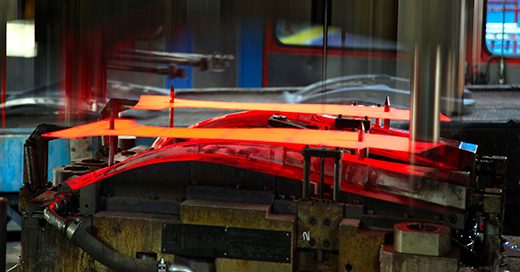
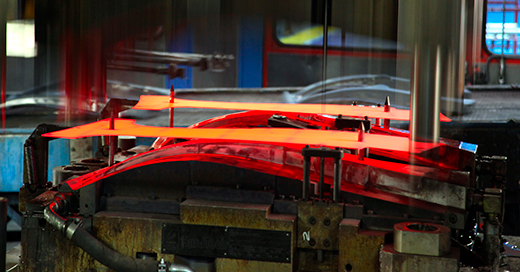
EurecatMV2019-11-27T07:19:21+01:00The objective of effiPRESS project is to characterise and develop hardening processes of greater efficiency and sustainability through hot stamping and the implementation of high strength steels (DOCOL®) and high thermal conductivity steels (HTCS®). Within the framework of the project, addressed especially at the automotive industry, investigations of the assisting heating and cooling processes and sheet forming are aimed at ensuring the comprehensive industrial applicability of the effiPRESS project. The innovation developed during the project has reduced processes times up to 10% by integrating steels with greater resistance into optimized tools with a higher thermal conductivity; [...]

CuttingEdge 4.0
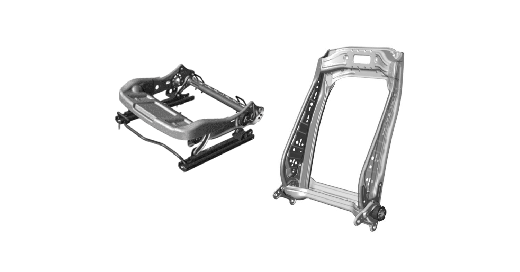
EurecatMV2026-02-17T12:23:31+01:00Novel material characterisation and data driven analytics to predict and avoid edge-cracking in safety related automotive parts. Advanced High Strength Steels (AHSS) have become the dominant material choice for lightweight construction in the automotive and transport sector for its good in-service performance, manufacturability and recyclability. However, in these kind of materials some limitations in cracking resistance and formability appear, which may trigger edge-cracking problems that compromise part quality. CuttingEdge4.0 project develops experimental tools and digital twins for the cutting process and incorporate Industry 4.0 data driven analytics based on Artificial Intelligence and machine learning solutions. The [...]

ECORKWASTE
EurecatMV2019-11-22T09:24:31+01:00Recovery of waste generated by the cork industry through its use for the treatment of wastewater in the wine sector and its use as fuel to generate electricity, generating an integral plan for the improvement of waste management of the cork industry, within the framework of the circular economy. The LIFE ECORKWASTE demonstrates the efficiency of an artificial wastewater treatment wetland filled with cork granules. To achieve this, cork has been used as an absorbent material for the elimination of organic compounds and has improved the quality of the residual effluents from the wineries. In addition, [...]

POWER
EurecatMV2019-11-21T08:05:50+01:00Digital Social Platform (DSP) with the best practices and experiences in water management in the industrial, social and political fields, to share them with experts from the sector and citizens. The European project POWER develops a new free digital platform that allows consulting water management initiatives that are being promoted in different cities around the world and raising debates between experts and citizens, with the aim of raising awareness about the problem of water scarcity. The POWER platform app, which is also available in a web version, is structured in four main aspects that deal with [...]
CERORSOM
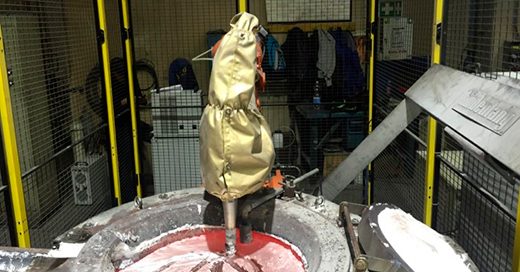
EurecatMV2019-11-19T11:36:01+01:00CERORSOM develops an innovative degassing technology based on the ultrasonic treatment of light metals to demonstrate, for the first time on an industrial scale, that ultrasonic degassing technology can be an efficient resource and environmentally friendly method to be used effectively in industrial conditions. CERORSOM means a significant improvement for the foundry sector of non-ferrous alloys, delivering a solution that improves melt quality by reducing the gas content and oxide formation between 80-90%, and with a reduction of the gas emissions to the environment by 80-100%, allowing the production of high added value casting parts. The [...]

iCUT
EurecatMV2019-11-18T12:47:28+01:00Integrative cutting solutions to produce high performance automotive components with high-manganese (HMnS) steel sheet. Currently, there is a lack of knowledge about the effects of the cutting processes on the mechanical properties and formability of HMnS. This complicates their extensive industrial application because non-optimized cutting could cause a dramatic reduction of part performance. A detailed investigation regarding the quality of the cut edge that determines fatigue and delayed fracture resistance is needed to face the industrial implementation of HMnS in structural vehicle parts. The iCUT project has the objective to describe the relationship between the cut [...]
MICROESENCI
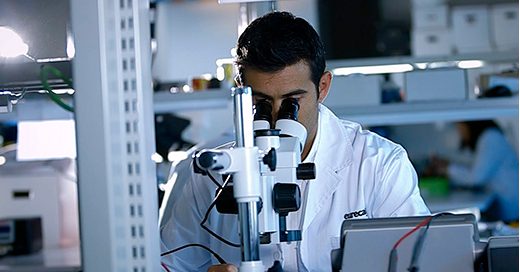
EurecatMV2019-11-18T08:19:31+01:00New microcapsules with antimicrobial and disinfectant effects for the sanitation of high-concurrency spaces. The Microesenci project investigates, develops and validates new microcapsules, which contain essential oils, with the objective to reduce the risks of infection in different risk situations and exposure spaces for vulnerable people, such as hospitals, elderly’s centres or collective transports. In addition, the polymers used in the microcapsules developed within the project are biodegradable and comply with the environmental policies of the European Union and the United States governments. Microencapsulation is a technology that allows applying active ingredients to different types of materials, [...]

StepUP
EurecatMV2019-11-12T10:32:22+01:00New deep energy renovation processes and methodologies to improve the energy performance and renovation of buildings. StepUP project aims to develop cost-effective solutions and technologies to transform the deep renovation market and make buildings decarbonisation a reliable, attractive and sustainable investment. To achieve this, StepUP uses continuous feedback loops and promotes an iterative deep energy renovation approach, based on Big Data, which minimises performance problems, reduce financial barriers and optimises investments. The solution developed by StepUP will target three different types of structures: multi-family residential dwellings, public non-residential buildings and rental private office buildings. Besides, the [...]

SESAME
EurecatMV2020-08-04T13:11:22+02:00Automation of the manufacturing process and operations of aerospace launchers to increase the number of units produced and reduce production time and cost. Currently, the production of aerospace launchers implies a complex process and multiple manual validation processes in order to guarantee the integrity and proper functioning of the launcher which causes a low volume of units manufactured per year. SESAME project develops Industry 4.0 solutions to digitalise the manufacturing of the new European launcher Ariane 6, with the aim to exploit the data of the process to ensure and guarantee the traceability and quality of [...]
PAPRIKA
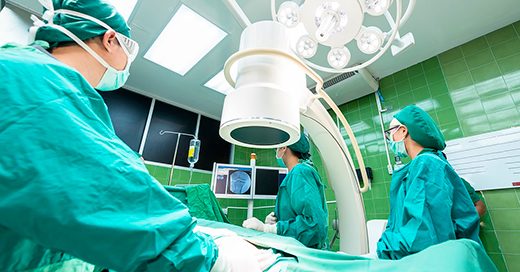
EurecatMV2019-11-06T09:24:35+01:00Personalised technological programme to prepare patients for surgery and provide follow-up, as a way to improve the outcomes of the operation. PAPRIKA project aims to improve the quality of life of patients who needs a surgery through a personalised program that allows a better preparation of the intervention, reduces postoperative complications and helps to improve the recovery, as well as a reduction in the hospitalization time and the costs associated with these interventions. The solution developed by PAPRIKA incorporates two digital solutions: an adaptive case management platform for professionals, integrated with the electronic health record (EHR) [...]

INNOBRAIN
EurecatMV2020-05-07T08:55:37+02:00Innobrain project has the main objective to investigate on new technologies for innovating in rehabilitation and cognitive stimulation treatments for patients with neurodegenerative and psychiatric illnesses. In particular, Innobrain’s solution will be addressed to patients with ABI (acquired brain injury), schizophrenia, dementia and bipolar disorder, some of the most common mental diseases in the Catalan society. The results of the investigation will allow to consolidate and reinforce the competitiveness of the Catalan Investigation and Innovation Community, englobing hospitals, companies and investigation centres, on the Guttman, NeuroPersonalTrainer®, a platform for cognitive stimulation. This tool offers personalized, intensive, [...]








SIMBIOTS
EurecatMV2021-09-09T09:51:20+02:00SIMBIOTS project, which reached its end date, facilitates the introduction of robotics in new industrial processes and applications thanks to the development of collaborative robots that facilitates the interaction of robots and operators without physical barriers. SIMBIOTS allows: The implementation of safe workspaces shared between robots and operators The improvement in the ergonomics of workers The reduction of the number of injuries and casualties resulting from the activity The increase in industrial productivity through sustainable manufacturing SIMBIOTS is a project of the Community Industries of the Future (IdF) of RIS3CAT coordinated by the Institute of Robotics and Industrial Informatics (IRI) with [...]