WAS

Technical feasibility study for IoT and AI R&D project applied to the water sector

2022-03-22T09:13:33+01:00

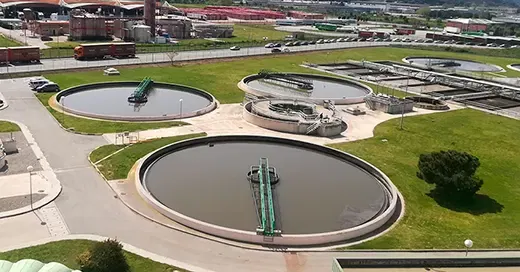
Technical feasibility study to evaluate the application of disruptive technologies in the water subsector. The IoT-IA CWP project aims to analyze how the application of the Internet of Things (IoT) and artificial intelligence (AI) can allow overcoming defined challenges in the water subsector. The beneficiary sector will be the Comprehensive Water Cycle Exploitation Services, which encompasses several points in the value chain and opens up the possibility of incorporating these technologies that will improve current decision-making and monitoring systems. Other goals of the project are to: Submit 2 R&D projects in regional, national or European financing [...]

SEAWIZARD

2022-03-15T11:11:27+01:00

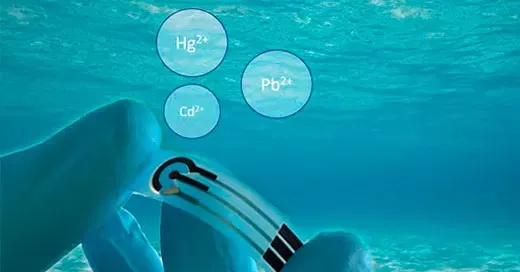
Development of a proof of concept to monitor heavy metals and interfering elements in seawater. The SEAWIZARD project aims to research and develop a proof of concept for monitoring heavy metals such as lead, mercury or cadmium in seawater, as well as key interfering elements such as temperature or pH, at much smaller temporal and spatial scales than currently possible. As a result, a new concept of marine environmental sensing will be built upon the convergence of dissimilar technologies, such as printed electronics, materials and environmental science and artificial intelligence (AI). This improvement will make it [...]

ALIMENTE21

2022-02-28T13:31:17+01:00

Boosting the food industry towards a more intelligent, predictive, prescriptive managent model with a lower environmental impact. The ALIMENTE21 project aims to increase the availability and efficiency of resources, both industrial and raw materials, of the food industry, as well as its production processes. This boost is applied to the multiple links of the value chain, while guaranteeing the safety and quality of procedures. The mission of ALIMENTE21 is to research and develop cutting-edge solutions based on artificial intelligence, big data, edge computing and digital twin, with the aim of advancing the food industrial organization towards [...]

BiMeSOIL

2022-02-10T08:27:09+01:00

Design of stabilisation and recovery technologies for metallic soil pollutants by means of native microorganisms. The BiMeSOIL project has the objective to revalue contaminated soils through a tailor-made in situ treatment design by using specialized native microorganisms in order to improve the leaching or stabilisation processes of problematic metals, such as lead, arsenic, chromium, cadmium or mercury. Soil characterization and directed biological research will lead to tailored in situ treatment processes through bioremediation (biomagnification and bioaugmentation) or mixed techniques (combined biological and physicochemical). These are some objectives of the project: Soil physical characterization. Contaminant identification. Biological [...]

PROMISCES

2022-05-03T12:06:58+02:00

Development of technologies to remove pollutants from soils, sediments, surface- and groundwater, that can be harmful to human health. The PROMISCES project develops, tests and demonstrates in the field, under real-life conditions, key technologies and innovations to monitor, prevent and remediate industrial persistent and mobile and potentially toxic pollutants in the soil-sediment-water system. At this sense, PROMISCES project identifies how industrial pollution prevents the deployment of the circular economy (CE) in the EU and which strategies help overcome key bottlenecks to deliver the ambitions of the European Green Deal and Circular Economy Action Plan. PROMISCES considers [...]

LIFE MySOIL

2023-05-11T15:33:07+02:00

Improvements in mycoremediation technology for the recovery of contaminated soils. The LIFE MySOIL project develops a competitive and innovative technology to demonstrate the feasibility of mycoremediation to full-scale configuration. Mycoremediation is a type of bioremediation that uses fungal inocula to degrade (or accumulate) pollutants. The advantage of mycoremediation is that it retains the benefits of bioremediation treatments, including low economic, social and environmental costs, while increasing the removal efficiencies up to similar figures of thermal desorption. Mycoremediation is a very widely studied technology at lab-scale and there exists a few experiences at bench-scale, a paucity of information [...]

LIFE SOuRCE

2022-09-06T12:30:33+02:00

Sustainable on-site remediation technologies for per-and polyfluoroalkyl substances (PFAS) contaminated groundwater. The LIFE SOuRCE project aims to demonstrate an innovative cost-efficient and versatile remediation solution for PFAS contaminated groundwater, which is able to remove long-chain PFAS (> 99 %) and short-chain PFAS (> 95 %). The project represents an affordable solution covering the broadest range of contaminated site characteristics, for meeting the new EU Drinking Water Directive targets. PFAS substances are a group of highly persistent chemical antigens presents in the environment and in the human body, which are difficult to degrade and can accumulate over [...]

IMPETUS

2023-03-09T16:23:46+01:00

Dynamic information management approach for the implementation of climate resilient adaptation packages in European regions. The IMPETUS project aims at accelerating Europe’s climate change response and turning commitments into concrete action, developing innovative measures to make its regions more resilient. Moreover, the project explores the synergies between climate change mitigation, supporting regional socio-economic growth and stability, and transition of communities to ecological sustainability and resilience. Within the project, each of the 7 bioclimatic regions of Europe – Arctic, Atlantic, Boreal, Coastal, Continental, Mediterranean and Mountainous - host seven regional test beds where innovative solutions are piloted [...]

BECA TORRES QUEVEDO

2021-11-03T14:39:20+01:00

Development and standardization of the mycoremediation of hydrocarbon polluted soils. The Torres Quevedo project evaluates the performance of this technology in a systematically manner with soils of different texture, with different inoculum substrates addition and under different environmental conditions (temperature and humidity). One of the main outputs of the project is the release of a mycoremediation implementation guide to help companies and organisations during the application of this treatment. Mycoremediation is a technique which is currently under development. One of the principal obstacles to become a reference technology is the lack of consensus on the ideal [...]

PROCEED

2022-04-20T11:52:12+02:00

Prediction and support system for the comprehensive management of the evolution and use of resources in pandemics situations. The PROCEED project aims to create an augmented epidemiological model to support decision-making through the collection, integration, and analysis of heterogeneous data sources (health, mobility, environment, wastewater and social). Within the framework of the project, a new system for predicting and supporting the comprehensive management of pandemics is developed and deployed, defined as a personalised infrastructure and offering tools that allow managers, clinical professionals and patients to access data, results, indicators, predictions and recommendation throughout the various stages [...]

iClimaBuilt

2023-11-22T09:36:18+01:00

Innovative insulating and energy storage materials in building envelopes that have climate adaption capabilities. The iClimaBuilt project develops and implements advanced energy technologies materials, with improved insulation and energy harvesting properties, for smart building materials which have the ability to adapt to a diversity of climates. On the other hand, iClimaBuilt updates and designs facilities called “Open Innovation Test Bed”, which provide the industry with services focused on the design, development, testing and validation of different technologies and materials for saving energy and reducing emissions. Additionally, to promote Nearly Zero-Energy Buildings (nZEB), the project will provide [...]

AquaSPICE

2021-02-18T14:15:33+01:00

Development and implementation of digital and circular water use innovations to promote a sustainable use of water and advancing sustainability process of industries. The AquaSPICE project aims at materialising circular water use in the European Process Industries, fostering awareness in resource-efficiency and delivering compact solutions for industrial applications, including water treatment and reuse technologies, as well as closed-loop recycling practices. The project is also developing a cyber-physical-system controller which includes a system for real-time monitoring, assessment and optimisation of water use and reuse at different interconnected levels. The project follows a systemic approach in water management [...]

GLOMICAVE

2022-03-31T11:27:11+02:00

New digital cloud-based genotype to phenotype platform relying on Big Data Analytics and Artificial Intelligence and using large-scale publicly available and experimental omics datasets. The GLOMICAVE project, coordinated by Eurecat, addresses the need to build systems that allow the use of primary data analytical processes and support large-scale omic experiments, thus maximising the utility of omic data at a massive level and increasing the understanding of biological systems as a whole. The new open platform developed by the project has the objective to assist experts and non-experts in identifying and understanding new links between genotype and [...]

LIFE INFUSION

2022-03-21T16:38:13+01:00

New waste effluent treatment system to convert and recover useful and sustainable resources such as biogas, bio-fertilizers and regenerated water. The LIFE INFUSION project demonstrates and validates a new wastewater treatment purification system, based on the circular economy concept, which allows to recover sustainable resources such as biogas, regenerated water, nutrients or bio-fertilizers. LIFE INFUSION project has the main objective of improving the current treatment of wastewater from municipal waste treatment, through a series of technological processes that do not destroy the nutrients contained in these waters. With this innovative solution, which combines various biological treatment [...]

MARBEL

2026-02-17T13:56:52+01:00

Design, manufacturing and validation of the next generation of battery packs for the automotive mass-market. The MARBEL project develops an innovative and competitive lightweight battery with increased energy density and shorter recharging times with the objective to accelerate the mass market take-up of electric vehicles. The project innovation is based on the following main pillars: Advanced battery packaging using a Design for Assembly (DfA) and Disassembly (DfD) methodology. Lightweight and sustainable Battery Packaging. Solutions and processes for the sustainable dismantling and 2nd life Flexible advanced battery management systems. Ultra-Fast Charging strategies and enhanced thermal management Procedures for [...]

Go to Top