

The MODEM project develops and tests demand prediction and management models to be implemented in the utilities sector (electricity, gas and water provision infrastructures). The project, geared towards developing solutions aimed at prosumers, identifies behaviour patterns and processes consumption data to generate tailor-made service strategies. As part of the MODEM project, new measurement technologies are implemented, along with artificial intelligence and machine learning techniques, to use existing resources in the most efficient way possible, thus guaranteeing a sustainable supply. The scope of the project covers the development of grid balancing and loss control (energy, water, etc.) tools, [...]

CAR2CAR
EurecatEQZ2019-04-15T11:06:34+02:00CAR2CAR-LOFE aims to develop a low-frequency (LF), V2V (vehicle-to-vehicle) communication system: a new type of network through which autonomous vehicles can communicate with each other to make more information available on their surroundings and improve safety for drivers in the event of an emergency, such as a road accident, an accident where a vehicle leaves the road, or an obstacle in the road. During the project, antennae and an innovative electronic communication system will be developed to maximise the communication distance between vehicles while fulfilling the requirements of this application and upholding safety standards. Meanwhile, to [...]

GENESIS
EurecatEQZ2019-04-01T09:36:39+02:00The GENESIS project develops a tool for an intelligent and sustainable control of smart home devices to achieve a better energy efficiency and cost reduction without compromising user comfort levels. During the project, demand prediction algorithms and algorithms for optimization and control of the use of energy are being developed and the flexibility in the client portfolio estimated, as well as a study on in which situations they can be applied for greater efficiency. The GENESIS solution, unlike other tools, allows energy consumers and producers / distributors to be connected, addressing their problems and needs within [...]
IGNITE
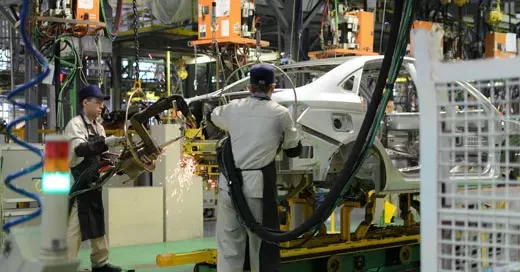
EurecatEQZ2020-12-04T10:58:48+01:00The IGNITE project has designed and developed an IoT (Internet of Things) platform for the centralised integration and management of all the equipment, systems and sensors that intervene in industrial production processes, guaranteeing the security of the industrial plant's information, both physically as well as in terms of communication. The project has also dealt with the introduction of intelligence into the machines so that they are able to act automatically in predefined events and the modification of interfaces to allow the integration of third-party services. The platform was based on advanced visualisation tools that enable all [...]
PISCIA
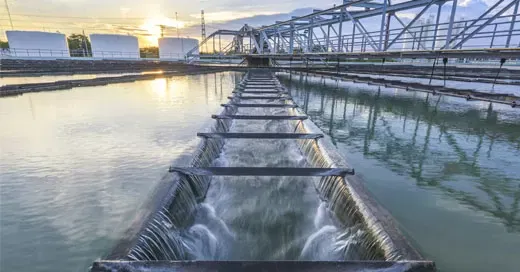
EurecatEQZ2019-04-01T10:00:01+02:00Smart platform where architecture of interoperable data from existing tools, systems, applications and devices will be deployed, which will ensure the simplified orchestration of integral management of water resources. The results of the PISCIA project will make it possible to homogenize the exchange of information and allow new events to arise, based on the information exchanged, taking a step towards cross-domain interoperability. Likewise, PISCIA will provide better water accounting (e-government), as well as increasing the competitiveness of the water industry, reducing its costs and losses due to inefficiency in management, due to lack of information. The [...]
AVINT
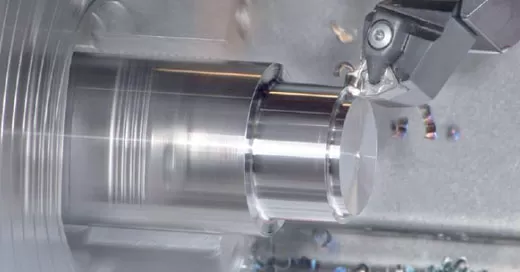
EurecatEQZ2020-12-04T10:51:12+01:00The AVINT project aims to develop and introduce an application for predicting the roughness and surface finish of mechanised pieces for their optimal surface integrity. In addition, the project will allow new products and pieces with added value to be obtained, such as mechanised tools, coverings for tools and lubricants/cooling agents. The project focuses its activity on optimising the efficiency of metallic mechanised processes, using simulation and optimisation tools and automatic learning for greater optimisation of the quality control and surface integrity of the components. AVINT is a project of the RIS3CAT Comunitat Indústries del Futur [...]

SCOuT
EurecatEQZ2019-04-01T10:34:05+02:00Modular management and decision-making support platform integrating devices, people and processes within one single environment to provide integrated comprehensive management of traceability, quality and industrial maintenance. The SCOuT platform will use artificial intelligence (AI), automatic learning and process mining, among other technologies, to develop predictive and prescriptive tools to be included within a system to support production and comprehensive management, traceability and maintenance of operations. These integrated technologies will identify scenarios in real time and predict their future systemic statuses, providing recommendations to adjust processes and preventive alarms, through monitoring, oversight, supervision and protection of the [...]

IMAQUA
EurecatEQZ2019-11-27T12:34:03+01:00The IMAQUA project develops monitoring and supervision tools allowing for integrated water management, from capture to the point of consumption, ensuring quality and minimising losses during distribution. The tools developed will be integrated within an ICT platform comprising a system capable of increasing operability and managing water infrastructure knowledge, tools to monitor and supervise pollutants offline and online (samplers, systems, cyber-physical systems), network supervision tools and support for decision-making so as to improve the efficiency of current management and planning strategies and display simulation tools to provide water managers with access to comprehensive information about all [...]

IoE Crops
EurecatEQZ2020-12-14T12:32:59+01:00The IoECrops project improves the productivity, efficiency and resilience of large-scale crop production by supporting agricultural management through the use of technologies based on the Internet of Things (IoT). Over the course of the project, sensors were installed and tractors, seed drills and bale harvesters were connected to the Internet along with the irrigation and fertilization systems used in different fields, in order to improve the productivity of large-scale crop production. The sensors used gateways located on the machines or in the fields themselves (all of which were located in Catalonia) to connect to a cloud-based [...]
REFER
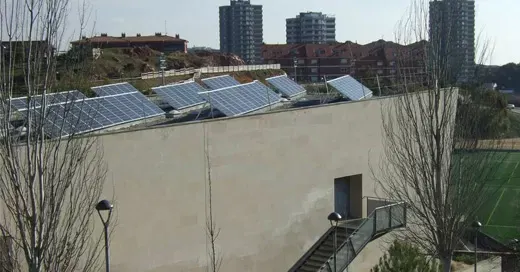
EurecatEQZ2019-02-01T09:09:19+01:00The REFER project promotes energy cost-reduction and greater efficiency in residential and service buildings by monitoring and optimizing the conditioning systems of residential buildings and, on the other hand, incorporating to service buildings intelligent and interoperable energy management systems and new innovative solutions for the generation and storage of renewable energy. During the project, energy measurement, generation and storage systems have been implemented, and more than 17 products have been developed, granting energy flexibility to buildings in ongoing rehabilitation processes. REFER has also allowed to improve technologies that participate in the energy flexibility of the buildings [...]
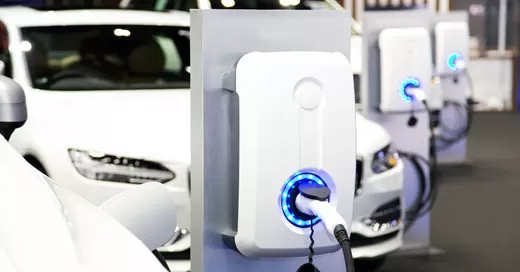
GREENCHARGE
EurecatEQZ2020-12-18T14:51:35+01:00GreenCharge project provides innovative cities with technological solutions and business models for cost-effective implementation and management of charging infrastructures for electric vehicles. On the other hand, it will provide a service for charge planning, including booking and billing for electric vehicle’s users. The GreenCharge system will be demonstrated and evaluated in Barcelona, Bremen and Oslo. GreenCharge will reduce the need for grid investments to establish new charging stations, remove range anxiety and enable the sharing of dedicated charging facilities. In the project, Eurecat is in charge of developing the charging management, improve the estimation of state [...]

STOP-IT
eurecatMP2019-11-13T08:35:00+01:00Technological tools for the analysis and prevention of risks in water supply infrastructures in order to counteract cyberattacks and natural hazards, verifying the effectiveness of current practices and to propose new complementary or palliative measures in order to foresee future threats. The technologies to be used and developed by STOP-IT project include mature technologies, like public warning systems and smart locks that are improved by their combination and embedment, and novel technologies such as high-volume real-time sensor data protection via blockchain schemes or efficient water contamination detection algorithms. The STOP-IT project, founded by the European Union’s [...]

LOGIMATIC
eurecatMP2023-01-24T10:05:04+01:00Logimatic developed a SLAM-based accurate localization and navigation system to automate the port logistics vehicles in order to increase the safety of workers, reduce the margin of error and improve the productivity and operational efficiency of loading and unloading tasks; featuring: Straddle Carrier retrofitting and automation. Autonomous navigation in free space with: obstacle avoidance, replanning, safety stop. Specialized planners: along container navigation. SLAM module (GNSS+lidar+odometry) with container model matcher. Integration with GIS-based Central Management System (CMS) interfaced to Terminal Operating System (TOS). The Logimatic system is protected against cyberattacks and combines a multi-constellation GNSS receiver with onboard [...]

INSITRATE
eurecatMP2019-11-13T07:49:28+01:00Denitrification of nitrate-polluted groundwater aiming the production of drinking water by using bioremediation. InSiTRate project develops a technology that uses the microorganisms already existing in the aquifer to transform the nitrates to nitrogen gas, process that permits the purification of the water. This technique, called as bioremediation, is less expensive than other current water treatments and does not need personnel to work, at the same time that allows to reduce more than 80 percent of the nitrates in each aquifer. During the project, a pilot plant has been set up in Sant Andreu de Llavaneres (Catalonia), [...]

RESSEEPE
eurecatMP2019-11-13T08:17:06+01:00RESSEEPE develops solutions and services to improve the energy efficiency of public buildings by using innovative retrofit technologies. It will lead to reduce the current energy consumption by half. These innovations are already tested in different real locations in Europe. During the project, a ventilated façade that generates electric energy though photovoltaic panels and improves the thermal behavior of the existing building using vacuum insulation panels (VIP) will be developed, as well as an aerogel-based superinsulating mortar and a wooden insulating wall panel. The innovations are being tested in four different real placements in the United Kingdom, [...]