Functional Printing & Embedded Devices

VIPO

2023-03-03T14:43:44+01:00

Design of a pruning shears prototype to improve the competitiveness of the wine sector. The VIPO project creates a technological solution to facilitate, through a virtual reality training tool, the incorporation of qualified personnel into vineyard tasks, contributing to improving the competitiveness of the wine sector. VIPO designs a pruning shears prototype with sensors that allows to simulate in a virtual environment an experience close to reality and the parameters of a real vineyard. Moreover, VIPO launches a training platform based on artificial intelligence, which is easily usable and customised, through which an introductory pruning course [...]

SYNATRA

2024-04-19T13:30:00+02:00

Development of transparent agrovoltaic systems using customised organic photovoltaics (OPV) with complementary light absorption for plant growth. The SYNATRA project revolutionises the field of agrovoltaics by integrating transparent organic photovoltaic modules with tailored light absorption into agricultural structures to stimulate a synergistic co-production of energy and plants. The customisation of semi-transparent OPV modules for specific agrovoltaic applications aims to achieve the optimal conditions for plant growth: controlled light intensity, light diffusion, spectral composition of light, homogeneous planting coverage and mechanical protection against aggressive elements such as hailstorms, wind or rain. The SYNATRA project contributes to increase [...]

SERPE4HAB

2024-07-03T10:22:53+02:00

Artificial Intelligence (AI) integrated into objects in the habitat sector. The SERPE4HAB project studies the combination of printed, hybrid and flexible electronics with the application of gesture recognition technology, through artificial intelligence, in products from the habitat sector, with the aim of adapting and adapting them to the new needs detected in the market. In this way, it is also possible for these products to become intelligent objects capable of integrating into the Internet of Things (IoT), as well as 4.0 connectivity, responding to the concerns expressed by of the population on their interaction with elements [...]

G_SensMalaria

2023-01-18T16:41:54+01:00

Development of a multiplexed, point-of-care, electrochemical biosensor for the quantitative detection of up to five diagnostic (HRP2 and LDH) and prognostic (ANG1, ANG2 and sTREM) malaria biomarkers. G_SensMalaria project aims to develop electrochemical aptamer-based (EAB) sensors using graphene-based printed inks. The use of EAB sensors allows to quantify biomarkers in less than five minutes, directly in undiluted blood. This is a unique technology that combines the properties of point-of-care sensors (speed and ease of use) with those of laboratory-based ones (quantification). Eurecat’s Functional Printing and Embedded Devices Unit is the responsible for the development of the [...]

Fab-4-Digital

2023-02-08T10:23:40+01:00

Digitalisation of two analog objects through the use of printed electronics manufactured on an industrial scale, on more sustainable supports and with a high degree of recyclability. For the first object, the objective is to be able to provide a book with digital functionalities, increasing its added value and its life cycle. The second case study aims to unify different measurements (temperature, humidity, movement) in a single product, with a higher technological level than can be manufactured with standardised components today. Eurecat participates in the Fab-4-Digital project through its Functional Printing and Embedded Systems Unit, responsible for [...]

AmpliSens

2023-03-17T14:54:19+01:00

Enhanced rapid tests for perinatal group B streptococci (GBS) diagnosis in pregnant women and their babies. The AmpliSens project addresses the development of a rapid and portable molecular test for the screen-out of neonatal sepsis caused by GBS in the blood or cerebrospinal fluid of the newborn, as well as for the screening of pregnant women. The product developed by the project, AmpliFast, relies on two modules: a battery-operated hand-held thermocycler to perform double-tagging end-point PCR in combination with a rapid diagnostic test platform consisting of a reader and a disposable cartridge. The diagnostic test is rapid and [...]

e-LEAF

2023-01-09T16:49:26+01:00

The objective of the e-LEAF project is to develop, from a patented experimental proof of concept, fuel cells to be used in hydrogen-powered vehicles. Using printed technologies, the project describes a novel fabrication methodology and Membrane Electrode Array (MEA) design flexible as a thin printed device with improved diffusion rate and reduced cost compared to conventional cell configuration. Lower vehicle emissions since 2008 have already reduced the number of deaths attributable to air pollution by thousands and returned billions of euros in public health benefits. However, only little progress has been made in reducing its climate [...]

FATIGA2

2023-07-03T14:20:20+02:00

Development of a device for monitoring fatigue and effort in athletes of any level and condition to prevent injuries and health incidents, as well as optimise their performance. The FATIGA2 project aims to design and improve a wearable device made of sustainable materials capable of monitoring fatigue and effort in athletes, in order to optimise their performance and prevent the formation of injuries and health-related incidents. The device, which is attached to the body through an adhesive, measures the levels of lactate in sweat and the heart rate in order to know the level of the [...]

INFUNDA

2022-12-19T17:56:30+01:00

Collaborative research to find solutions in the functionalisation of surfaces. The INFUNDA project is a collaborative research business initiative carried out by seven companies (KOSTAL, WALTERPACK, TOUS, MAIER, INECFI, FLUBETECH and GOIZPER), two of which are SMEs (INECFI and FLUBETECH), which have come together to combine their knowledge and provide solutions in the functionalisation of surfaces, both in plastic and metal components. INFUNDA is part of the latest generation of innovative enabling technologies that are at a basic level of maturity, identified by their high application potential, giving companies a differential position by giving way to [...]

LEGATO

2025-12-19T10:15:34+01:00

Development of organic photovoltaic modules (OPV) with high efficiency, transparency and 3D integration in plastic parts. The objective of the LEGATO project is to unveil the design and processing aspects that remain unexplored to enable the production of OPV modules with enhanced light use efficiency (LUE) and 3D integration. LEGATO contributes to the improvement in energy performance of organic photovoltaics at affordable costs by implementing high throughput manufacturing processes, including a versatile laser patterning methodology. Its main ambition is to conceive new design and processing guidelines for the advanced manufacturing of OPV modules. Research and innovation [...]

EChiLiBRiST

2023-11-29T11:42:40+01:00

Development and validation of a quantitative point-of-care test for the measurement of severity biomarkers to improve risk stratification of fever syndromes and enhance child survival. The EChiLiBRiST project has the objective of developing and validating a rapid triaging tool (RTT) based on endothelial activation markers to determine, objectively, quantitatively and with high precision those pediatric patients at risk of dying, so as to prioritise their care. During the first 2 years of the project, a laboratory prototype as well as develop a functional prototype to produce mini-series to test in the field will be developed and [...]

SmartLabels

2022-03-22T09:17:18+01:00

Development of smart labels using contactless technology. The SmartLabels project is an inter-cluster and trans-autonomous initiative with the aim of developing smart labels using contactless technology, to offer improvements in functionalities in the packaging sector such as product traceability or counterfeit control systems. To this end, NFC antennas have been developed using printed electronics taking into account the geometry of the packaging. An application has also been designed and implemented to read these antennas and verify the authenticity of the products. Eurecat participates in the project through its Functional Printing & Embedded Devices Unit, which has [...]

GAIAPrint

2022-08-18T09:53:36+02:00

Integration of organic solar cells and flexible batteries for the generation of green energy. The GAIAPrint project aims to produce flexible organic photovoltaic modules (OPV) with state-of-the-art materials for the production of clean energy, as well as to complement its storage with low-cost printed batteries. In this sense, the integration of these two emerging technologies in the field of printed electronics in ultra-low-power electronics systems is proposed in order to promote the generation of new, more autonomous and sustainable connected sensors. The development of ultra low consumption electronics will be carried out in a way that [...]

SEAWIZARD

2022-03-15T11:11:27+01:00

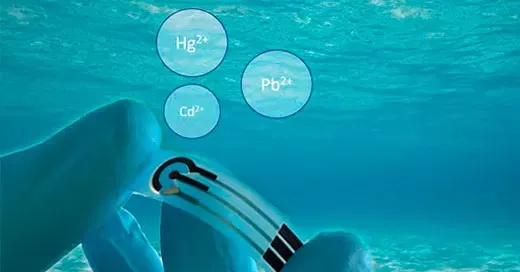
Development of a proof of concept to monitor heavy metals and interfering elements in seawater. The SEAWIZARD project aims to research and develop a proof of concept for monitoring heavy metals such as lead, mercury or cadmium in seawater, as well as key interfering elements such as temperature or pH, at much smaller temporal and spatial scales than currently possible. As a result, a new concept of marine environmental sensing will be built upon the convergence of dissimilar technologies, such as printed electronics, materials and environmental science and artificial intelligence (AI). This improvement will make it [...]

ALTERNATIVE

2021-11-22T09:37:50+01:00

Development of an innovative platform based on aged cardiac tissue model in order to evaluate the environmental toxicology of chemical mixtures. The ALTERNATIVE project is developing an in vitro platform with the objective to culture a 3D functional human cardiac tissue to evaluate the cardiotoxicity of chemical compounds and the impact of toxic substances on the population, especially in elderly and people with chronic diseases. The novel developed platform will enable regulators and industry to identify, quantify and prevent cardiotoxic co-exposures to industrial chemicals and pharmaceuticals in a cost-effective way. Additionally, the implementation of computational models [...]

Go to Top