

Smart solutions for relief from Musculoskeletal Non-Communicable Diseases (MSK-NCDs). SmILE develops smart solutions to reduce the impact of Musculoskeletal Non-Communicable Diseases (MSK-NCDs) in older people through prevention and early intervention, empowering patients to take charge of their health while alleviating the burden on healthcare systems. The project creates a universal chip platform that can be integrated into a wide range of medical devices, turning them into active data generators and enabling faster and more accurate diagnoses while supporting the rollout of innovative treatments. The collected data will be processed through an integrated patient-centred health platform, designed [...]

DiTEC
EurecatIG2026-02-27T12:10:50+01:00DiTEC researches and develops technological solutions based on data quality and new generative AI algorithms for the creation of innovative Digital Twins as key enablers of the autonomous factory and Industry 5.0. In the current context of industry, characterised by increasing complexity and competitiveness, the ability to innovate and optimize production processes is essential. Advances in digitalisation and the adoption of digital enablers such as the Internet of Things and AI have allowed the development of the digital twin: virtual replicas of physical systems that can simulate, predict and optimise their behaviour. The digital twin is [...]

AIR2LIFE
EurecatIG2025-02-19T09:14:52+01:00Automatic resuscitation for ventilation in cardiopulmonary resuscitation. AIR2LIFE develops an advanced automatic ventilation device designed to support cardiopulmonary resuscitation (CPR) in cases of sudden cardiac arrest. The innovative solution, led by Dipneo in collaboration with Eurecat, assists both professional and non-professional first responders by automating the ventilation process during CPR, optimising patient survival rates. Cardiac arrest is a leading cause of mortality globally, with survival rates decreasing by 10% for each minute without proper intervention. Current manual resuscitation devices require physical effort and trained personnel, limiting their effectiveness in emergency situations. AIR2LIFE addresses these limitations by [...]

RE-VALORA TERRITORI
EurecatIG2026-08-24T16:08:54+02:00Revaluation of products and co-products of the territory with differentiated nutritional value. RE-VALORA TERRITORI incorporates honey with different nutritional and rheological characteristics into new food products. The project revalues whey, fruit (apple and pear), legumes, honey and spirulina algae to obtain new food products. This revaluation of co-products is in line with the challenge and culture of reducing food waste. RE-VALORA TERRITORI considers circular economy as cooperation between food processors by supplying each other with ingredients and/or by-products to be revalued and, in this way, reducing the impact of the accumulation of by-products. The current situation [...]

AGRIVAL
EurecatIG2026-06-19T16:21:24+02:00Development of a substrate with properties similar to conventional substrates, made from the by-products of the agri-food industry as an alternative to peat and/or coconut fiber. AGRIVAL identifies which by-products and mixtures from the agri-food industry have similar properties to peat and coconut fiber in order to generate sustainable and efficient substrates. Once characterised, the new substrates will be used in crops of local agricultural producers, particularly in strawberry and tomato crops, to assess their technical, economic, and environmental application. Currently, peat and coconut fiber are key components in the production of agricultural substrates, as they [...]
CLIMASEQ
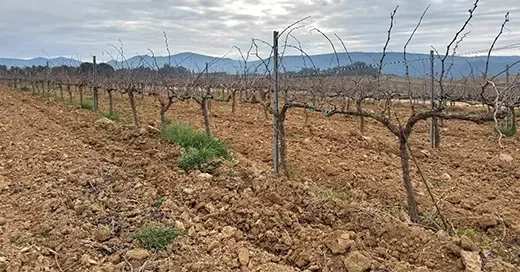
EurecatIG2026-06-19T16:42:28+02:00Irrigation management tool with alternative water sources for the resilience of fruit and vegetable farms. CLIMASEQ develops an advanced decision support system for irrigation, which integrates alternative water sources such as groundwater, rainwater and reclaimed water. This tool will help farmers efficiently manage irrigation in the short and medium term, optimising the use of water resources according to the specific needs of crops and water availability. In addition, it promotes sustainable management of water resources in the long term, taking into account future climate scenarios, and will improve the resilience of farms to climate change, especially [...]

Laia Health
EurecatIG2025-02-06T10:58:23+01:00Improvement of care and monitoring of anxiety and depression disorders in women during preconception, pregnancy and postpartum. Laia Health improves the approach to emotional disorders in women during maternity through a digital platform that acts as a training and support tool for both patients and healthcare professionals. Laia Health seeks to address the growing challenge of maternal mental health, an area where the prevalence of emotional disorders is high (1 in 4 women) and detection capacity remains very low (less than 25%). These disorders can affect the cognitive development of the baby in its first weeks [...]

LIVLAB-IN
EurecatIG2025-02-05T15:38:44+01:00Insecticulture and circular economy. LIVLAB-IN transforms agriculture and agroindustry through insecticulture and the principles of the circular economy. This project uses insect production as a solution for the valorisation of by-products, waste and plant residues, contributing to a more sustainable and profitable model in several links of the food chain, from the first transformation to the waste generated in food stores. Through this methodology, LIVLAB-IN proposes solutions to optimise the use of resources (breeding substrate, space, energy and water), to reduce greenhouse gas emissions and to take advantage of waste nutrients efficiently, helping to convert waste [...]

STEP-UP HORIZON EUROPE
EurecatIG2025-01-30T13:32:17+01:00Excellence in the execution of research and innovation projects participated by Eurecat and fundraising for their financing. STEP-UP HORIZON EUROPE captures resources for the funding of research and innovation projects participated by the centre, mainly through the R+D+i Framework Program of the European Union. Moreover, this initiative ensures excellence in the execution of projects, especially those coordinated by Eurecat. STEP-UP HORIZON EUROPE ensures the success of the entire strategy of the centre, increasing European research projects and achieving the growth that the territory needs. General details Project STEP-UP HORIZON EUROPE – STrategies for the Expansion [...]

CarbonSC
EurecatIG2025-12-17T15:14:58+01:00Disruptive carbon-fibre sternal closure system for fast and secure fixation of a sternotomy. CarbonSC develops and clinically tests a disruptive sternal closure compatible with mini-sternotomies that solves the main drawbacks of current technologies. In this sense, CarbonSC is the first cost-effective solution that fixes the sternum in a safe, fast and error-proof way, while avoiding bone damage. The main clinical innovations of the CarbonSC system are, on the one hand, designing a unique mechanism, integrated into the device itself, that ensures the application of a precise tightening force to close the sternum, and on the other [...]
BioVit
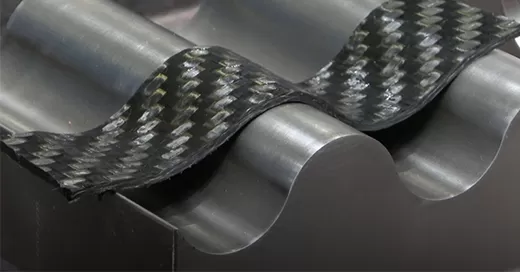
EurecatIG2025-12-17T15:15:24+01:00Towards a more sustainable future with biobased vitrimeric resins. BioVit develops vitrimeric resins from natural resources for the production of high-performance composite materials, offering sustainable solutions for industry. Vitrimers combine the mechanical properties of thermoset polymers at low temperatures with the malleability of thermoplastic polymers at high temperatures, allowing not only their use in advanced applications, but also their reuse or recycling at the end of their useful life. BioVit adapts the synthesis of vitrimeric resins to produce large batches suitable for the manufacture of composite material parts on an industrial scale. This adaptation ensures that [...]

H3MOV
EurecatIG2026-07-09T08:53:18+02:00Type III compressed hydrogen tanks for collective mobility using high-cadence processes. H3MOV develops high-cadence production processes to provide innovative solutions for compressed hydrogen storage, to address the high cost and low efficiency of current manufacturing methods. The project focuses on type III compressed hydrogen tanks, which, although not the lightest for a given volume, have several advantages over type IV tanks, such as lower hydrogen permeability and simpler sealing systems for the tank nozzles. Due to their slightly higher weight, these tanks are currently used in collective mobility vehicles, such as buses and trains. H3MOV focuses [...]

GEAR-UP
EurecatIG2025-01-30T10:51:34+01:00Revolutionising the manufacturing sector through sustainable practices and advanced technologies. GEAR-UP develops digital tools and methodologies that address recycled materials variability, covering stainless steel, aluminum alloys, and fiber-reinforced plastics for additive manufacturing (AM). The project employs simulation-driven approaches for optimising various AM processes, including laser beam-directed energy deposition, metal laser beam powder bed fusion, and fiber-reinforced polymer material extrusion. GEAR-UP emphasises environmental conservation by using recycled materials in engineering design, significantly reducing virgin resources, energy consumption, and greenhouse gas emissions. The project overcomes challenges associated with secondary materials, such as performance variability, through resilient design and [...]

EU4MEDTECH
EurecatIG2025-01-29T15:49:24+01:00Transforming the evaluation of high-risk medical devices and diagnostics in Europe. EU4MEDTECH revolutionises the generation and evaluation of clinical and performance evidence for high-risk, innovative medical devices (MDs) and in vitro diagnostic devices (IVDs) by co-creating and validating the versatile and lifecycle-oriented EU4MEDTECH framework. This framework addresses the challenges posed by the new EU Medical Devices Regulation (MDR) and In Vitro Diagnostic Medical Devices Regulation (IVDR), which, while ensuring higher patient safety, have increased regulatory burdens for stakeholders across the HealthTech value chain. The EU4MEDTECH framework will be operationalised through an interactive, cloud-based digital platform and [...]

Shift2Zero
EurecatIG2026-02-12T16:39:00+01:00A mission-driven system to create zero-emission electric vehicles optimised for urban logistics. Shift2Zero, coordinated by Eurecat, is developing innovative designs and functionalities for mission-specific, zero-emission N1 electric light commercial vehicles (e-LCVs) to address the evolving demands of urban logistics while reducing emissions and improving operational efficiency. Shift2Zero shapes zero-emission right-sized N1 concepts with enhanced and safe functionalities, including dual transport (people and freight), assessing the combined potential of novel design variants and logistics innovations to materialise user requirements in current and future missions. To further optimise logistics operations, Shift2Zero is integrating advanced cargo management solutions. These [...]