

Revolutionising post-3D printing treatments through the use of the DryLyte technology. DryTi3D research, studies and demonstrates strategies to obtain Ti6Al4V parts with improved surface quality in additive manufacturing for the biomedical and aerospace industries, optimising the dry electropolishing process. The project investigates a design of new solid-state electrolytes (with different electrolyte particle size, acid media and concentration), electrical parameters and polishing strategies to offer greater profitability and efficiency to the process. Dry electropolishing surface finishing process is proposed to be the most efficient surface treatment to produce mirror-like workpieces with tailored surface and near surface characteristics. [...]

IMPLICIT
EurecatIG2026-02-17T18:01:21+01:00Highlighting the lack of recycling of auxiliary materials used in the composite production. IMPLICIT develops a circular economy system for the recycling of auxiliary materials such as vacuum bags, breather fabrics and bleeding cloths, using a combination of mechanical, physical and chemical recycling methods to recover the original polymers. Despite advances in the recycling of the composites themselves, these auxiliary materials are primarily disposed through landfill or incineration. This poses a significant challenge to achieving the European Union's 2030 recycling targets. IMPLICIT seeks to close the life cycle of these auxiliary materials by reintroducing the recovered [...]

BIOntier
EurecatIG2026-06-19T11:36:04+02:00Breaking frontiers in sustainable and circular biocomposites with high performance. BIOntier creates an industrial platform to develop the new generation of multifunctional, sustainable, and recyclable bio-based composites (BioC) with enhanced properties for sectors such as automotive, aerospace, energy, and water treatment. The project promotes advanced manufacturing processes, improving synthesis and stability while reducing environmental impact. The initiative aligns with the UN Sustainable Development Goals and the EU Green Deal. BIOntier also fosters collaboration and establishes networks to tackle environmental challenges, demonstrating high-level industrial applications and opening new opportunities for BioC adoption in European industries. The global [...]

Local Products Hub
EurecatIG2026-06-19T11:38:02+02:00Program of technological and innovative entrepreneurship of proximity. Local Products Hub supports entrepreneurs through specialized training and mentoring to foster the creation and growth of companies based on innovation, technology, and new business models in the agri-food sector. The program promotes food production using local resources, linked to the values of the region, and fosters new, more innovative, digital, and sustainable business models. Specifically, the program addresses the entire value chain of the agri-food sector, including agricultural production, food processing, marketing, and logistics of agri-food products in the Empordà region. The program offers 100 hours of [...]

Benestar i Salut Girona Hub
EurecatIG2026-06-19T12:17:40+02:00Technological and innovative entrepreneurship program in Girona. Benestar i Salut Girona Hub supports entrepreneurs through specialised training and mentoring to promote the creation and growth of companies based on innovation, technology and new business models in the field of well-being, which includes food, health and sports. This progam promotes entrepreneurship in the wellness sector, based on innovation and technology and supports the creation of new companies and/or new products and services through levers, platforms, support and training that help to respond to challenges, needs and opportunities present in the territory. The program offers 100 hours of [...]

EMPRÈN BIO 4.0
EurecatIG2026-06-19T12:23:11+02:00Technological and innovative entrepreneurship program in Lleida. EMPRÈN BIO 4.0 promotes technological and innovative entrepreneurship as a driver of new sustainable business models in Lleida. The project boosts the economic and business fabric through the bioeconomy and its value chains: agri-food, biomaterials, bioenergy, biofertilizers, biofuels, bioproducts, bioplastics and the economic and social valorisation of ecosystem services. EMPRÈN BIO 4.0 supports entrepreneurs through specialised training and mentoring to promote the creation and growth of companies based on innovation, technology and new business models in the field of bioeconomy. The objective is to promote the valorisation of renewable [...]

UMBRELLA
EurecatIG2026-06-19T12:37:46+02:00Transforming stroke care through artificial intelligence and advanced digital technologies. UMBRELLA delivers faster, more accurate, and personalized stroke care, improving outcomes for over a million new patients annually in the EU and nearly 10 million survivors. To achieve this, the project collects real-world stroke patient data from various European hospitals and develops AI-driven predictive models to tailor diagnosis, treatment, and rehabilitation to each individual’s needs. Using a federated platform, hospitals can train and validate algorithms while preserving data privacy. The project tackles key challenges in stroke care: treatment delays, lack of personalisation, unequal access to care [...]

BlauCat
EurecatIG2026-06-19T14:14:25+02:00Current state and action plan for Blue Carbon in Catalonia. BlauCat analyses the state of blue carbon in the coastal ecosystems of Catalonia to assess its potential as CO₂ sinks and design conservation and restoration strategies. These ecosystems, which include wetlands and seagrass meadows, are fundamental for carbon sequestration and climate change mitigation, coastal protection, and marine biodiversity. BlauCat quantifies blue carbon reserves, identifies threats, and establishes monitoring tools that enable management based on scientific evidence. Additionally, the project lays the groundwork for its inclusion in carbon offset mechanisms and environmental policies in Catalonia. Through mapping, [...]

DEM-Debate
EurecatIG2025-04-03T12:05:13+02:00Insights from community-governed platforms to cultivate a resilient election information ecosystem in Europe. DEM-Debate studies the practices of community-governed platforms based on a distributed and transparent model of creating and sharing information online, and the lessons learnt about what works and what does not to improve transparency and resilience of the online information ecosystem. The project focuses in particular on the 2024 European election as a sensitive scenario, and on Wikipedia as a paradigmatic and especially relevant case of community-governed platform. Wikipedia is the largest existing free knowledge platform and the only non-commercial VLOP (Very Large [...]

Agrosimbiosis
EurecatIG2026-06-19T16:04:03+02:00R&D to help the agri-food industry face the challenges of climate change and increase its competitiveness. Agrosimbiosis addresses the competitiveness gaps associated with the challenges of the climate crisis in the agri-food sector through the development and adaptation of technologies. Within the context of this project, the R&D line "Obtaining high-value bioproducts from agroindustry" develops and validates a paste made from discarded walnuts for export, incorporating a microencapsulated polyphenol extract to improve its oxidative stability and promote its commercial viability. This study arises from the collaboration between the Center for Systems Biotechnology of the Andrés Bello [...]

NoNOx
EurecatIG2026-06-19T16:05:40+02:00New system for the treatment and removal of nitrogen oxide (NOx) from flue gases. NoNOx develops a new technology for the treatment of nitrogen oxides from industrial emission gases. Nitrogen oxides (NOx, including NO and NO2) are emitted by combustion processes in many industrial sectors (e.g., energy, thermal waste valorisation and steel industry). In terms of air quality, high emissions of NOx contribute negatively to the ecosystem and human health. Currently, industrial NOx emissions are treated by physical-chemical technologies (selective non-catalytic and selective catalytic reduction) that have high operational and capital costs and produce a great [...]

CO2 CAPTURIL
EurecatIG2025-03-18T12:23:07+01:00Innovative CO2 capture system for industrial integration in a renewable hydrogen plant. CO2 CAPTURIL develops an innovative CO2 capture system in methanol reforming, addressing the challenges of sustainable hydrogen production. Since this process generates significant CO2 emissions, CO2 CAPTURIL proposes an efficient solution based on advanced ionic liquid and porous polysulfone capsules technologies, improving capture capacity and reducing environmental impact compared to conventional methods. In addition to reducing emissions in hydrogen production, the project validates the versatility of high-purity captured CO2, using it in sectors such as the chemical and food industry. This raw material can [...]
COMECOCO2
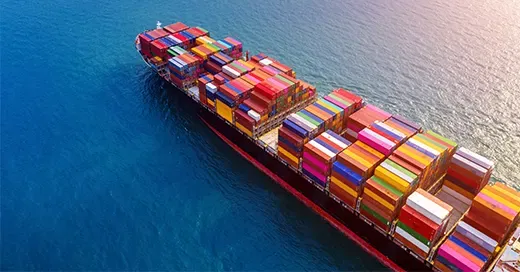
EurecatIG2025-03-05T10:31:07+01:00Renewable methanol for sustainable maritime transport. COMECOCO2 develops and validates an efficient system that integrates a high-temperature co-electrolyser (co-SOEC) and a catalytic reactor to produce competitive renewable methanol from CO2 captured from wastewater, reclaimed water and renewable electricity. This system, with application in maritime transport, will be validated in a laboratory environment and a preliminary validation will be carried out in a relevant environment, specifically in a wastewater treatment plant (WWTP). Despite the deployment of numerous emission mitigation policies through the use of renewable energy alternatives, sectors such as heavy transport continue to use almost exclusively [...]

INVASOR-ES
EurecatIG2026-06-19T16:09:01+02:00Resilience 4.0 of infrastructures and crops against invasive species. INVASOR-ES develops advanced technological solutions to combat invasive alien species (IAS) in hydraulic infrastructures, especially in irrigation systems. These species, such as the zebra mussel, the apple snail and bryozoans, generate serious problems in infrastructures: obstructions, breakdowns, high maintenance costs and loss of agricultural productivity. INVASOR-ES implements new technologies where the use of advanced monitoring sensors, combined with artificial vision and deep learning, will allow the precise and efficient identification and classification of different larvae of invasive species. The main result of this project is the creation [...]

BIOSAL
EurecatIG2026-06-19T16:11:38+02:00Application of biochar in regenerative agriculture. BIOSAL applies biochar in regenerative agriculture, promoting the circular bioeconomy and improving soil health. This initiative addresses significant environmental challenges, such as poor soil quality, dependence on chemical fertilisers and inefficient management of organic and forestry residues. Biochar, produced through the pyrolysis of plant residues, has the capacity to enhance soil quality, increase soil biodiversity and reduce the need for chemical inputs. Furthermore, it contributes to climate change mitigation by capturing carbon and improving soil structure. The project evaluates the properties of biochar and other organic amendments in compliance to [...]