

Co-creation of a citizen science toolkit for climate assemblies in living labs. The CLIMAS project aims to support a transition to climate resilience by co-designing an innovative problem-oriented climate adoption Toolbox, which relies on the application of a value-based approach, design thinking methods and citizen science mechanisms. CLIMAS will test the Toolbox in Climate Assemblies and Living Labs and formulate scientific-based guidelines for policymakers on how to shift Climate Assemblies from expert technically based deliberations to multi-stakeholder value-based dilemmas from a bottom-up and more societal perspective. The use of the Toolbox will anticipate possible tensions, points [...]

BiMeSOIL
EurecatIG2022-02-10T08:27:09+01:00Design of stabilisation and recovery technologies for metallic soil pollutants by means of native microorganisms. The BiMeSOIL project has the objective to revalue contaminated soils through a tailor-made in situ treatment design by using specialized native microorganisms in order to improve the leaching or stabilisation processes of problematic metals, such as lead, arsenic, chromium, cadmium or mercury. Soil characterization and directed biological research will lead to tailored in situ treatment processes through bioremediation (biomagnification and bioaugmentation) or mixed techniques (combined biological and physicochemical). These are some objectives of the project: Soil physical characterization. Contaminant identification. Biological [...]
PROMISCES
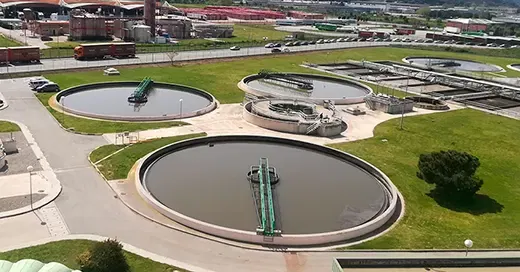
EurecatMV2022-05-03T12:06:58+02:00Development of technologies to remove pollutants from soils, sediments, surface- and groundwater, that can be harmful to human health. The PROMISCES project develops, tests and demonstrates in the field, under real-life conditions, key technologies and innovations to monitor, prevent and remediate industrial persistent and mobile and potentially toxic pollutants in the soil-sediment-water system. At this sense, PROMISCES project identifies how industrial pollution prevents the deployment of the circular economy (CE) in the EU and which strategies help overcome key bottlenecks to deliver the ambitions of the European Green Deal and Circular Economy Action Plan. PROMISCES considers [...]
BECA TORRES QUEVEDO
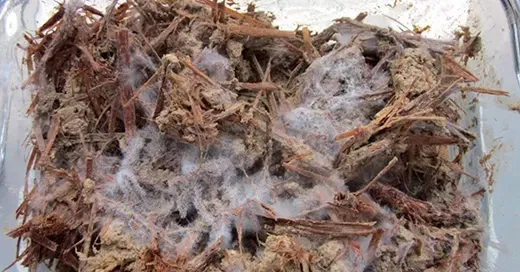
EurecatMV2021-11-03T14:39:20+01:00Development and standardization of the mycoremediation of hydrocarbon polluted soils. The Torres Quevedo project evaluates the performance of this technology in a systematically manner with soils of different texture, with different inoculum substrates addition and under different environmental conditions (temperature and humidity). One of the main outputs of the project is the release of a mycoremediation implementation guide to help companies and organisations during the application of this treatment. Mycoremediation is a technique which is currently under development. One of the principal obstacles to become a reference technology is the lack of consensus on the ideal [...]

PECT EBRE BIOTERRITORI
EurecatMV2022-01-26T14:02:48+01:00The Specialization and Competitiveness Project (PECT) Ebre Bioterritori promotes and facilitates the systemic transition (technical-economic and social), towards a model of sustainable exploitation of natural capital, articulating a stable innovation environment in the whole of Terres de l'Ebre (Baix Ebre, Monstià, Terra Alta and Ribera d'Ebre counties). The project is co-financed by the European Regional Development Fund (ERDF) of the European Union, within the framework of the ERDF Operational Program of Catalonia 2014-2020, an objective of investment in growth and employment. The systemic change driven by the project implies that the innovation structures are set up [...]
PECT HubB30 – Més enllà de la circularitat
EurecatMV2024-01-30T09:15:18+01:00Development of a network of labs in the territory (OpenLab) with the aim of converting them into a matrix which leads the transformation towards a sustainable research and innovation ecosystem. The Territorial Specialization and Competitiveness (PECT) project "HubB30, beyond circularity" is a pilot experience focused on Zero waste, which should allow design the methodology, the optimal structure and the Spaces to implement a new interaction model between the different actors of the Quadruple Helix (universities and research centers; administration; companies; citizenship) and the open innovation processes. The overall strategy of the project is based mainly on [...]

WAT’SAVEREUSE
EurecatMV2021-10-07T10:46:26+02:00Raising awareness of legislation on water saving and reusing to promote the circular economy in the tourism sector. The WAT’SAVEREUSE project overall objective is to explain the benefits of water legislation and national initiatives to promote the circular economy in water consumption, particularly in the tourism industry, targeting both water savings and water reuse, with a special focus on the Mediterranean environment. In the framework of the project, which counts with the participation of Eurecat’s Sustainability Area, different awareness raising campaigns addressing four identified target groups will be carried out. The action to achieve the main [...]

MADRAS
EurecatMV2025-12-19T10:15:49+01:00Development of novel materials and manufacturing processes for a high-volume production of OLAE devices. The MADRAS project, coordinated by Eurecat, has the objective to develop new materials and manufacturing processes for a scalable production in an industrial level of OLAE devices. The project addresses the use of conventional and established industrial manufacturing techniques and adapted processing tools to deliver this innovative technology closer to market. The use of organic and large area-electronics (OLAE) technologies and components have experienced a remarkable increase in recent years thanks to printed electronics technologies progress which offers solutions to develop OLAE thinner, [...]

LIFE SPOT
EurecatMV2020-01-23T16:01:22+01:00Development of a new process, based on microalgae treatment and cork filtration, able to remove nitrates and pesticides from polluted groundwater. The SPOT project, which has the objective to produce drinking water that meets the requirements established by the European Union, promotes the sustainability and resilience of animal farming and tourism sectors in rural areas through nature-based solutions. The Sustainability Unit of Eurecat participates in the bench-scale tests to define the operational conditions of the pilot plants and their monitoring as well as in their environmental, social and economic impacts evaluation. The project consortium, coordinated by [...]

ECORKWASTE
EurecatMV2019-11-22T09:24:31+01:00Recovery of waste generated by the cork industry through its use for the treatment of wastewater in the wine sector and its use as fuel to generate electricity, generating an integral plan for the improvement of waste management of the cork industry, within the framework of the circular economy. The LIFE ECORKWASTE demonstrates the efficiency of an artificial wastewater treatment wetland filled with cork granules. To achieve this, cork has been used as an absorbent material for the elimination of organic compounds and has improved the quality of the residual effluents from the wineries. In addition, [...]

POWER
EurecatMV2019-11-21T08:05:50+01:00Digital Social Platform (DSP) with the best practices and experiences in water management in the industrial, social and political fields, to share them with experts from the sector and citizens. The European project POWER develops a new free digital platform that allows consulting water management initiatives that are being promoted in different cities around the world and raising debates between experts and citizens, with the aim of raising awareness about the problem of water scarcity. The POWER platform app, which is also available in a web version, is structured in four main aspects that deal with [...]

iCUT
EurecatMV2019-11-18T12:47:28+01:00Integrative cutting solutions to produce high performance automotive components with high-manganese (HMnS) steel sheet. Currently, there is a lack of knowledge about the effects of the cutting processes on the mechanical properties and formability of HMnS. This complicates their extensive industrial application because non-optimized cutting could cause a dramatic reduction of part performance. A detailed investigation regarding the quality of the cut edge that determines fatigue and delayed fracture resistance is needed to face the industrial implementation of HMnS in structural vehicle parts. The iCUT project has the objective to describe the relationship between the cut [...]

StepUP
EurecatMV2019-11-12T10:32:22+01:00New deep energy renovation processes and methodologies to improve the energy performance and renovation of buildings. StepUP project aims to develop cost-effective solutions and technologies to transform the deep renovation market and make buildings decarbonisation a reliable, attractive and sustainable investment. To achieve this, StepUP uses continuous feedback loops and promotes an iterative deep energy renovation approach, based on Big Data, which minimises performance problems, reduce financial barriers and optimises investments. The solution developed by StepUP will target three different types of structures: multi-family residential dwellings, public non-residential buildings and rental private office buildings. Besides, the [...]

eSCALED
EurecatMV2019-11-05T11:25:14+01:00eSCALED project is expected to generate breakthroughs in the development of artificial photosynthetic leaves as photoelectrochemical devices and educate highly trained researchers. eSCALED offers 14 Early Stage Researcher positions for ground-breaking research on artificial photosynthesis and photoelectrochemical devices. Each PhD student works under the supervision of an international and interdisciplinary team of supervisors towards solving a specific challenge related to the project. In parallel, eSCALED will offer the young researchers an enhanced and comprehensive training, tailored workshops, a summer school, and lectures to facilitate sharing of knowledge, acquisition of new skills and career development. Eurecat participates [...]

Zero Brine
EurecatMV2019-09-17T08:11:08+02:00Innovative technologies for reducing industrial saline wastewater streams and derived environmental impacts by recovering and reutilizing minerals and water from the brine. Zero Brine project proves that minerals, such as magnesium, and clean water can be recovered from industrial processes for their reuse in other industries, facilitating the implementation of the European Circular Economy Package and the SPIRE Roadmap by developing the technological solutions and business models for wastewater/brine resource recovery. To achieve this, technologies such as nanofiltration using regenerated membranes, eutectic freeze crystallization, forward feed evaporation and electrodialysis with bipolar membranes are being evaluated. Eurecat [...]