
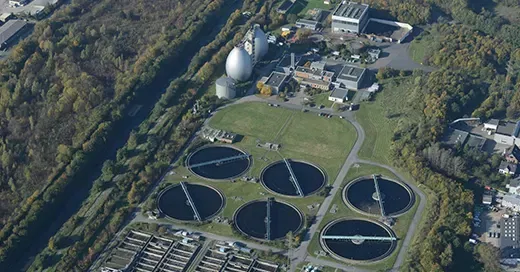
Consolidation of reclaimed water as a safe and reliable source in Catalonia, improving the quality of water bodies and strengthening resilience against the impacts of climate change. DECIDEIX provides tools to safely plan direct and indirect potable reuse schemes, proposing and applying innovative strategies to increase public acceptance of reclaimed water use. The project improves and expands the tool developed in the SUGGEREIX project for decision-making in treatment and monitoring systems for reuse schemes. This updated and expanded tool will include both direct and indirect potable uses, as well as new protective values for reclaimed water [...]

UMI-LINGO
EurecatMPv2026-09-22T17:18:01+02:00Open access to a modular, multi-tool handheld gripper and a multimodal dataset for natural language-guided robot manipulation. UMI-LINGO democratises robot learning by providing an open-source handheld gripper and a multimodal dataset from human demonstrations. By integrating natural language instructions, visual inputs, and tactile/auditory sensing, the project enables cost-effective data collection and model training, accelerating automation adoption across sectors, particularly for SMEs. Building upon the Universal Manipulation Interface (UMI), UMI-LINGO introduces a novel approach: task demonstrations are generated from natural-language descriptions. In this setup, one user describes a task based on before/after images, and another executes it [...]

MICROWORLD PUERTOS
EurecatIG2026-06-19T09:06:00+02:00MICROWORLD PUERTOS identifies microorganisms capable of biodegrading micro- and nanoplastics in the waters of the Port of Tarragona and La Pineda beach, through the analysis of plastic-degrading microbial strains. These strains are identified from plastic debris found in the waters and beaches of Tarragona to ensure they are well adapted to local Mediterranean conditions. In addition, the study assesses the potential toxicity of plastics through experimental, microbiological, and bioinformatic models. Plastic pollution is one of the most pressing environmental concerns today, as microplastic polymers are persistent, widespread, and can affect ecosystems and human health by entering [...]

SELAB
EurecatIG2025-07-04T11:10:26+02:00Energy storage system based on second-life batteries from electric vehicles. SELAB (Smart Energy Lab) enables efficient and sustainable energy management, storage, and distribution, reducing the ecological footprint and dependence on the conventional grid. This system is scalable (from 15 kW to 320 kW) and integrates an Energy Management System (EMS) that optimises the use of renewable energy sources and enables autonomous energy management with lower operational costs. The project includes battery ageing and characterization tests to develop a model for estimating the State of Health (SoH), which is key to extending battery life. SELAB’s objectives are: [...]

INDUX-R
EurecatIG2025-07-03T15:27:06+02:00Transforming European Industrial Ecosystems through eXtended Reality. INDUX-R develops a human-centric XR ecosystem to transform European industrial sectors by empowering humans and creating innovate XR products and services of significant added value. The project targets for concrete scientific breakthroughs integrated in technological enablers to be applied in use cases driven from real-life needs while having the potential to be replicated in several other applications. These devepelopments are focused on core XR technologies, namely, digitisation and creation of XR assets, realistic animation, light-field HMDs, XR media streaming and egocentric perception. To address the challenges that multi-user XR [...]

CARMONY
EurecatIG2026-06-19T09:08:18+02:00Coordinated Action for Responsive Mixed Orchestration and Network Yield. CARMONY introduces an interlinked orchestration framework for traffic management that integrates governance and business models, continuously refined using innovative simulation technologies with real-world traffic data. This approach aims to generate credible response plans, guidelines, and decision logics, fostering societal trust. Key stakeholders, including road operators, governments, and traffic managers, are involved from the project's inception, providing ongoing support. The framework is accessible via smartphone apps and online dashboards, aiding comprehensive traffic management decisions. CARMONY will be piloted in urban and highway areas in Spain and Luxembourg, focusing [...]

PLIADES
EurecatIG2026-06-19T09:21:27+02:00Revolutionising data management across industries with advanced AI. PLIADES advances the state of the art in data space reference architectures, driving a significant shift in the use of data as a key enabler of technological progress in artificial intelligence and robotics. The project explores innovative AI-enabled tools to support full lifecycle integration of data, both within and across data spaces. PLIADES incorporates sustainable data creation methods—compression, filtering, and normalisation—enabling efficient and greener data storage. It reinforces data privacy and sovereignty using standards and decentralised protocols. Data sharing is revolutionised through AI-based brokers and connectors using extended [...]

NOVAFERM
EurecatIG2026-08-24T15:38:08+02:00Obtaining new protein sources through fermentation of agri-food by-products for the development of high value-added products. NOVAFERM studies the valorisation of by-products of plant origin, from organic farming, through solid-state fermentation. The objective is to obtain new ingredients and/or value-added products, applicable to the development of hybrid meat products. This contributes to reducing environmental impact and promoting the circular economy. With the pilot-scale development of the inclusion of mycoprotein in the different meat formations, companies could diversify their range of products, which will allow them to reach the alternative protein market that is increasingly expanding. This [...]

ManuFoW
EurecatIG2025-04-17T11:05:52+02:00Digital skills and gender equality in the future of manufacturing work. ManuFoW drives the upskilling of the workforce and the adaptability of manufacturing companies to face digital transformation with a gender equality perspective. Aiming to close the skills and gender gap in the context of Industry 4.0, the project develops and implements innovative training programmes for current and future employees, as well as executives, across six key technological domains: Data Analytics and Artificial Intelligence, Robotic Systems and Automation, IoT and Sensor Technologies, Cloud Computing and Big Data, Cybersecurity, and CAD-CAM and Additive Manufacturing. The project delivers [...]

2E4GREEN
EurecatIG2025-04-16T13:28:39+02:00Development of new ester-based oils and additives, as well as lubrication strategies for electric mobility. The 2E4GREEN project boosts a smart-lubrication strategy based on the selective activation of microencapsulated additives to reduce friction and wear, increase lubricant efficiency and extend service life. It does so by taking into account both the improvement of friction losses and the working conditions of electric mobility, to respond as a whole to the new concept of green mobility. The addition of additives to base oils improves the tribological performance of the system. In this sense, 2E4GREEN develops a solution based [...]

SERENA
EurecatIG2025-04-22T09:17:01+02:00Reduction of nitrate pollution, recovery of organic waste and environmental monitoring SERENA reduces nitrate diffuse pollution in ecosystems through the research of innovative technologies for the denitrification of groundwater, the recovery of organic waste and the development of systems for monitoring the concentration of nitrates in water. The project addresses the decontamination of aquifers through bioremediation and chemical reduction technologies, combined with research into denitrifying enzymes. In addition, the anaerobic co-digestion of slurry and vegetable water is explored together with the use of nanoparticles with the aim of mitigating the inhibition problems of current technology. SERENA [...]

WatEnerWine
EurecatIG2026-06-19T09:35:10+02:00Promoting sustainability in the European wine sector. WatEnerWine improves the efficiency of water and energy use in the European wine sector and other agri-food sectors, while promoting the use of renewable energy sources. The project develops a strategy focused on improving the support structures for the sustainable transition of the sector, including the creation of Green Transition Centers to advise wineries on the adoption of new technologies that optimise the use of resources such as water and energy. WatEnerWine also facilitates knowledge transfer within the industry through good practice guides and innovation catalogs, carrying out events [...]

CAVIFOREST
EurecatIG2025-07-23T10:26:10+02:00New tools and methodology to increase cavities in trees, generated artificially for various species or groups of forest fauna. CAVIFOREST transfers new tools for the forestry sector, knowledge of cavity-forming species and methodologies for the creation of new cavities in trees, and the monitoring of long-term occupancy. For forest fauna, the scarcity of tree cavities is a major shortcoming in many forests. Globally, it is shown that there is a need to test alternative techniques to improve the provision of artificial cavities. The construction of shelters or cavities in trees, with adapted systems, is an emerging [...]

FIDELIA
EurecatIG2026-06-19T09:38:01+02:00Smart manufacturing, deep learning, and artificial intelligence ecosystem. FIDELIA consolidates an inclusive innovation ecosystem that fosters technological development and the implementation of artificial intelligence and deep learning in advanced manufacturing to improve efficiency and competitiveness. The project maps the ecosystem to identify key players and their capabilities, detecting specific needs and activating collaboration within the sector. Furthermore, FIDELIA promotes knowledge exchange through workshops, events, and specialised activities, as well as increasing visibility and promoting the expansion of the network of stakeholders involved. Furthermore, the initiative boosts talent and training, developing technical capabilities and promoting transnational cooperation. [...]

ISEMBRA
EurecatIG2025-07-23T10:26:18+02:00New concept of direct sowing seeder for sustainable agriculture. ISEMBRA develops and validates of an innovative direct broadcast seeder for extensive crops. The machine features a newly designed seeding train that enables precise seed placement at the required depth while minimizing soil disturbance. This design substantially reduces the power demand on the tractor and limits both soil compaction and disruption. The ISEMBRA seeder also includes a versatile dosing system capable of handling seeds of various sizes. This flexibility supports crop rotation (including cereals, legumes, and other herbaceous species) and enables cover crop sowing in nut tree [...]