Sustainability

IMAQUA

2019-11-27T12:34:03+01:00

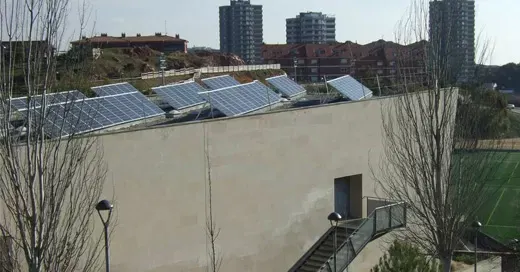
The IMAQUA project develops monitoring and supervision tools allowing for integrated water management, from capture to the point of consumption, ensuring quality and minimising losses during distribution. The tools developed will be integrated within an ICT platform comprising a system capable of increasing operability and managing water infrastructure knowledge, tools to monitor and supervise pollutants offline and online (samplers, systems, cyber-physical systems), network supervision tools and support for decision-making so as to improve the efficiency of current management and planning strategies and display simulation tools to provide water managers with access to comprehensive information about all [...]

GEOFIT

2019-11-15T12:03:55+01:00

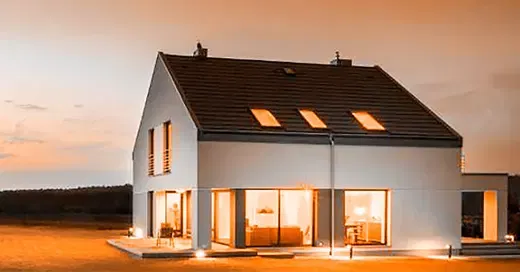
The GEOFIT project develops innovative and optimized geothermal systems with the aim of promoting the use of renewable energies and energy efficiency in the construction sector, mainly in rehabilitation, and implementing advanced methods of inspection based on a multidisciplinary approach. GEOFIT responds to the need to design a methodology that meets the European requirements of quality and comfort of the occupants and the level of CO2 emissions. Eurecat Metallic and Ceramic Materials Unit and Sustainability Unit participate in the project. The contribution of the Metallic and Ceramic Materials Unit is to analyze the failure mechanisms of [...]

REFER

2019-02-01T09:09:19+01:00

The REFER project promotes energy cost-reduction and greater efficiency in residential and service buildings by monitoring and optimizing the conditioning systems of residential buildings and, on the other hand, incorporating to service buildings intelligent and interoperable energy management systems and new innovative solutions for the generation and storage of renewable energy. During the project, energy measurement, generation and storage systems have been implemented, and more than 17 products have been developed, granting energy flexibility to buildings in ongoing rehabilitation processes. REFER has also allowed to improve technologies that participate in the energy flexibility of the buildings [...]

MINIBUS

2019-11-13T15:22:23+01:00

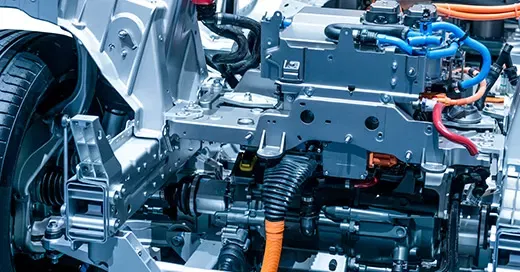
The MINIBUS project defines, develops, designs and manufactures a 100% electric urban minibus with high-load performance with the capacity to provide service in an urban environment throughout 16 hours of uninterrupted service, including the energy expenditure of the air conditioning, meeting the same requirements that current diesel vehicles. The project aims at contributing to reduce/eliminate fuel consumption and emissions in Barcelona’s city canter, improve citizens’ accessibility to sustainable means of transport adapted to the city’s mobility needs and obtain a reduction of the total noise caused by the operation of vehicles with electric motors. The main objectives [...]

GREENTONICS

2019-11-13T15:17:00+01:00

The GREENTRONICS project develops components, electronic products and services for different applications in the sustainable mobility industry (electric and hybrid vehicles with high voltage batteries, 48V automotive systems and alternative systems). Unlike countries such as Japan, the United States and Germany, as well as China and South Korea, Catalonia lacks of a strong industry around the components of the sustainable mobility sector. Despite having a long industrial tradition in the sector of automotive components and that the automotive industry is one of the key Catalan economic sectors, there is not a well-established electric mobility technologies network. [...]

REWASTEE

2025-12-17T15:09:38+01:00

Rewastee project aims to provide the sustainable construction market with a unique and sustainable thermos-acoustic material from Electric Arc Furnace (EAF) waste, a residue from the metallurgy industry. The Rewastee solution will contribute to a better energetic efficiency in the construction sector and a reduction of the residue management’s economic costs and its environmental impact. The innovative material has been designed and validated for multiple applications such as sound insulation boards, multilayer wall partitions, underflooring and other uses in which thermal inertia and acoustic insulation are needed. Rewastee is a European project lasting 3 years funded [...]

RELEACH

2019-11-13T08:15:37+01:00

The aim of Releach is to innovate in the current water purification system. It aims to reduce the environmental and economic cost associated with the treatment of contaminated water. One of the most innovative areas of the project has been the recovery of the membranes of desalination plants at the end of their useful life to be reused in the process of treatment of leachates. By applying the treatment in these old desalination plants, the residue it is transformed in a reutilized one. The Releach project has been cofunded by the European Union’s Life+ programme, which [...]

INSITRATE

2019-11-13T07:49:28+01:00

Denitrification of nitrate-polluted groundwater aiming the production of drinking water by using bioremediation. InSiTRate project develops a technology that uses the microorganisms already existing in the aquifer to transform the nitrates to nitrogen gas, process that permits the purification of the water. This technique, called as bioremediation, is less expensive than other current water treatments and does not need personnel to work, at the same time that allows to reduce more than 80 percent of the nitrates in each aquifer. During the project, a pilot plant has been set up in Sant Andreu de Llavaneres (Catalonia), [...]

RESSEEPE

2019-11-13T08:17:06+01:00

RESSEEPE develops solutions and services to improve the energy efficiency of public buildings by using innovative retrofit technologies. It will lead to reduce the current energy consumption by half. These innovations are already tested in different real locations in Europe. During the project, a ventilated façade that generates electric energy though photovoltaic panels and improves the thermal behavior of the existing building using vacuum insulation panels (VIP) will be developed, as well as an aerogel-based superinsulating mortar and a wooden insulating wall panel. The innovations are being tested in four different real placements in the United Kingdom, [...]

LowUP

2019-11-13T07:51:39+01:00

LowUP offers technological solutions that will reduce both CO2 emissions in the atmosphere and primary energy consumption, as well as reduce the European dependency on importing energy from abroad. LowUP’s three solutions will combine innovative heat and cool recovery technologies fuelled by low valued energy sources, such as renewable and wasted energy sources. Partners are working together to develop and demonstrate one heating and one cooling system for office buildings, and one heat recovery system for industrial processes. LowUp is a project lasting 42 months funded by the European Union’s Horizon2020 programme with a consortium of [...]

GREENOMED

2019-09-27T12:32:12+02:00

GREENOMED aims to test and transfer an inter-regional Clusters-centred cooperation methodology aimed to set the basis of an interconnected network of regional pilot plants. GREENOMED targets mainly regional clusters that with the projects’ solution will be able to offer more advanced services to their members, will internationalize their activity and strengthen the relationship with Regional Authorities. On the other hand, companies and research/innovation organizations will benefit from a structured process to become joint protagonists of the construction of the pilot plants system, based on their needs. Expected results: Structured methodology enabling design and implementation of pilot [...]

NATURE4CITIES

2019-12-17T11:52:56+01:00

NATURE4CITIES is a research and innovation project. Its goal is to create a Reference Platform for Nature Based Solutions (NBS). The platform offers technical solutions, methods and tools aimed at facilitating decision-making in urban planning. This will address the environmental, social and economic challenges of cities. Nature4Cities aims to bring nature back into innovation, planning and their implementation. This new approach implies new collaborative models driven by citizens, researchers, policy makers, and industry leaders, using co-creation processes and sharing best practices. In Nature4Cities, Eurecat contributes with its experience in data acquisition and processing with drones. Aerial imagery [...]

NEPTUNE

2019-11-13T08:04:31+01:00

Innovative projects, lead by SMEs, to encourage the innovation and sustainable growth of the marine and maritime sectors in Europe. Neptune project promotes innovation to create new industrial value chains that are beneficial for the entire sector, specifically at a local level. The project has a multi-sectorial approach and is focused on water management in urban and rural environments, the transport and logistics of inland and sea ports, the environment, and renewable marine energy. It is estimated that Neptune will have an impact on almost 2,000 innovators, the majority of which are small and medium sized companies. [...]

Sim4Nexus

2019-11-13T08:24:37+01:00

Sim4Nexus aims to guarantee an integrated, efficient and sustainable management of soil, food, energy and climate resources that are not usually managed correctly due to inconsistent policies or lack of knowledge. The project develops complex system methodologies, a geoplatform with public data and a tool where information can be obtained. In addition to this, the researchers will also develop an “Applied game” in the form of an online simulator to enable users to understand the results in residue management policies using a cross functional approach on different levels. General details Project Sim4Nexus [...]

URBAN WINS

2019-09-19T11:19:24+02:00

Sustainable and innovative strategies related to urban waste management in order to improve quality of life in cities. The Urbanwins project examines the impact that different urban elements have on waste generation in order to promote more efficient, sustainable and environmentally friendly cities. The programme will be tackled using a cross-functional approach to include the involvement of all parties responsible for waste management such as research groups, administrations, and citizens, who will be able to contrast their ideas and experiences in debates set up in the 24 cities from six European countries where the initiative will [...]

Go to Top