

Valorisation of waste generated in the olive oil value chain. The CIRCOLIVE project enhances the abilities of businesses on circular economy in the olive oil sector in Spain, Italy, Greece, Portugal and Croatia to promote the adoption of circular entrepreneurial models for waste and by-product valorization of the whole olive oil value chain. In particular, CIRCOLIVE boosts the adaptation of vocational and educational training (VET) provision to emerging business skills needs on circularity by designing transnational curricula. The project also builds SMEs’ abilities on the implementation of circular business models and on deep tech domains in [...]

TDS+2.0 2024
EurecatIG2024-05-31T14:07:54+02:00Development of a tourism intelligence system for the Barcelona province based in the compilation and treatment of data. The Tourism Data System (TDS) project manages an interactive and easy-to-use digital platform capable of providing the public sector and private companies with a great volume of trustworthy data and, this way, allowing them to grasp the current tourism conjunction, as well as its historical evolution. With this information, the aim is to facilitate the decision-making process and enhance the adaptation to current and future challenges in a key sector of the Catalan economy. To accomplish this, the TDS harvests tourism information from [...]

DIPTA 2024
EurecatIG2024-05-29T16:18:45+02:00The DIPTA 2024 project develops a knowledge transfer system to promote innovation in tourism brands in the province of Tarragona. DIPTA 2024 is divided into four different lines of work: observatory, laboratory of innovation and tourism intelligence (LABIIT), technology and transfer. Eurecat participates in DIPTA 2024 through its Consultancy Department, contributing its know-how in data intelligence, implementation of digital solutions, development and strategic planning, product design and in the generation of new knowledge, as well as promoting collective reflection on current tourist trends and dynamics. General details Project DIPTA 2024 - Development of [...]

iBeChange
EurecatIG2024-06-27T13:10:08+02:00Improvement of long-term primary cancer prevention. The iBeChange project addresses psychosocial and lifestyle risk factors to promote primary cancer prevention. This initiative designs, develops and tests an integrated platform that encourages behaviour change in individuals to achieve healthy and sustainable behaviours and emotions. The innovative iBeChange system goes beyond the state of the art in sustainable behaviour change and emotional management by combining evidence-based knowledge from clinical psychology and behaviour change theories with the capabilities of adaptive digital technologies and AI. Thus, the iBeChange system observes dynamically, learns about user behaviours, and delivers tailored and effective [...]

IAEDU
EurecatIG2024-05-23T10:59:51+02:00Artificial intelligence in education. The IAEDU project introduces artificial intelligence to education through the design and execution of four training activities related to digital skills at level B1 and B2 of the current Teaching Digital Competence Reference Framework (MRCDD). The aim is to improve the digital skills of more than 150 teachers of digital and industrial training cycles, to integrate technology in the classroom and enhance the learning and skills of the students. The contents of the training programs deal with the design and implementation of the Internet of Things, artificial intelligence and ChatGPT applied to [...]

ECOSEDRIV
EurecatIG2024-05-22T15:20:54+02:00Ecological implications of restoring sediment flows in regulated rivers. The ECOSEDRIV project understands and quantifies the interactions between suspended sediments, flow regime and biological communities in highly regulated rivers to design new reservoir management schemes to restore sediment flow towards the coast in a sustainable way. ECOSEDRIV takes the lower Ebro River as a model of highly regulated river systems with a strong sediment deficit and where large floods were suppressed, to test the hypotheses raised by the project. Deltas are among the most vulnerable coastal systems and require sediment inputs for their progradation and vertical [...]
EFFECTIVE
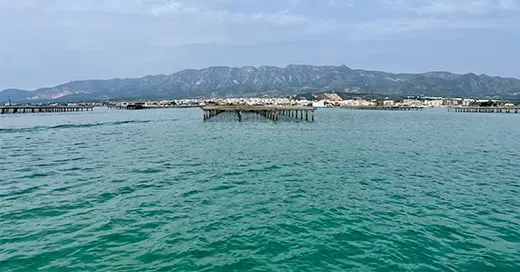
EurecatIG2024-05-16T09:48:22+02:00Protection and restoration of marine protected areas in the Mediterranean. The EFFECTIVE project develops a comprehensive scientific knowledge base and practical guidance, combining science, technological, nature-based solutions, digitalization, and social engagement, for the application of the ecosystem-based management to the protection and restoration of the EU’s Mediterranean Blue Natural Capital. The development of the project is divided into the three fundamental pillars of ecosystem-based management: First, the development of protection and restoration tools and the establishment of a policy framework, which aims to implement technological and nature-based solutions for the restoration and protection of marine biodiversity, [...]

PROMESI
EurecatIG2024-05-13T16:00:52+02:00Cloud-based crowdsourcing platform for massive annotation of metabolites in biomedical experiments. The PROMESI project designs the grounds to enable a massive annotation of metabolites. First, PROMESI provides a comprehensive identification of the metabolites present in biologically relevant samples, which will allow other researchers to use that information to expedite the annotation process in their experiments. On the other hand, PROMESI designs an innovative method to enable translating information on retention time (RT) across different chromatographic methods, facilitating the exchange of RT information of data generated in laboratories worldwide. Finally, the initiative integrates these resources into a [...]

HIBRIDe
EurecatIG2025-01-16T14:51:40+01:00Hybridization of smart energy networks, from components to system. The HIBRIDe project reinforces technological capabilities for sustainable energy autonomy, addressing the challenge of generating an innovative technological solution that allows optimization, hybridization, storage and network management for the integration of renewable energies. HIBRIDe responds to the challenge of optimizing the design and comprehensive management of a local energy network with the research and development of advanced digital tools for optimal planning and operation of hybrid networks; that is, with coupling between electrical and thermal energy, to maximize the use of primary energy from different renewable energy [...]

H2CAT
EurecatIG2024-04-22T16:15:39+02:00The Catalan network of innovation in renewable hydrogen. The H2CAT network reunites the major Catalan research groups who focus on the technological advancement of renewable hydrogen to support them in the process of valorizing and transferring research results to the social, productive and commercial environment of different application sectors. The network consolidates a scientific-technological model to drive it towards innovation and scalability in its benchmark industries to position Catalonia as a world leader in renewable hydrogen, not only in the generation of knowledge and the development of solutions, but also in the creation of a transfer [...]

iRAIN
EurecatIG2025-03-07T12:57:48+01:00Artificial intelligence to reuse wastewater and nutrients in the agricultural sector. The iRAIN project investigates an innovative advanced water resource management system to optimize water resources applied in precision agriculture. iRAIN's system combines new treatments for water regeneration and nutrient recovery from urban wastewater with hybrid technologies based on monitoring, artificial intelligence and spectroscopy by fusing data from satellites, drones , agricultural robots, sensor networks and smart multispectral cameras. The initiative's work plan is divided into four activities: research into water regeneration techniques and nutrient recovery for agricultural use; research into advanced techniques for monitoring water [...]

E:SBN
EurecatIG2024-04-19T12:53:01+02:00Identification, classification and catalogue of nature-based solutions in Spain that allow planning and maximizing benefits in the fight against climate change. The Systematization of Nature-Based Solutions in Spain (E:SBN) project establishes a system for identifying, classifying and cataloguing Nature-Based Solutions (NBS) created in different types of ecosystems in Spain, from parks, green corridors, coastal restoration and wetlands or climate refuges, so that their planning and implementation, both in urban and rural environments, is carried out with a global perspective and in a coherent, effective and adapted way to each territorial reality within the framework of climate [...]

OPTIPROT
EurecatIG2025-02-05T16:01:47+01:00Cervera network of excellence for the innovation of new protein sources for the generation of different foods, prioritizing sustainability processes, the impact on health and consumer demands. The OPTIPROT project addresses the transition towards a more sustainable nutrition by searching for new respectful sources of alternative protein, assessing both the environmental impact and the repercussion on human health and optimizing the technological, social, cultural and legislative challenges. For this purpose, omic technologies (transcriptomics, epigenomics, proteomics and metabolomics) are used which, within the context of food and through the use of high-performance tools, improve human nutrition and [...]

ARQA
EurecatIG2024-07-26T13:47:17+02:00Innovative collaborative initiative among three leading Spanish technological centres in the field of quantum computing. The ARQA project advances research and development of quantum applications for the business sector, thereby tackling challenges that traditional computing cannot currently resolve. The Cervera ARQA Network, formed by the Technological Center for Information and Communication Foundation (CTIC), Eurecat, and ITG, constitutes a joint effort to boost the transfer of quantum technologies to businesses, fostering a national level collaboration that facilitates the integration of these advanced technologies into the business fabric, and thereby, into society. This project not only seeks to [...]

ALABAMA
EurecatIG2026-06-19T17:28:09+02:00Adaptive laser beam for additive manufacturing. The ALABAMA project develops and matures adaptive laser technologies for laser metal deposition (LMD) processes with either powder or wire as feedstock material. The objective is to decrease the porosity and to tailor the microstructure of the deposited material by shaping the laser beam, both temporally and spatially, during the additive manufacturing (AM) process. The key innovation in the project is to develop multiscale physics-based models to enable optimization of the AM process. These process parameters are tested and matured for multi-beam control, laser beam shaping optics and high-speed scanning. [...]